

Ceramic glazes research #1
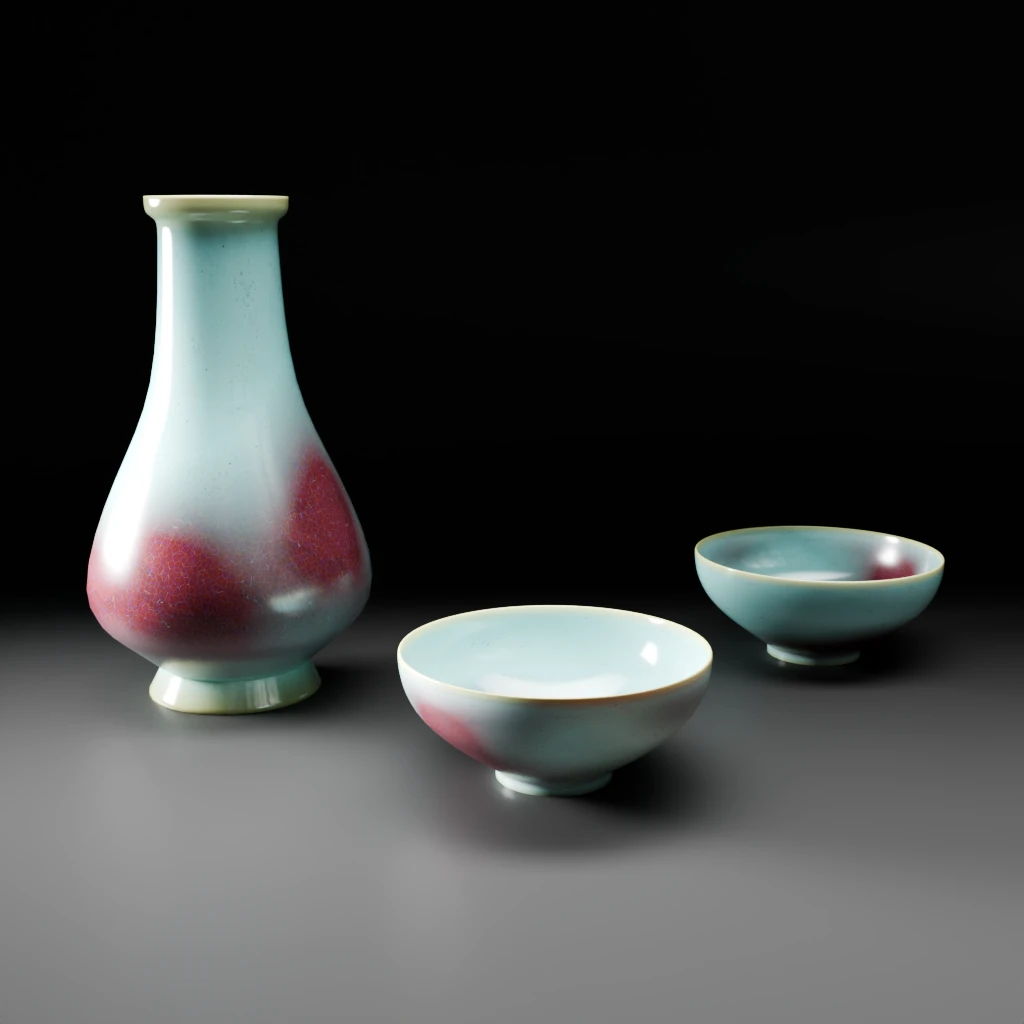
The following texts and images are the results of a training exercise to go from the pictures of a museum piece to the creation of a 3D restored version of it. It’s a documentation on some processes and constructions. These particular models are the result of hypothesis that resulted in a certain amount of artistic licence, making them artistic renders and not scientific restorations.
The beauty in deceptively simple things
Today, it’s #potteryTherapy.
You may be familiar with the stories of the Five Great Kilns of the Chinese Song dynasty(960-1279). Despite the whole thing probably being blown out of proportion by later collectors, I always liked the most simple pieces attributed to them. That is to say, mostly what is not referred to as ‘official’ (meaning “meant exclusively for the court and the Palace”).
As I need a pause amidst a big project, I decided to revisit my PBR training and try to emulate the glazes I liked best of the Jun ware, Ru ware, Guan ware and Ding ware.
As a reminder, here are the steps that allow to go from clay to ceramic. I took the example of the Jun ware. It goes the same but with a slightly different chemistry for the other ones.
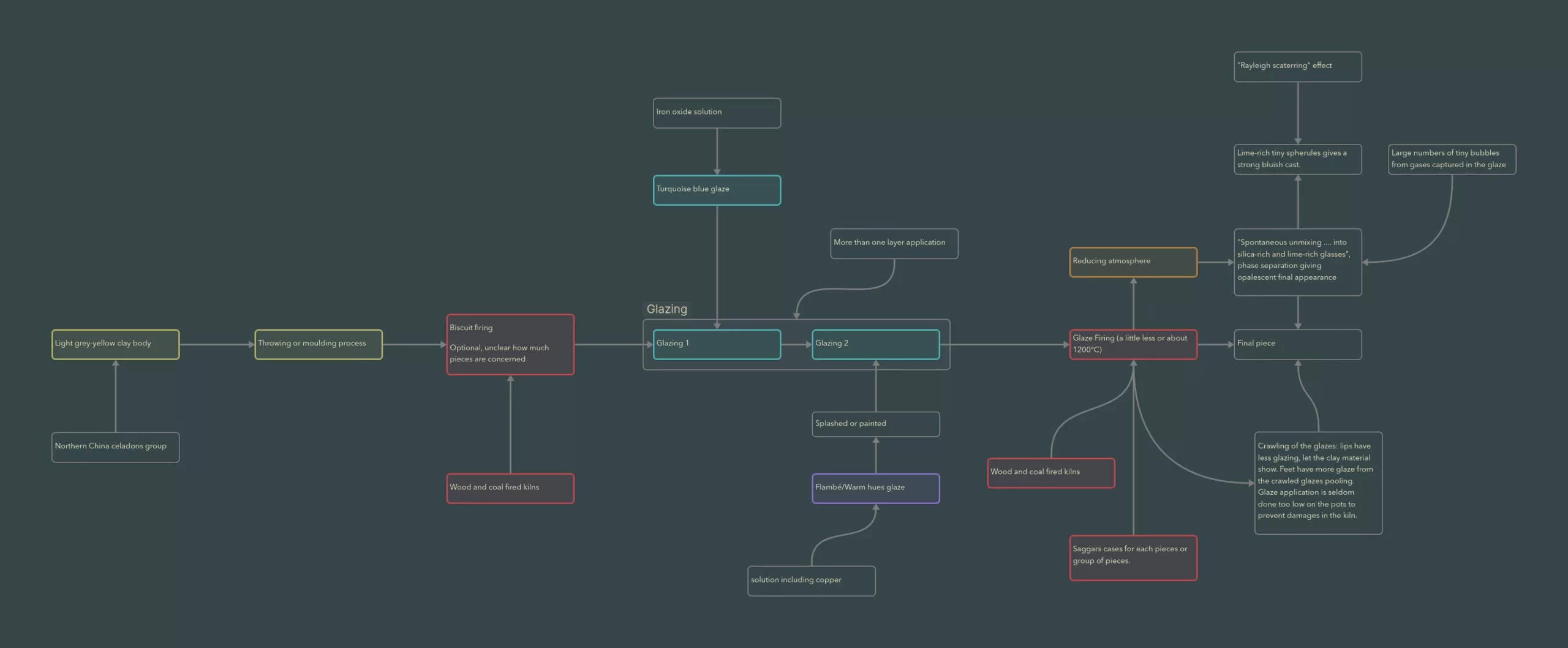
The part we’re interested in today comes after the second firing. This is the result of the entire process we will try to imitate.
3D notes
Clay
As you might have noticed, everything starts with what is described as a smooth light grey-yellow clay body. I decided to create a clay body base that can be adapted to the different productions if need be.
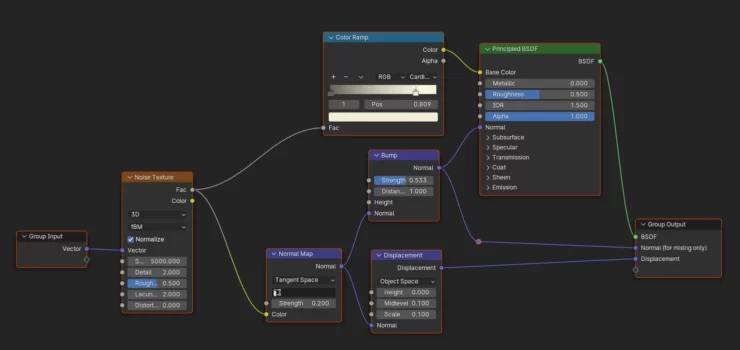
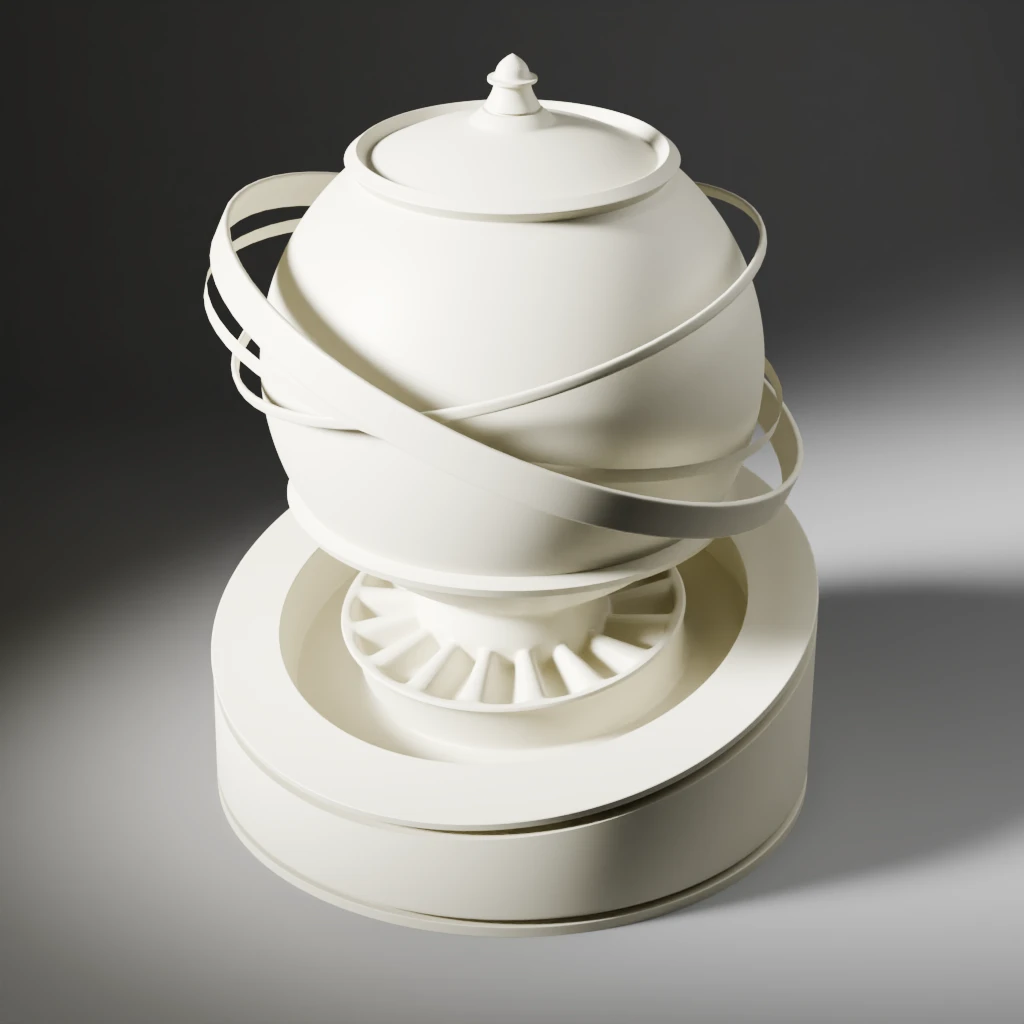
I now have a ready-made node that can be re-used as needed. I choose to output two data blocks from the node. First, the displacement node, because the light surface relief on the piece is given by the clay, so I will be using it on the material output once the texture finished. Then, the normal map we created. This is a data-block we can re-use too for mixing purposes.
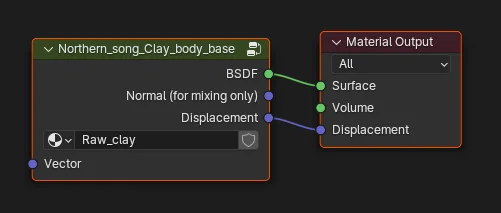
Let’s play with the glazes next !
Glazes
Some nodes below use combinations of shaders instead of maps. Though best practice is to blend PBR maps, in most cases there was a definite shift in texture that made it easier to handle. The same goes for colour ramps nodes: I know maths nodes make more sense because they are more powerful. But I found colour ramps faster to implement in these cases. Refactoring the nodes would be an option in a production setting.
Jun ware
Material study
Jun ware is a generic term for productions from the Henan region, from roughly 960 to 1644, that is to say from the Northern Song to the Ming dynasty.
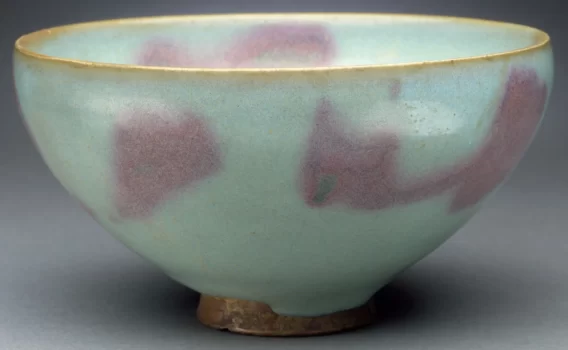
My favourite type of glaze from these productions are the ones adorning the most simple vessels, mostly bowls or drinking cups.
Their walls are thick and sturdy. Glaze is thin at the top and on prominent parts and pools at the bottom. It is applied stopping high above the foot, maybe to prevent crawling damages (feet sticking to the saggar during firing). It goes from bluish-green to turquoise, with yellow specks of the base clay showing. There is the addition of bright purple splashes here and there. It can present a very dim network of crazing, but that is not always the case. There is an opalescent quality to the surface of the pots.
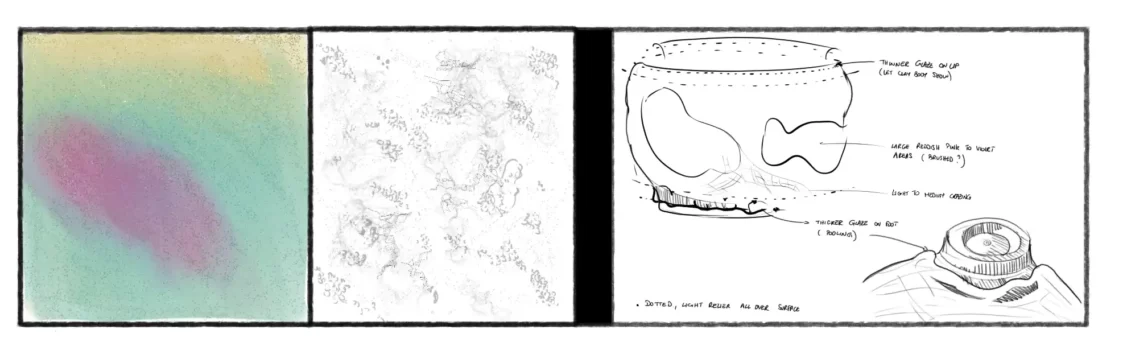
Now let’s try to translate this into nodes in Blender shading system. I’m fairly certain there are many ways to do it. Here are the paths I took. As a guide, I usually try to follow what I know about the texture creation process IRL. It might make redundancies, but it’s easier for my brains to create a complex system that way and then simplify things once I obtain a decent result.
First, let’s create a colour base using variations in light blues with green accents.
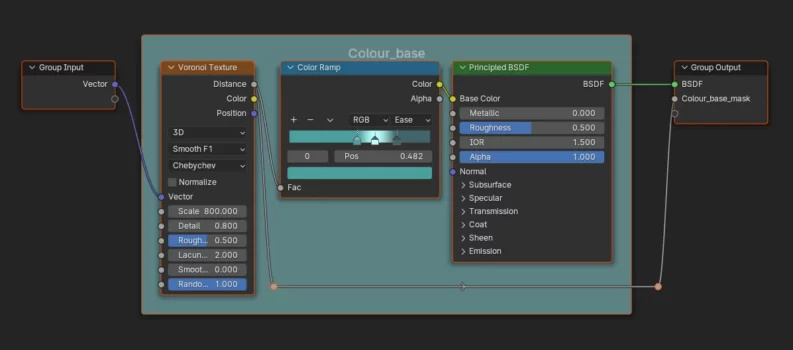
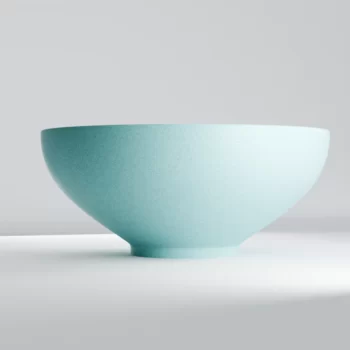
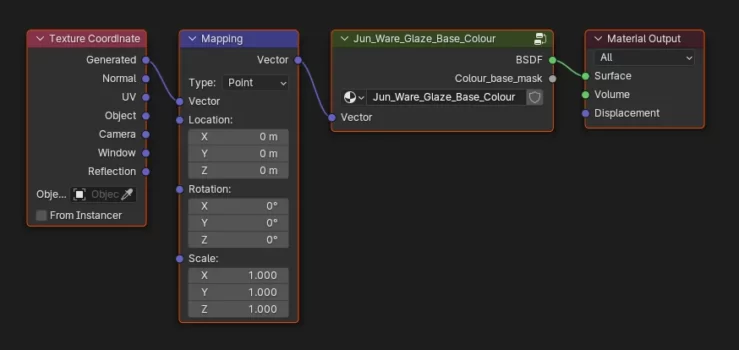
Once again, I chose to output the mask used in the node, so I can use the data in another part of the graph if need be. I did not allow for normals to be outputted this time. The glaze will behave has a very viscous liquid in the kiln (it’s basically glass). So it won’t create reliefs in and of itself. It can (and will!) be altered but afterwards.
Now for the purple “accents”. Specialists are not fully certain of the method used to create them: brush strokes or spraying of a liquid solution of salts that is adsorbed by the first glaze. During firing, it will react with it and can create bright purple colours. This reaction is dependent on the chemistry and thickness of the layer below as well as the temperature of that part of the piece during the firing. Hint: it is never homogenous ! Therefore, there is an element of hazard that we must take into account. But we can hypothetize that the potters would not have wanted the accents on perilous parts where they know the glaze would run. It would ruin the effect. So, we need to contain them more or less to the middle of the pot, avoiding the rim and foot. We therefore need to create both the purple texture but also a mask to “control” it.
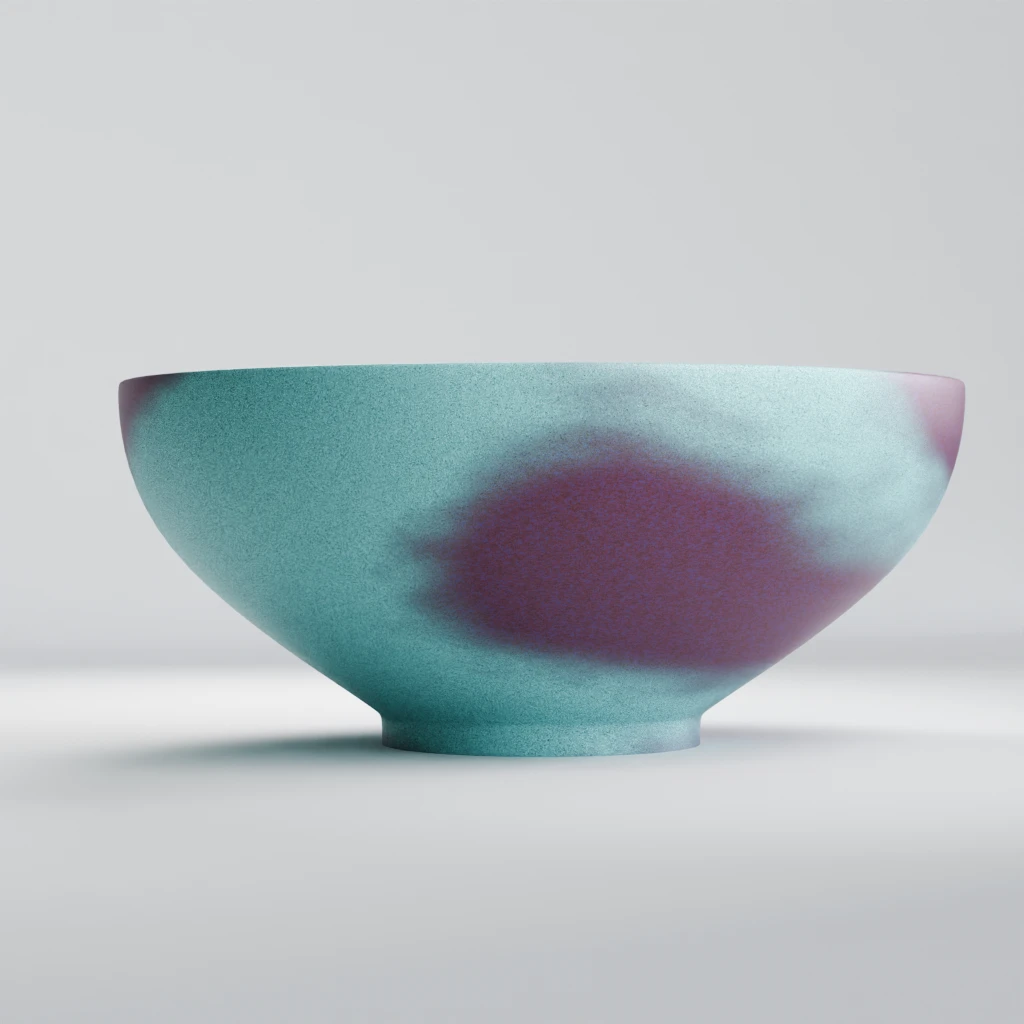
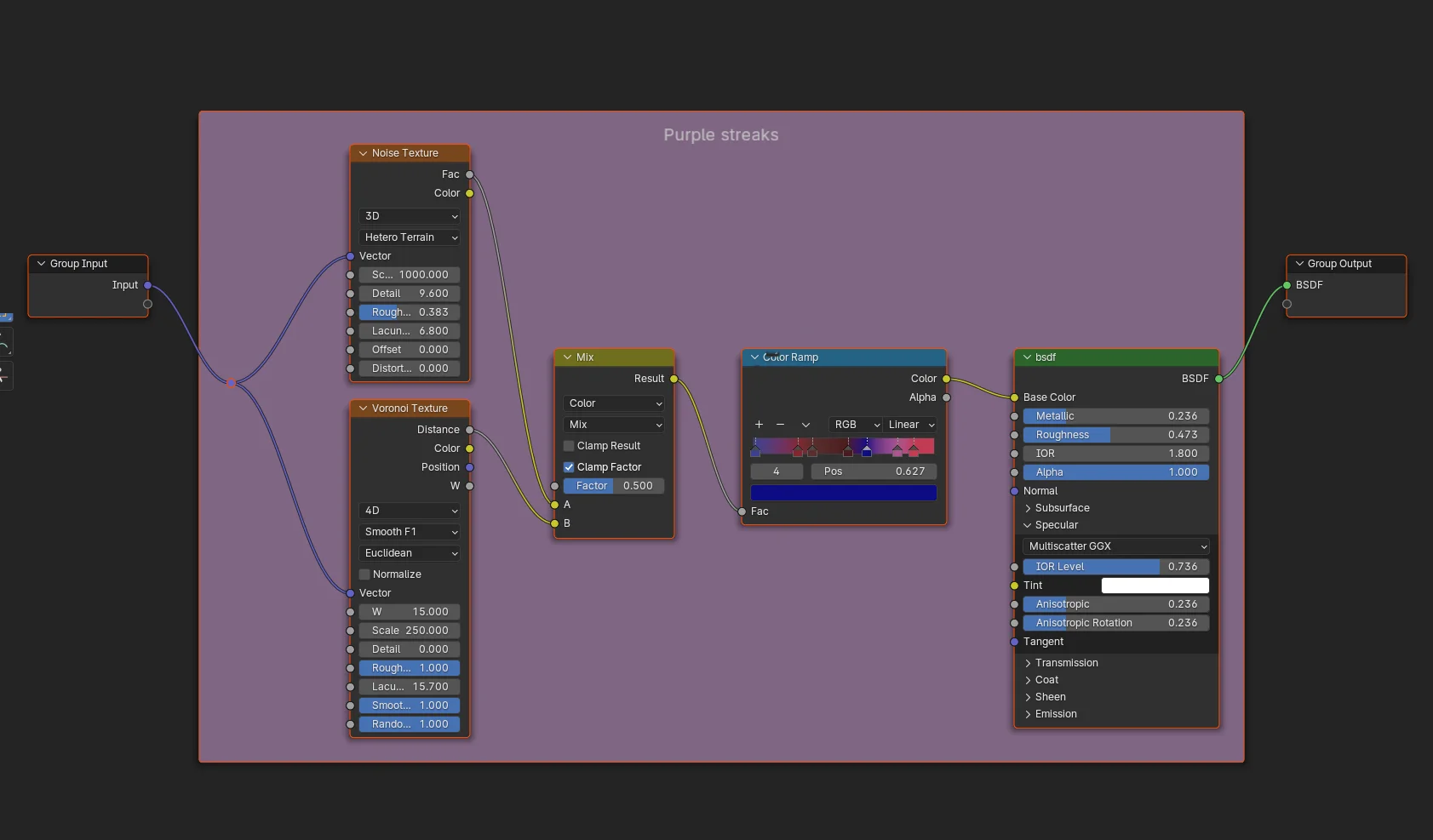
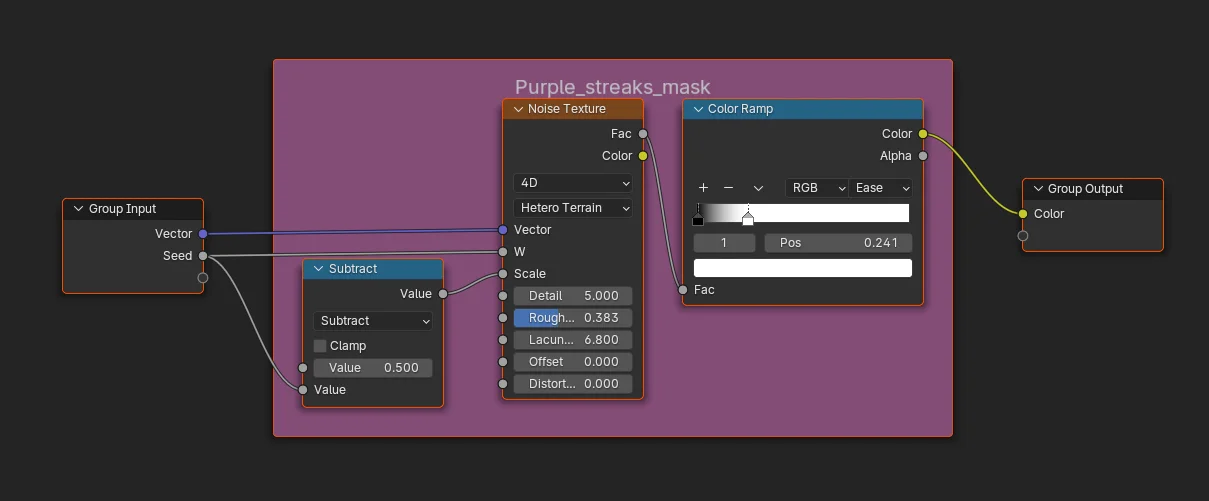
I choose to let the seed and scale input be controlled by an external value to allow for fine-tuning of the texture. Let’s wrap it all into one convenient group node.
We’re almost done for the heavy lifting. I just need to let the clay body show on the rim, where the glaze is thin, and on the foot where the glaze was not applied. I think I have all the bricks I need. All I have to do is to create yet another mask.
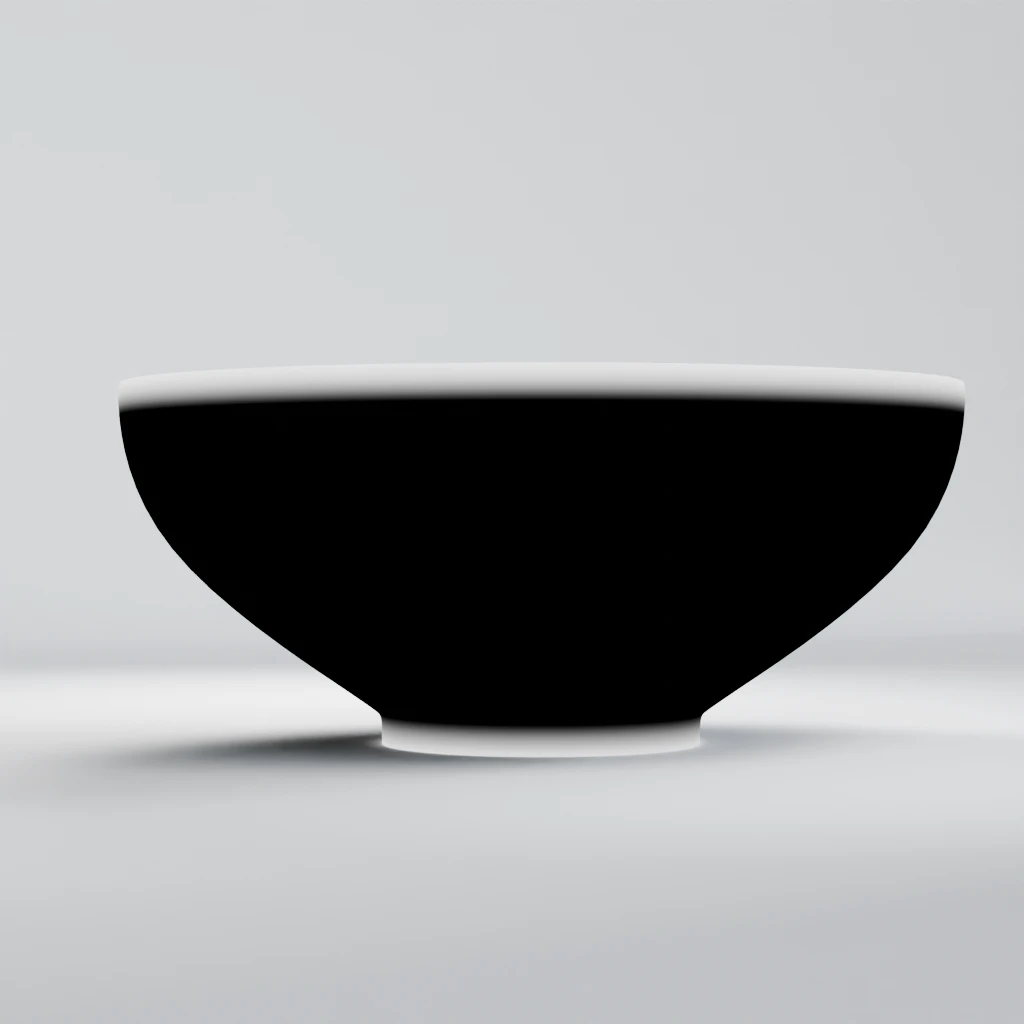
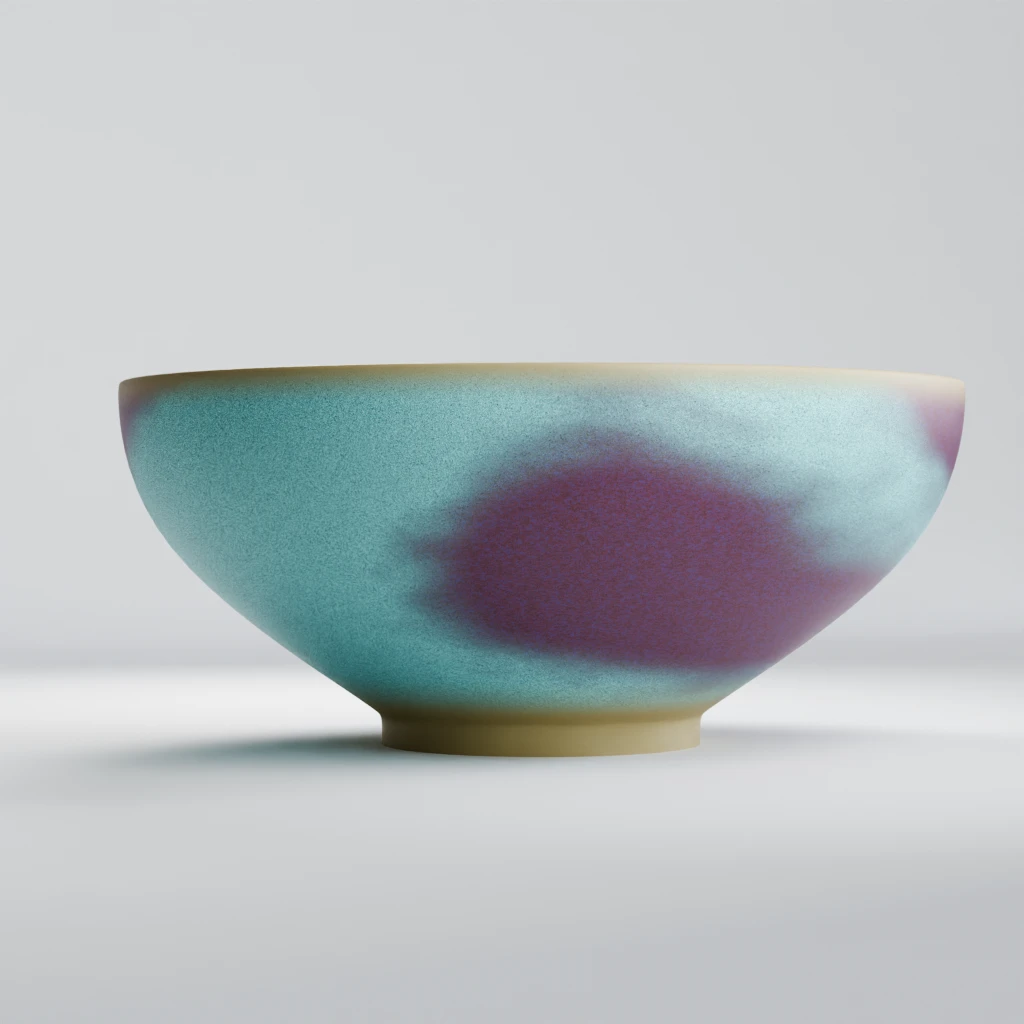
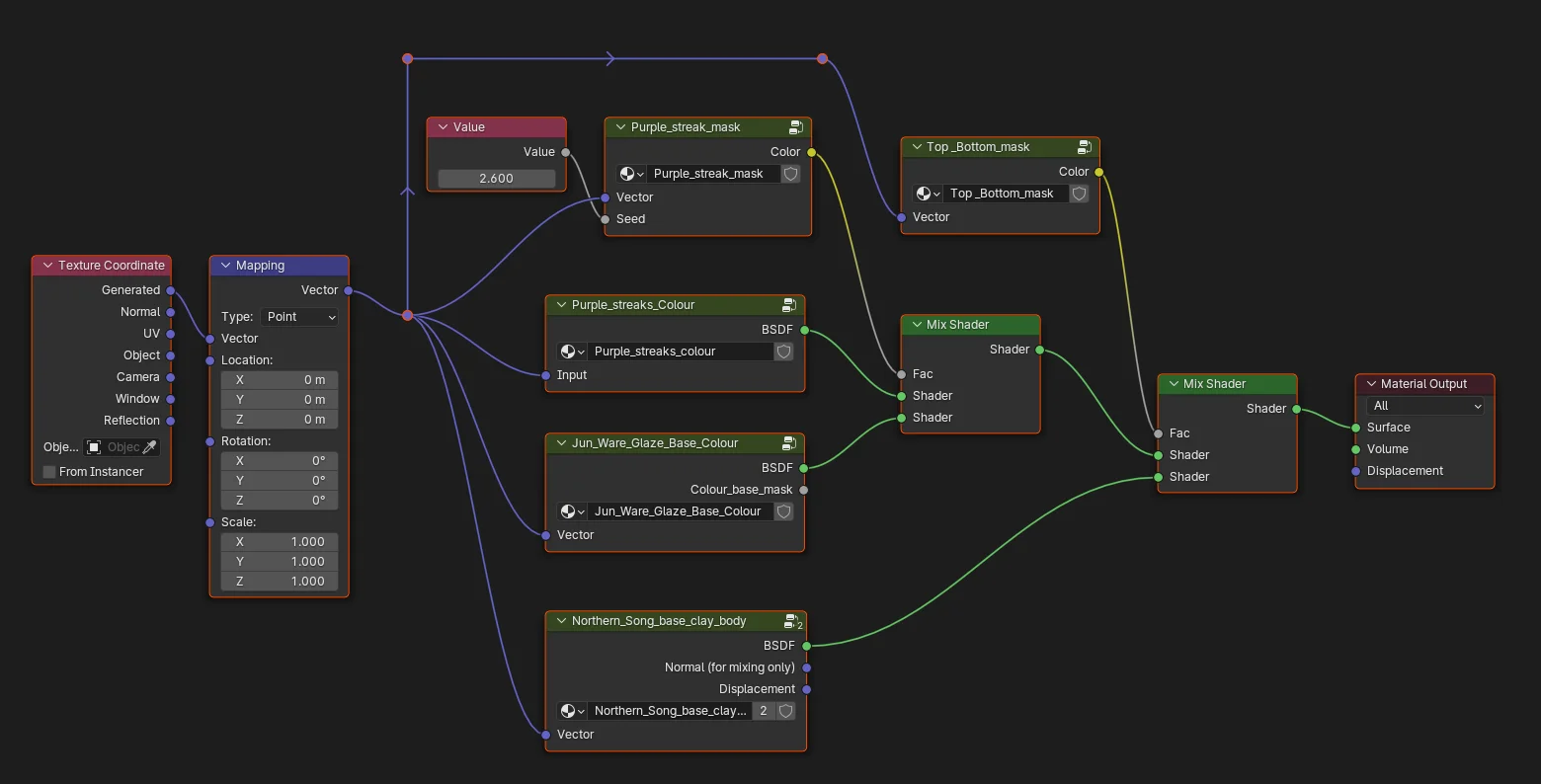
It’s nice but still very rough. We need to add the crazing and polish the look a little.
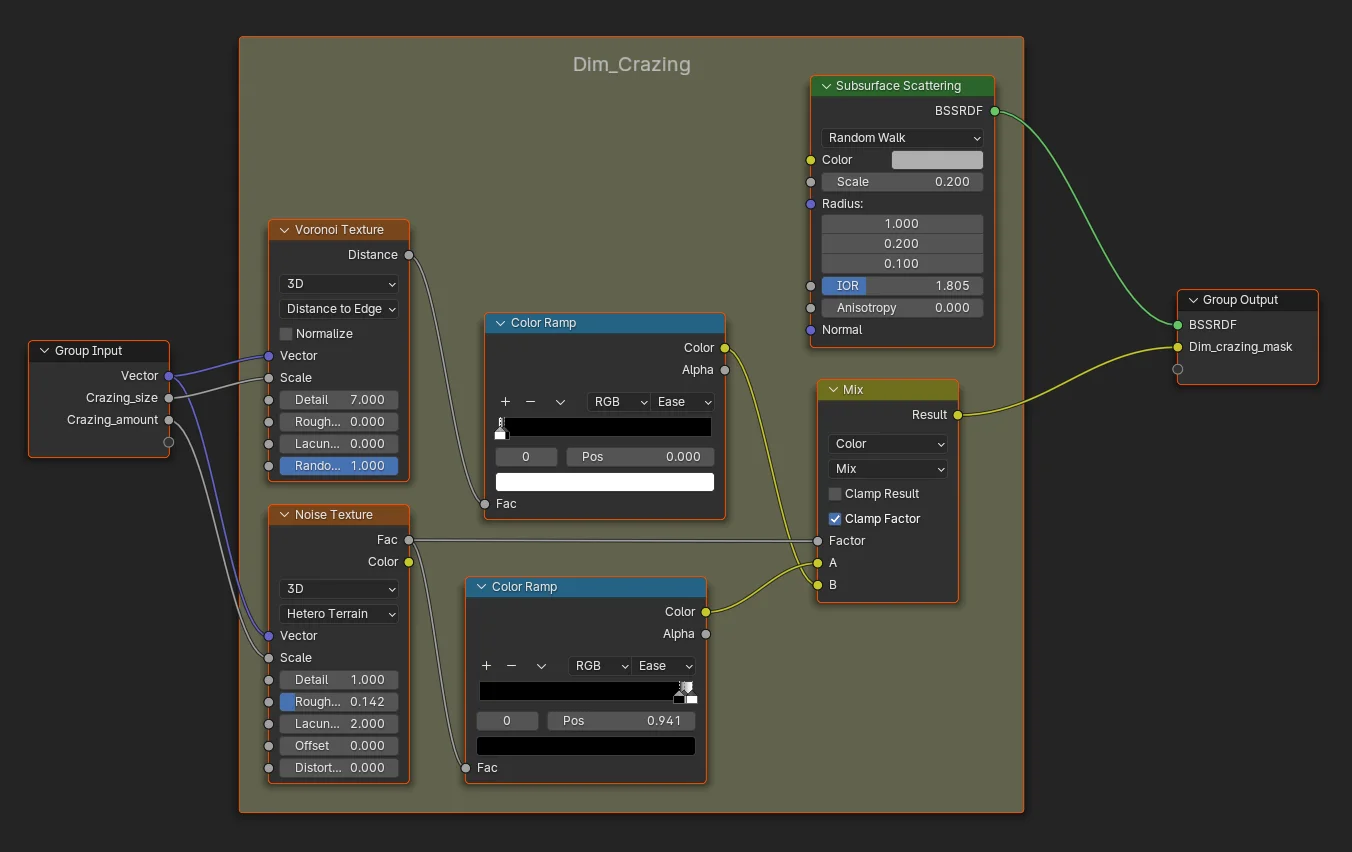
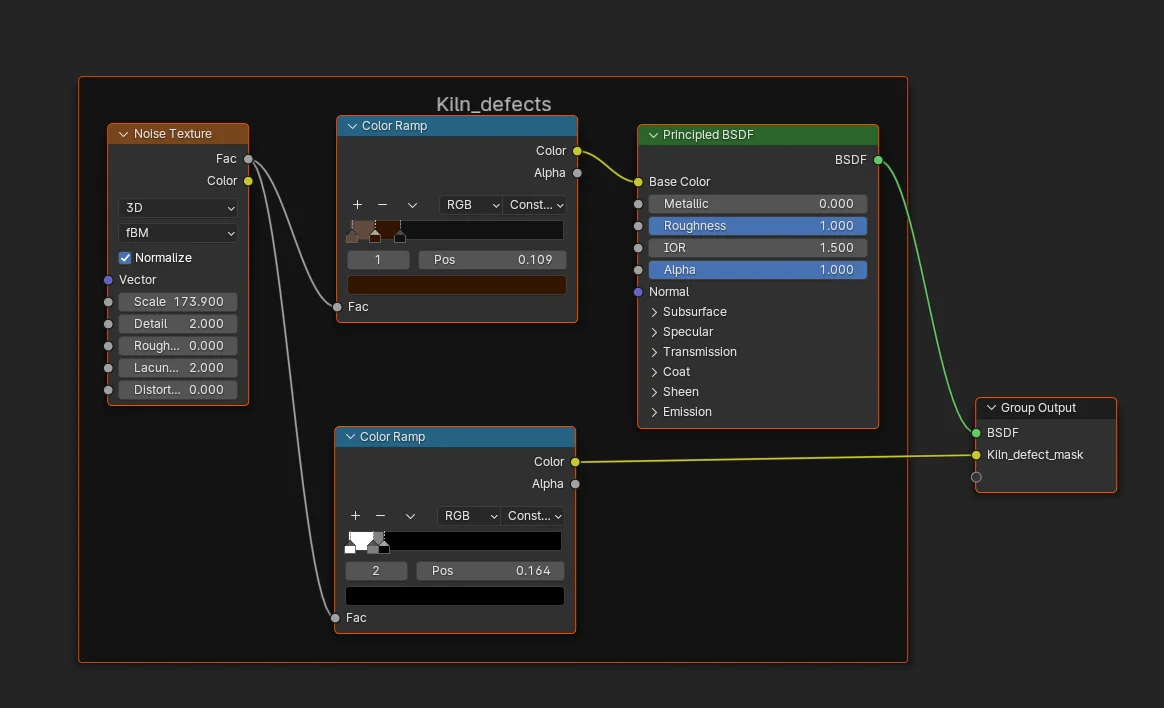
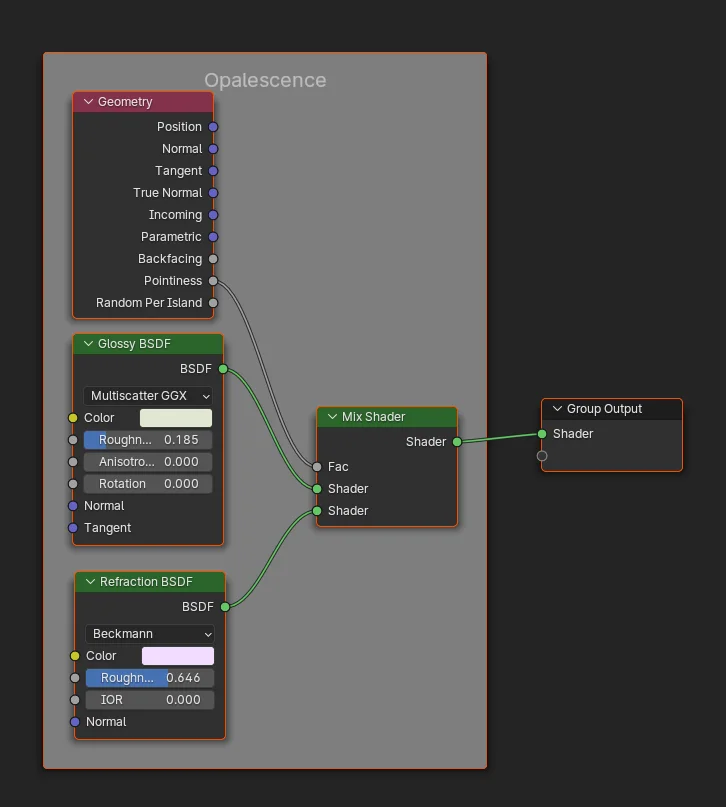
In order to accommodate this last part of the node graph better, I decided to move things around a little. It makes more sense to have the node related to letting the clay body show at the very end.
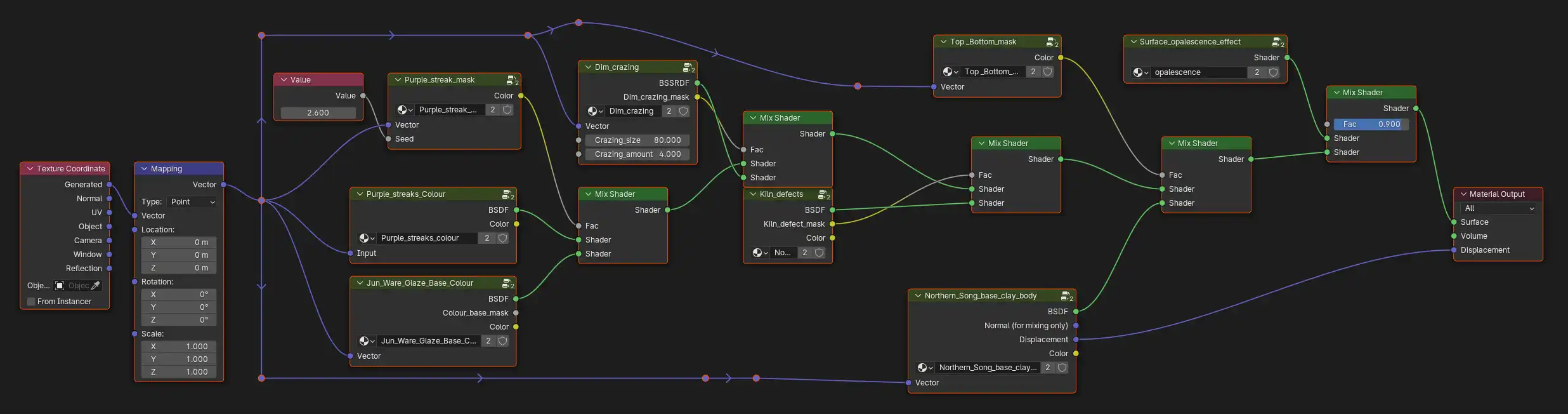
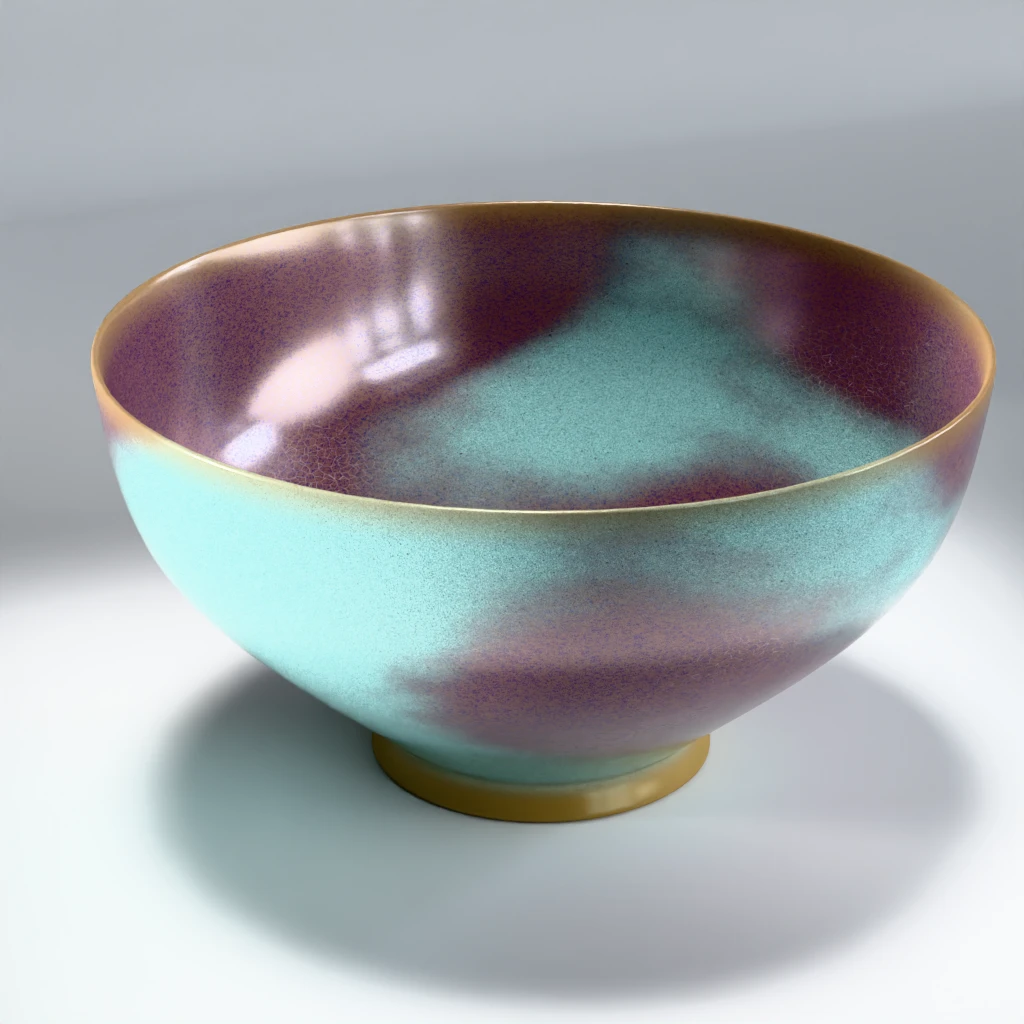
Now, with very little tweaks and a custom lighting system, the texture can be deployed and adapted on almost any shapes.
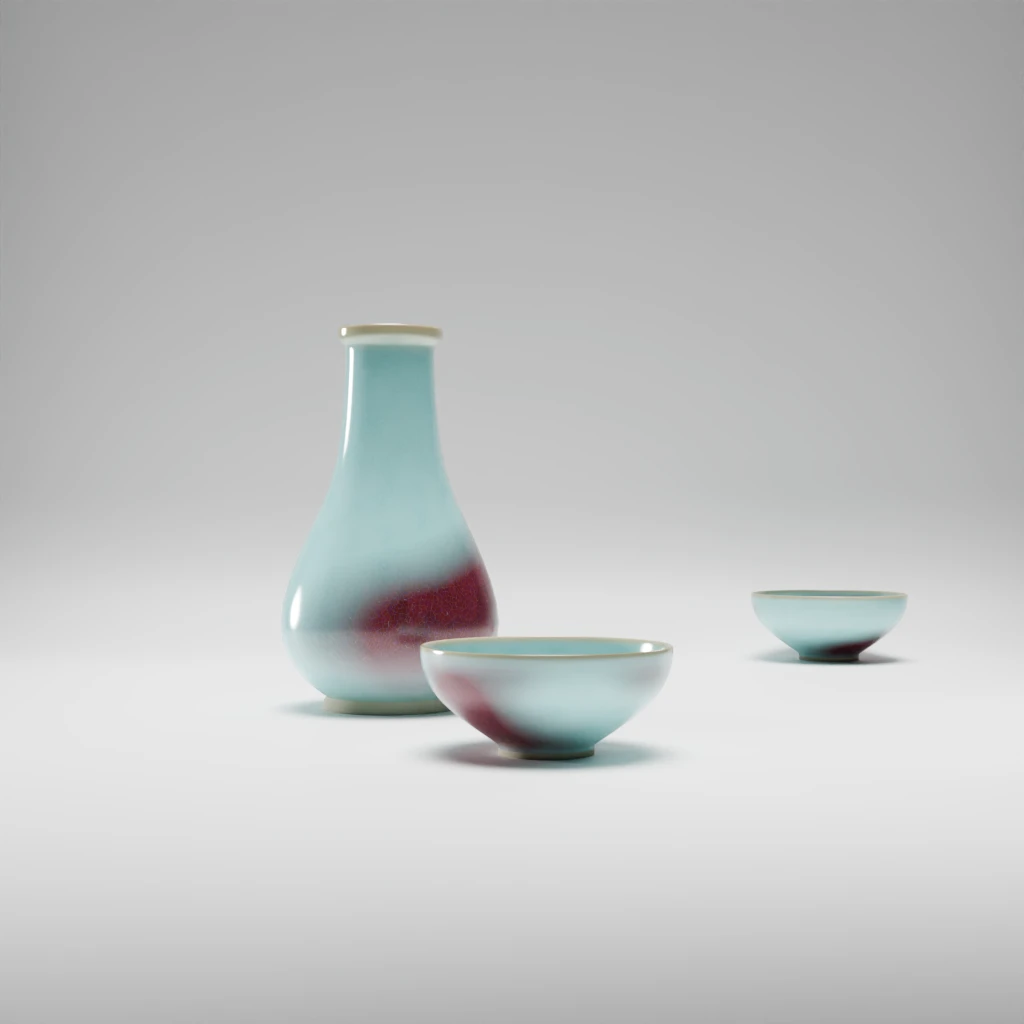
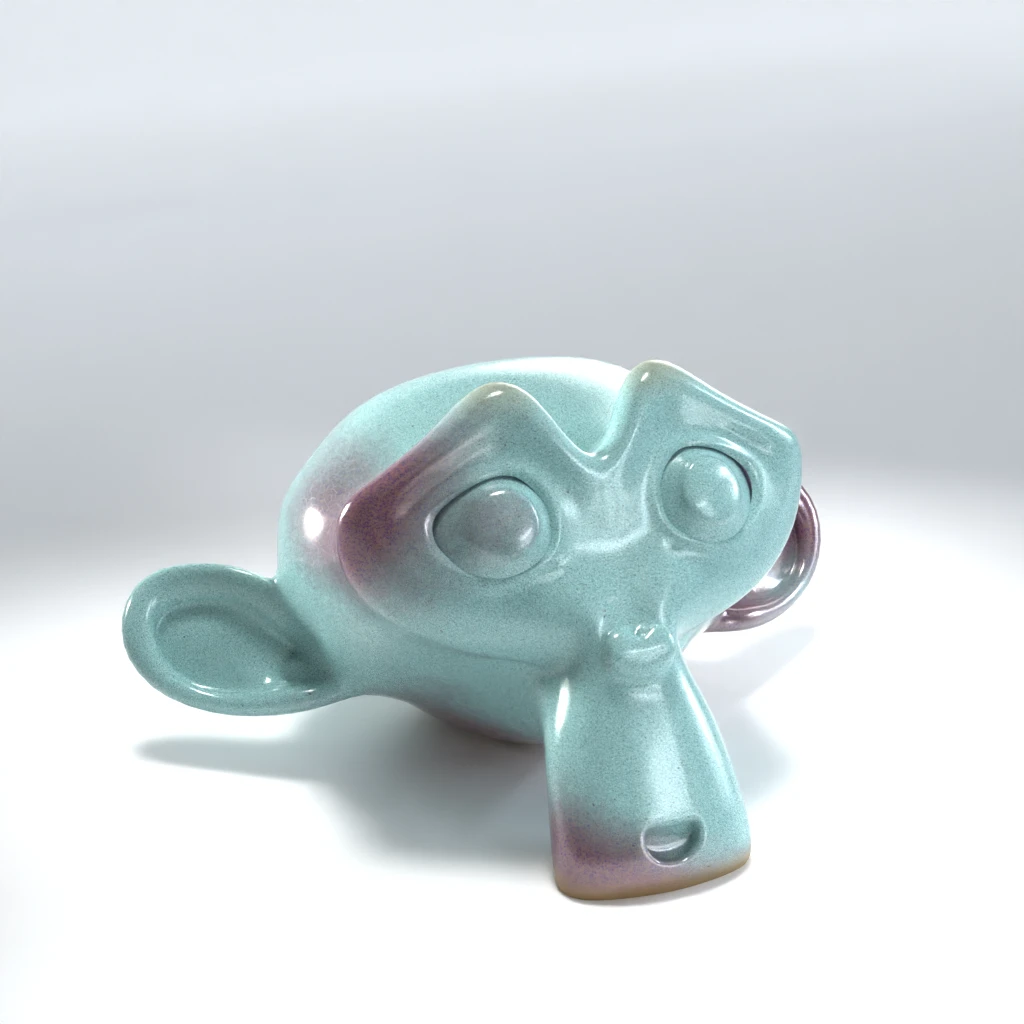
3D view
Disclaimer : technical limitation to material render in web app can let artefacts show, particularly in zoomed views.
See the full screen view (this will open a new tab in your browser).
Ru ware
Following the same paths and re-using as much of the different nodes as possible, we can then have fun with the other glazes.
Material study
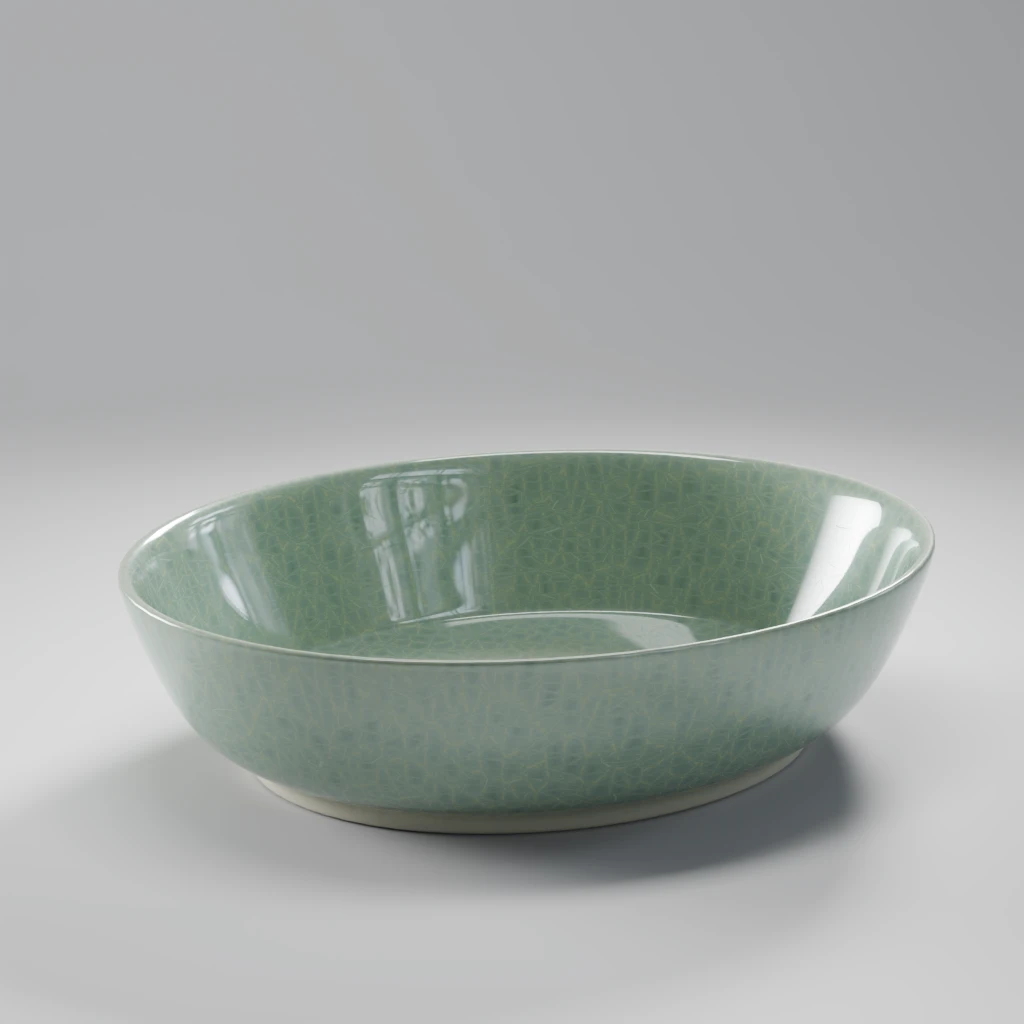
Ru ware has a very sought after “duck egg” blue glaze that can sometimes goes to light celadon green. This production is the one that most closely imitates jade. Pots shapes are simple and elegant. There are pieces showing a light flowery relief, but they are not the pieces I like most.
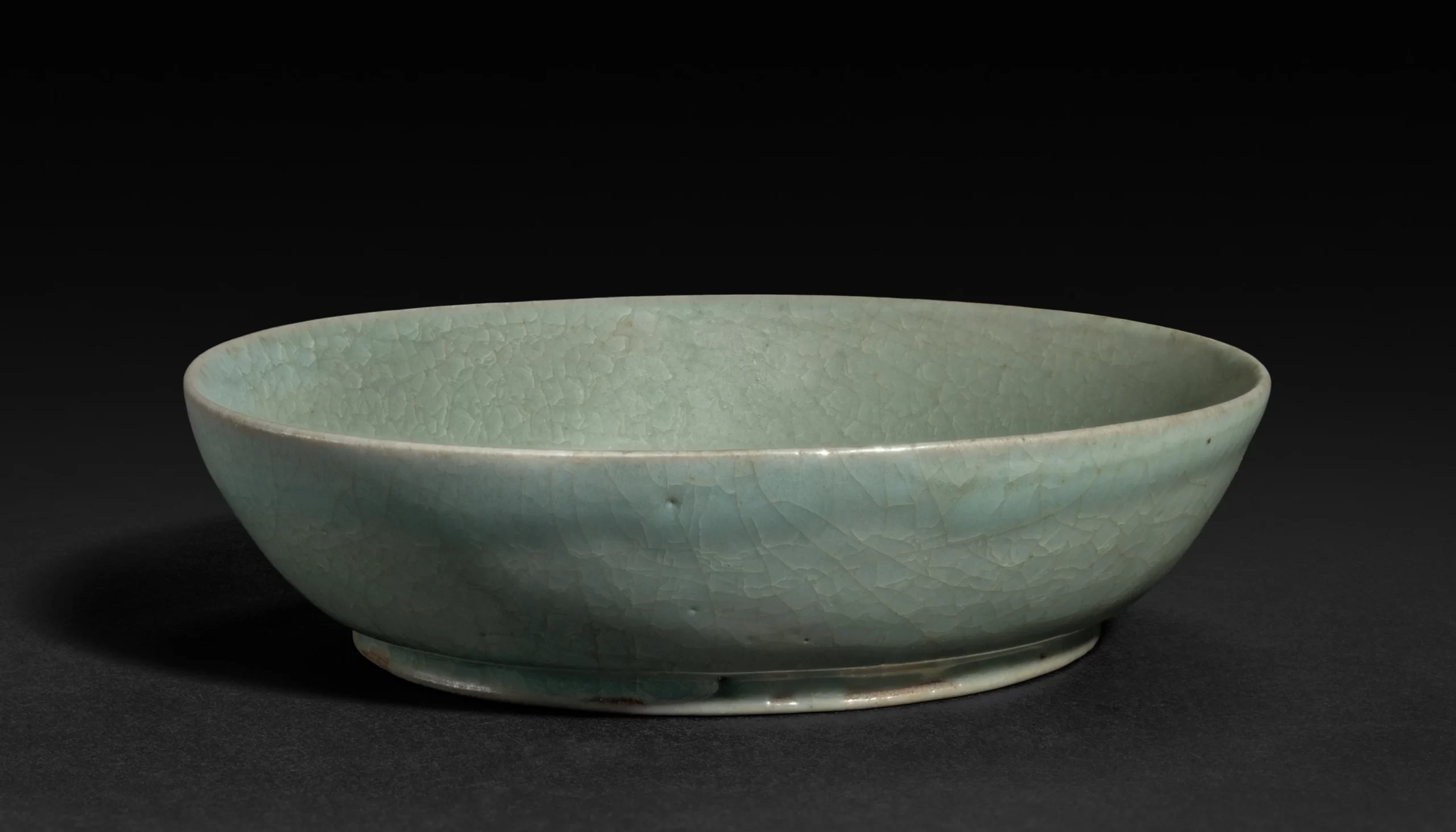
These pieces were glazed by layers and I like when the almost clear glaze let the crazing network show its depth among. It renders an almost crystalline effect.
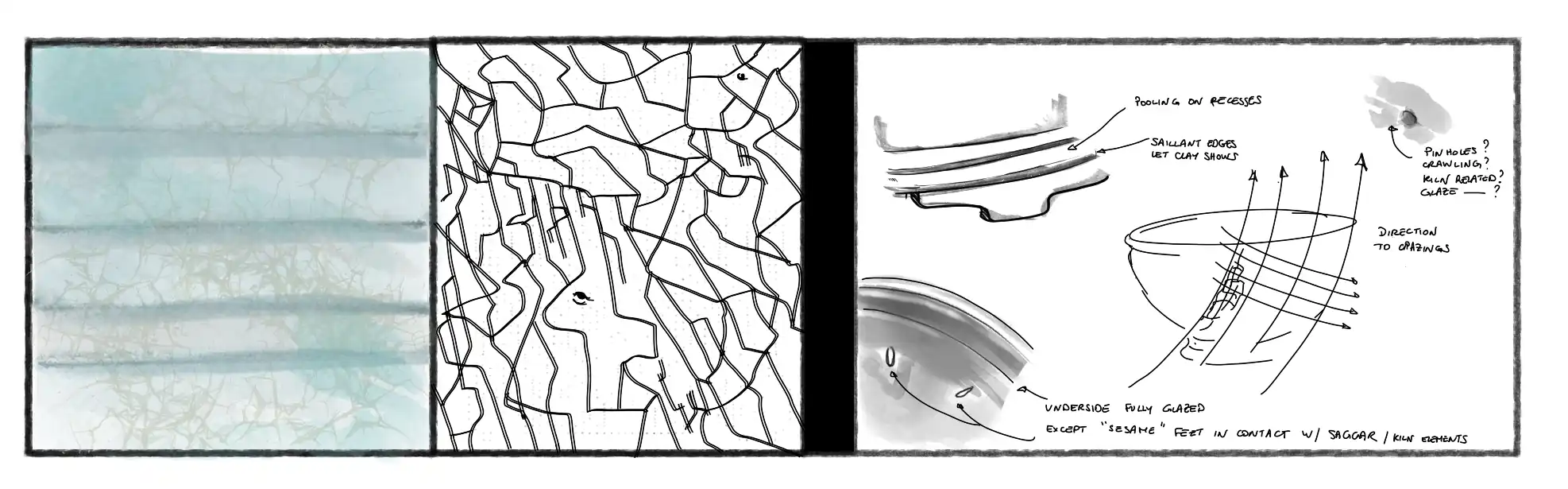
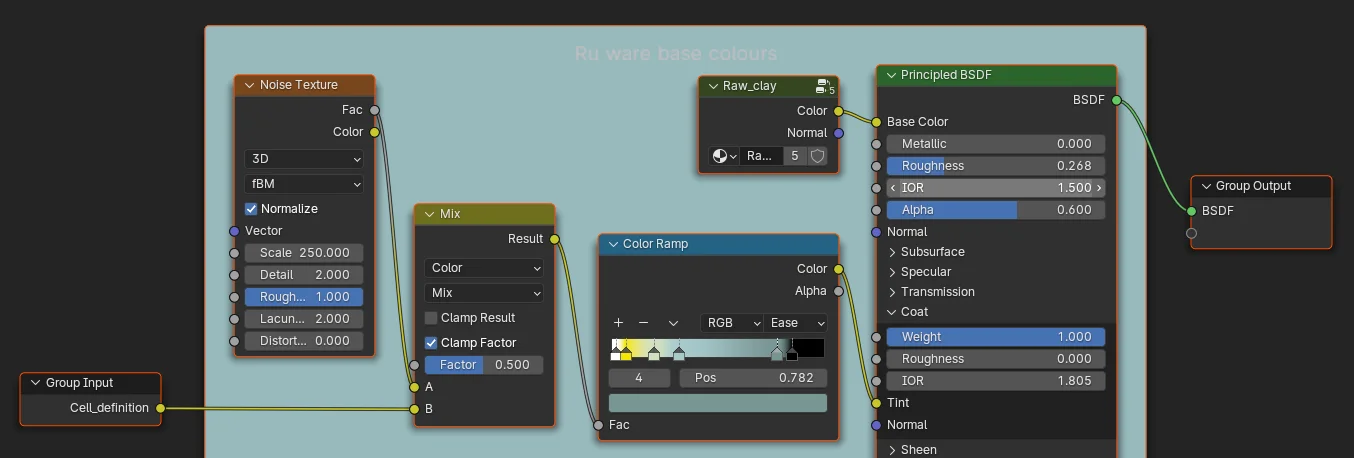
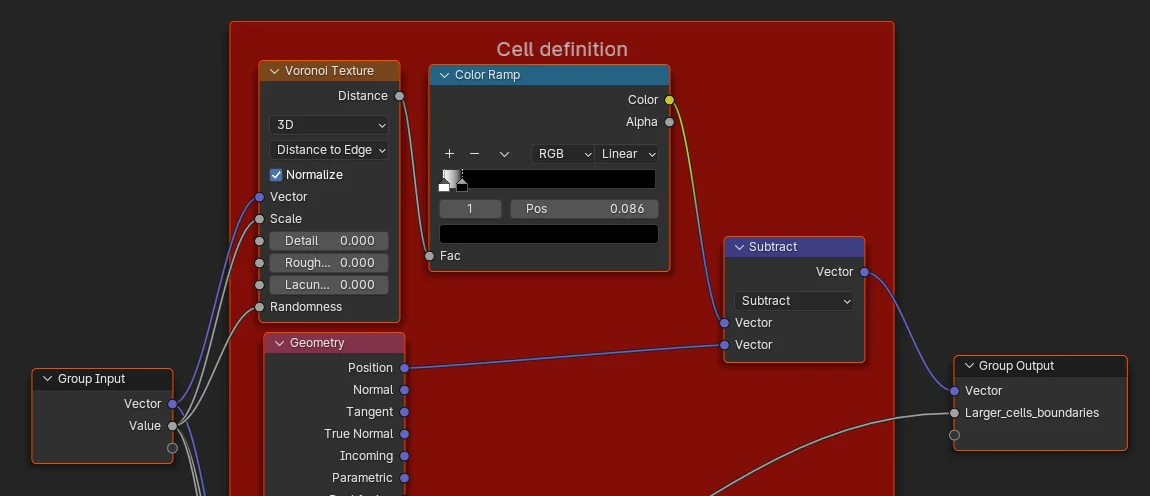
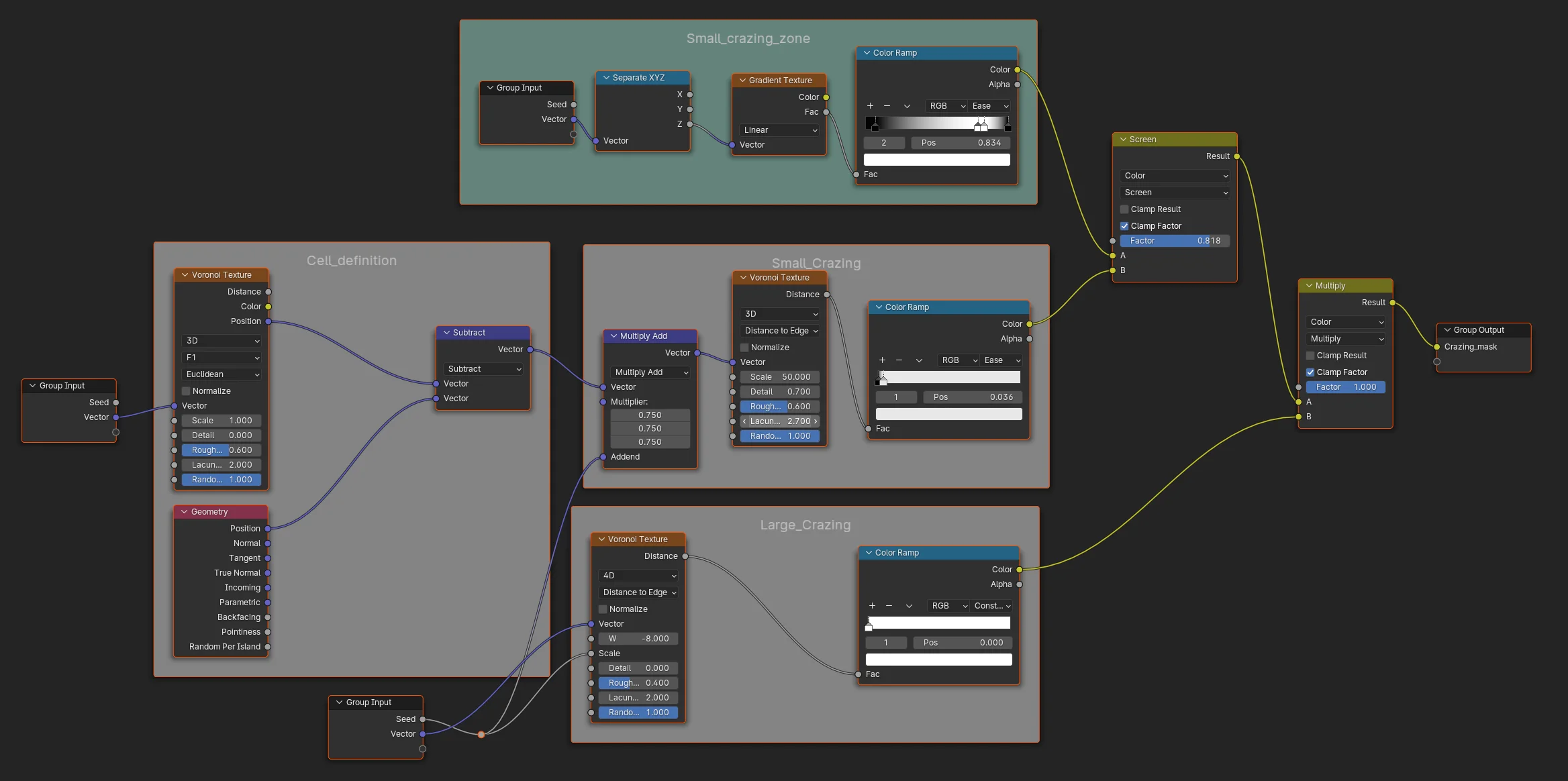
The crazing network relies on making visible the boundaries of a subdivision of large cells filled with smaller ones. The key point is defining the first level of cells. In order to do that, I’m subtracting the coordinates of each point forming the cell from the total geometry. As the data is evaluated for each, it outputs the area of each individual cell. It’s a little mathsy for me, and I’m not certain it works like that under the hood, or if I’m having the correct reasoning. Bottom line is, it seems to work!
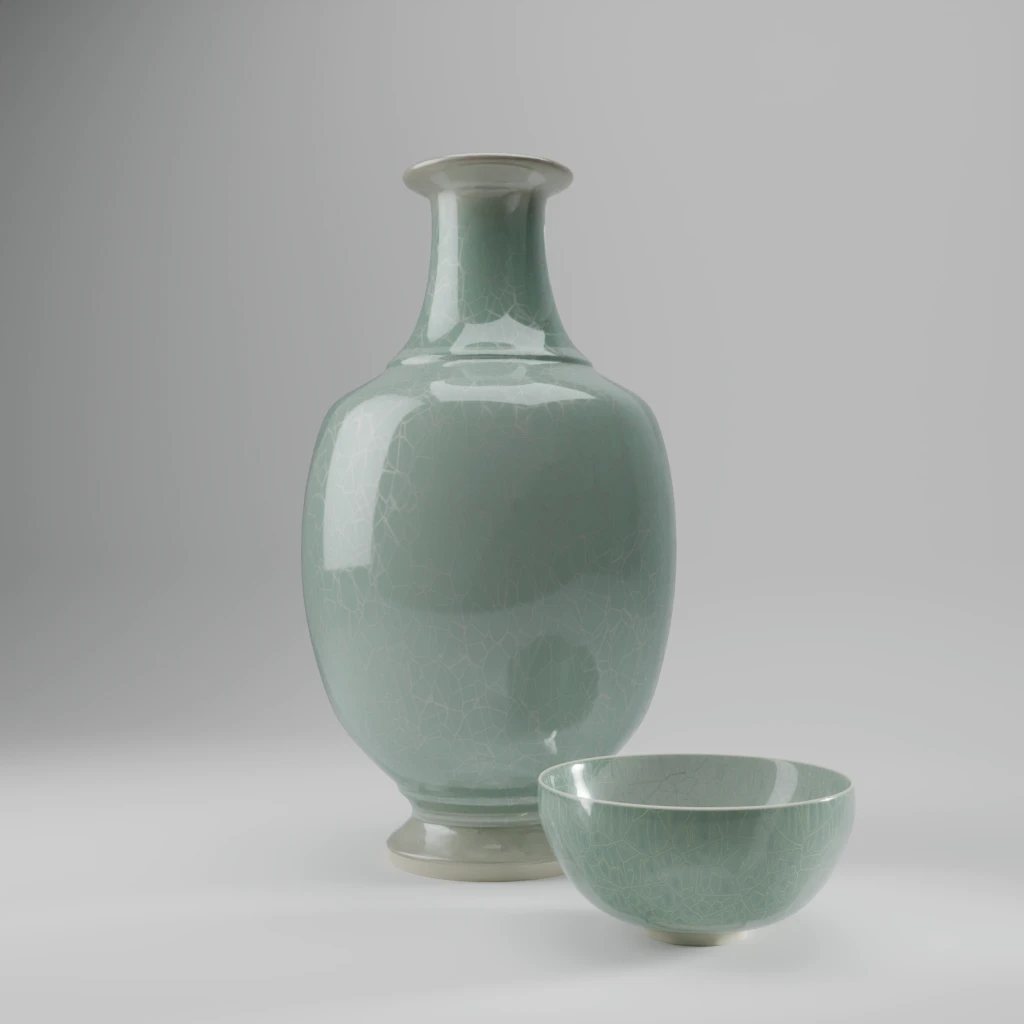
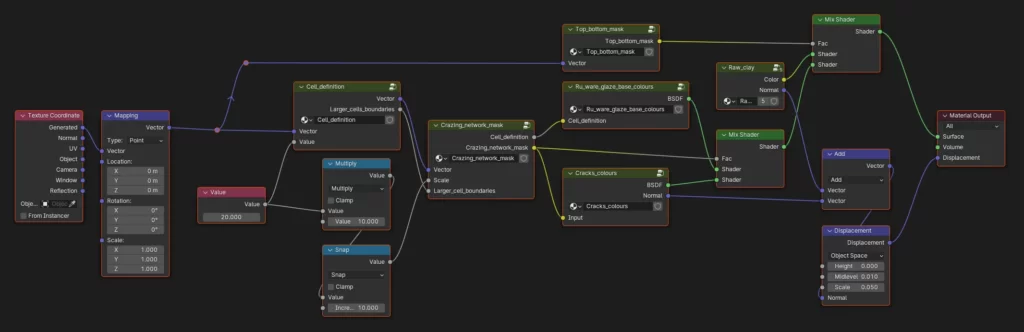
Now, once again, with very little tweaks and a custom lighting system, the texture can be deployed and adapted on almost any shapes.
Guan ware
Material study
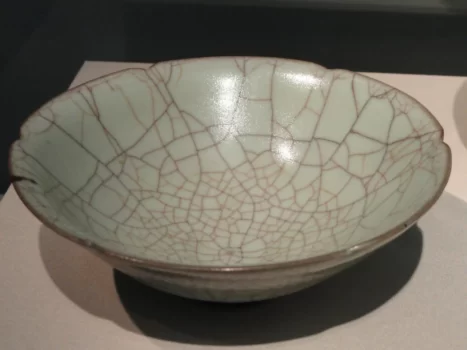
These thin and delicate pots are known for their heavily crackled surface. Crazing can have many networks forming nested cells over the lightly grey-blue tinted hue of the glaze. The crazing networks can have a tint of their own, though that might have been an ulterior addition from zealous collectors.
There is a direct link between Guan ware, produced in or near Hangzhou after the court was forced to flee from the northern palaces in 1127. Access to the Ru and Jun kilns were cut off: Guan ware began as a replacement for the lost productions.
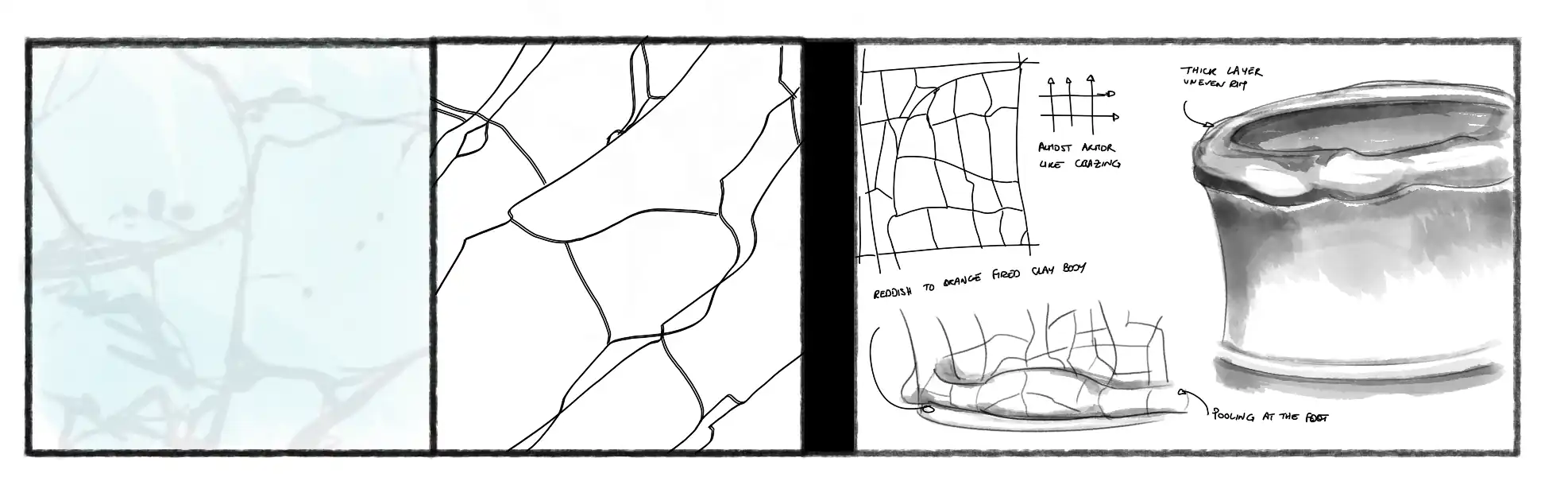
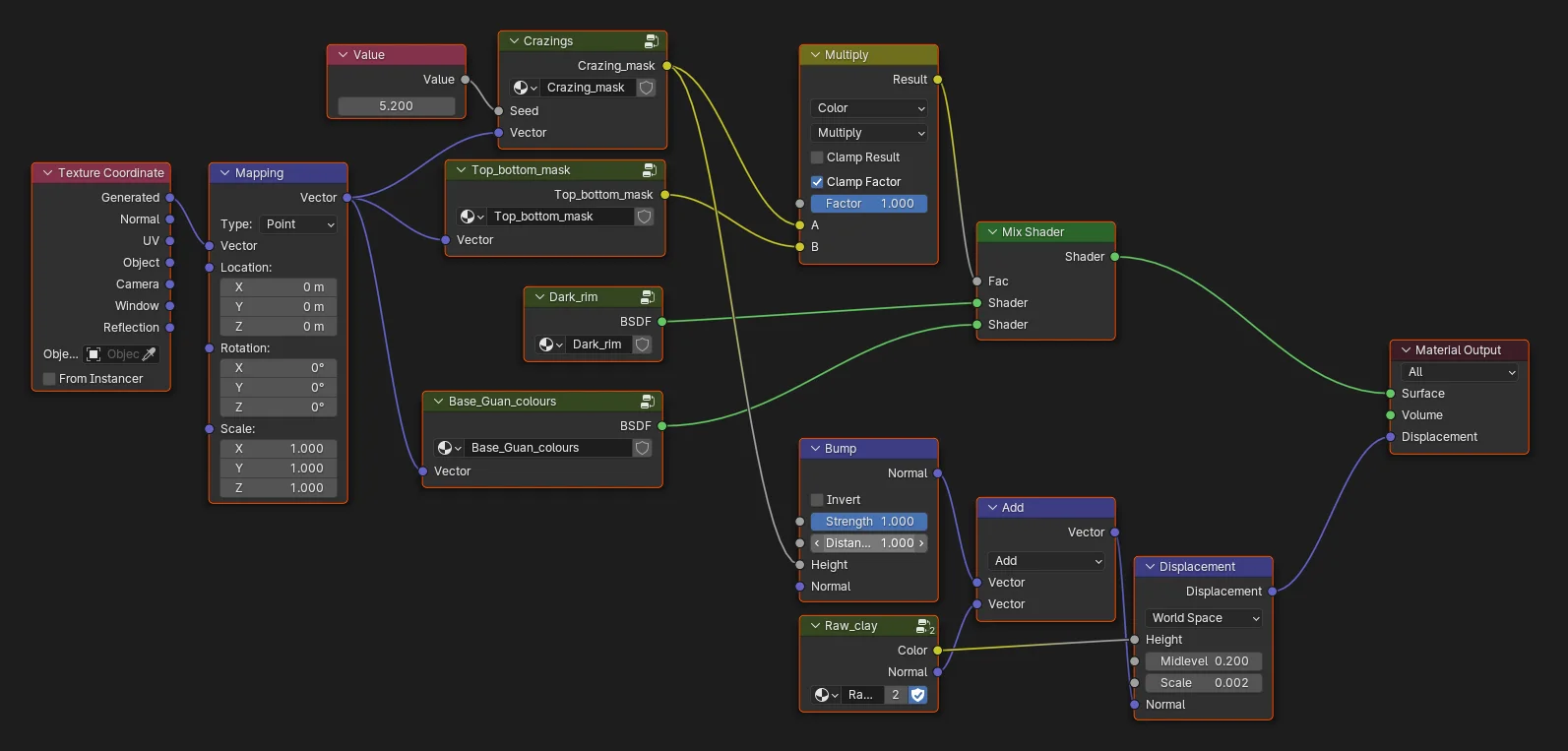
The most difficult part to create this texture is once again to create the crazing networks in the glaze without it being too mechanical in order to keep a coherent look. This part may have been possible in geo nodes. I have chosen to stay in the material perimeter. The bulk of the effect if done using a Voronoi node to define a base cell unit and then filling it with smaller ones.
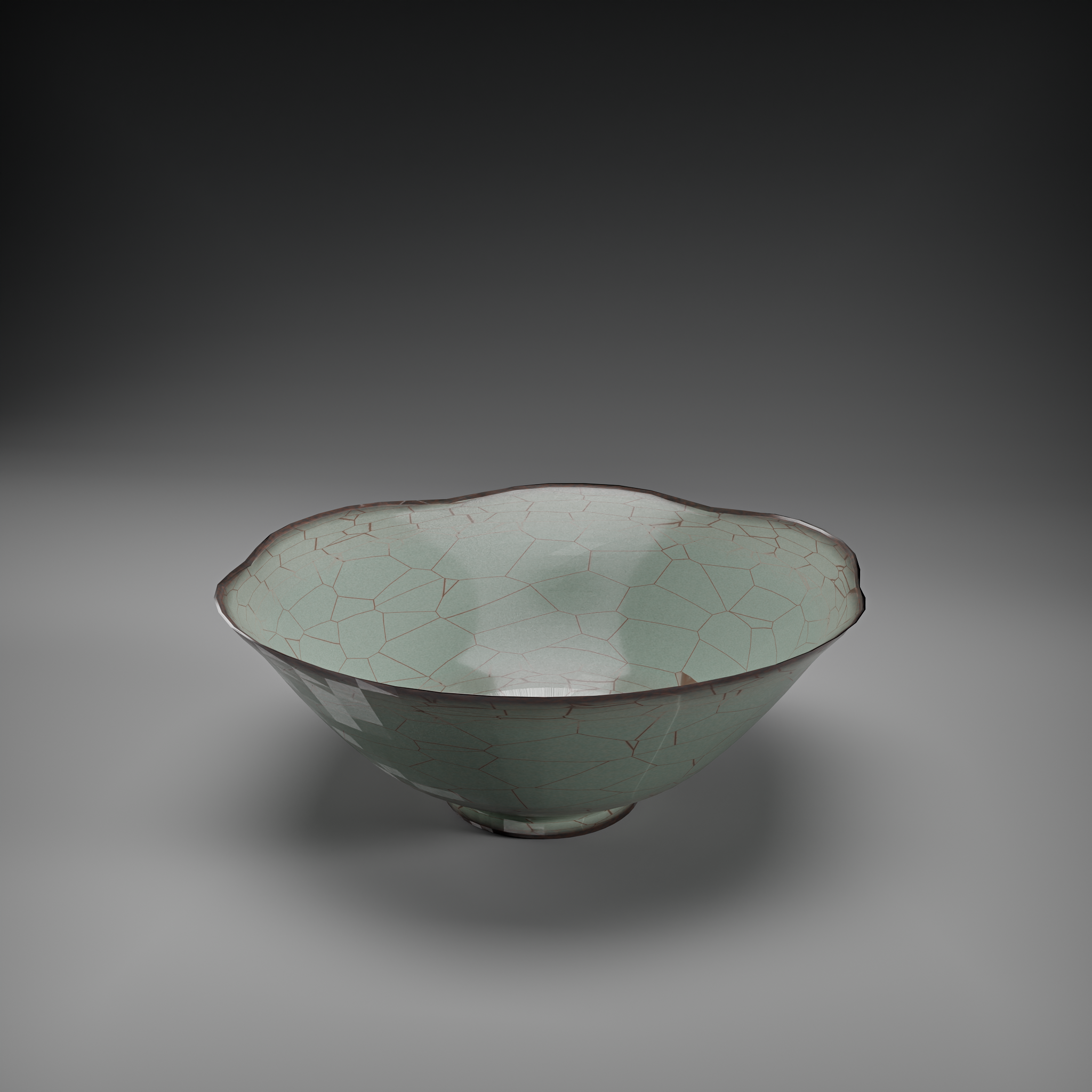
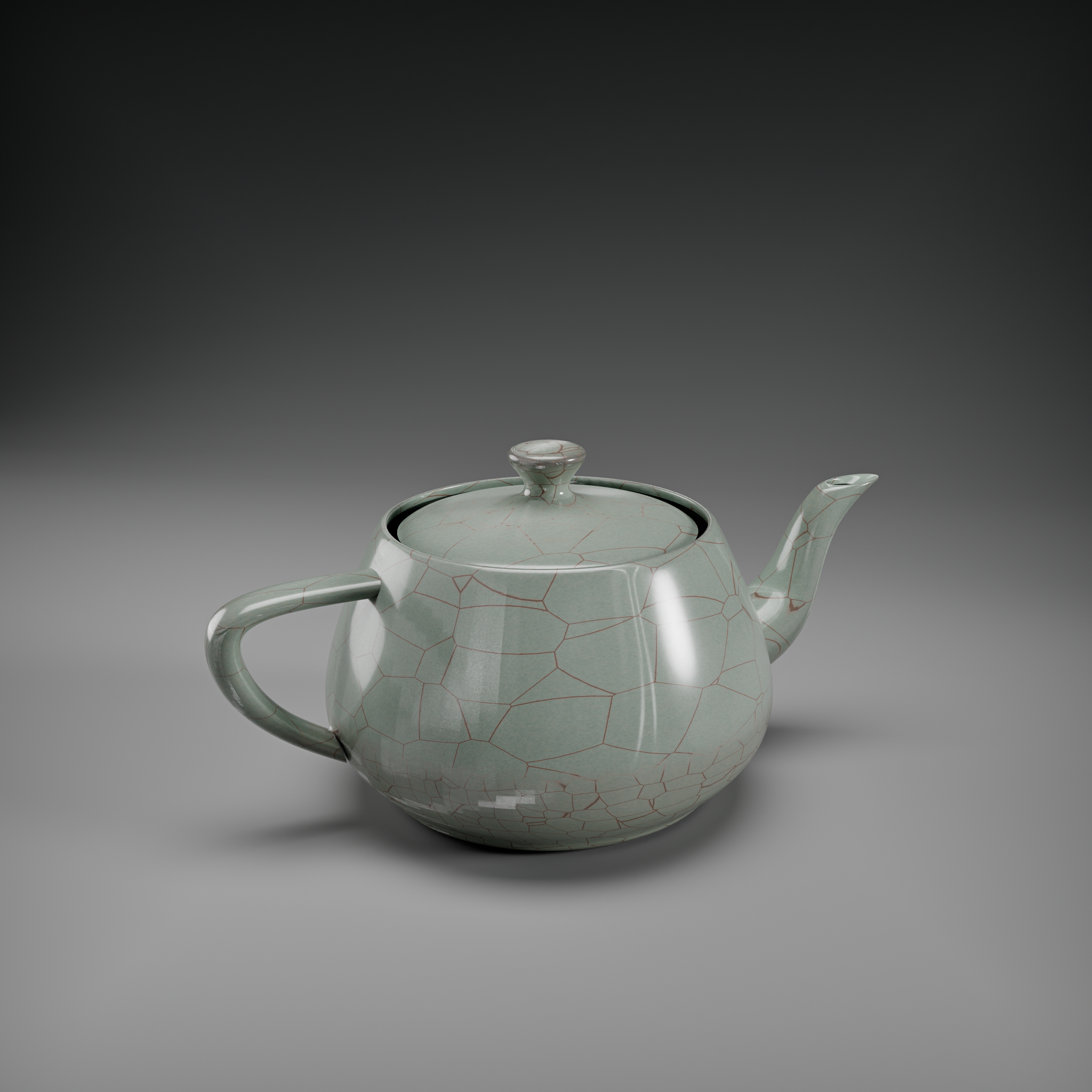
The texture can be deployed and adapted on almost any shapes.
Ding ware
Material study
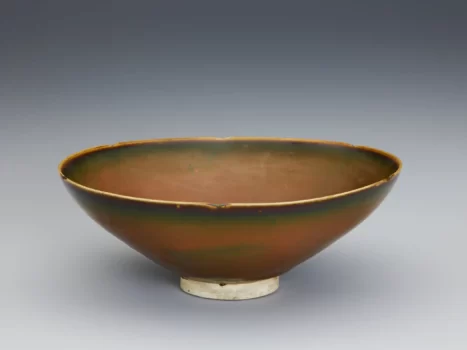
Ding ware usually bear white, creamy, glaze most of the time with fine slip decors on the surface. Of course, I did not select one of those. I’m more interested in the very rare and very elusive “secondary” ware of that production. Those pieces are known almost exclusively by text (Vainker). They have a red-black to golden brown glazes, with no decors. The few surviving pieces are simple, very elegant shapes with relatively thin walls. If I had to guess, I’m thinking these pieces were created to emulate metal work.
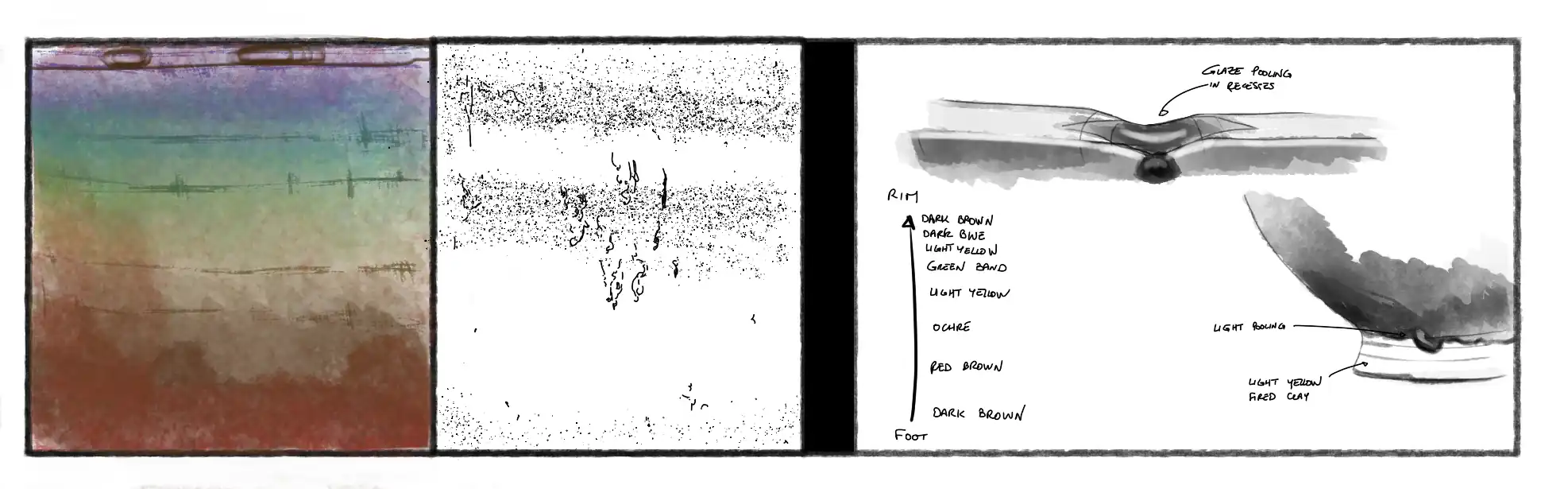
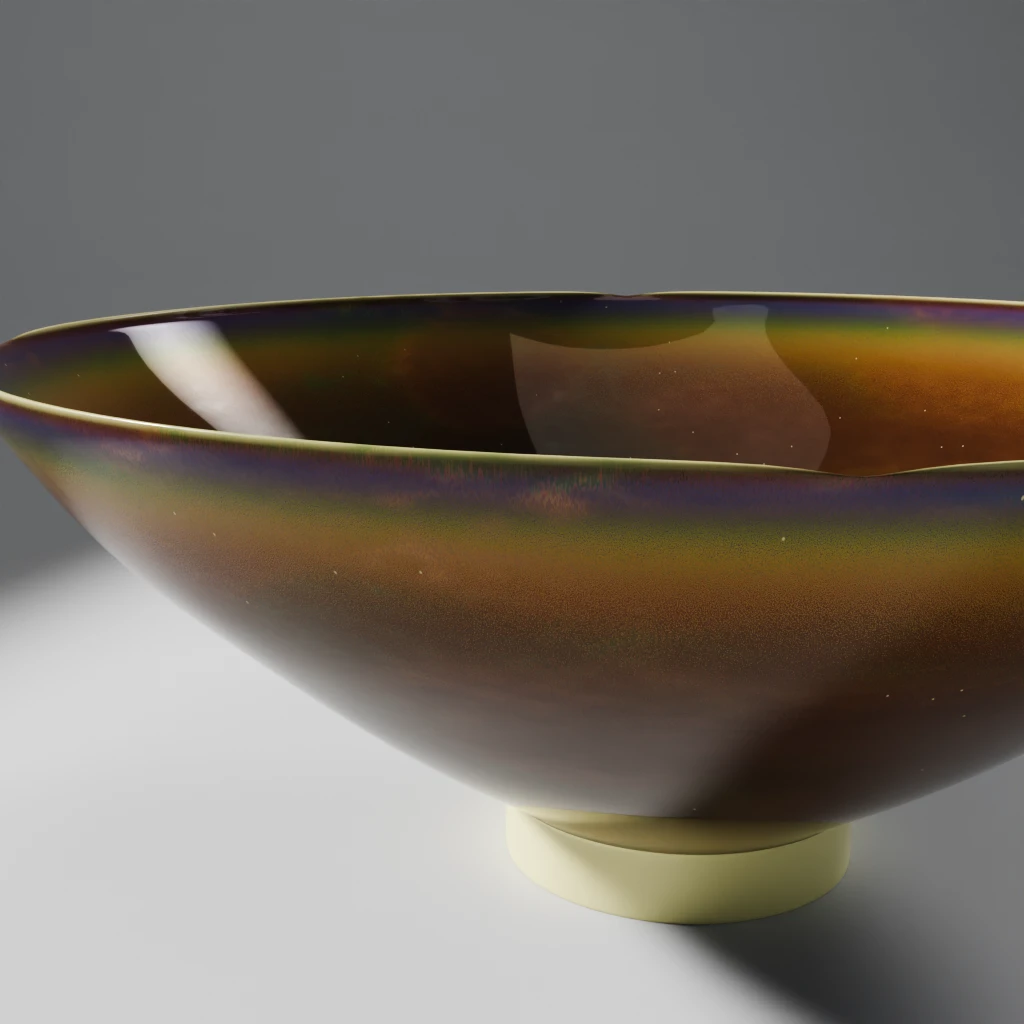
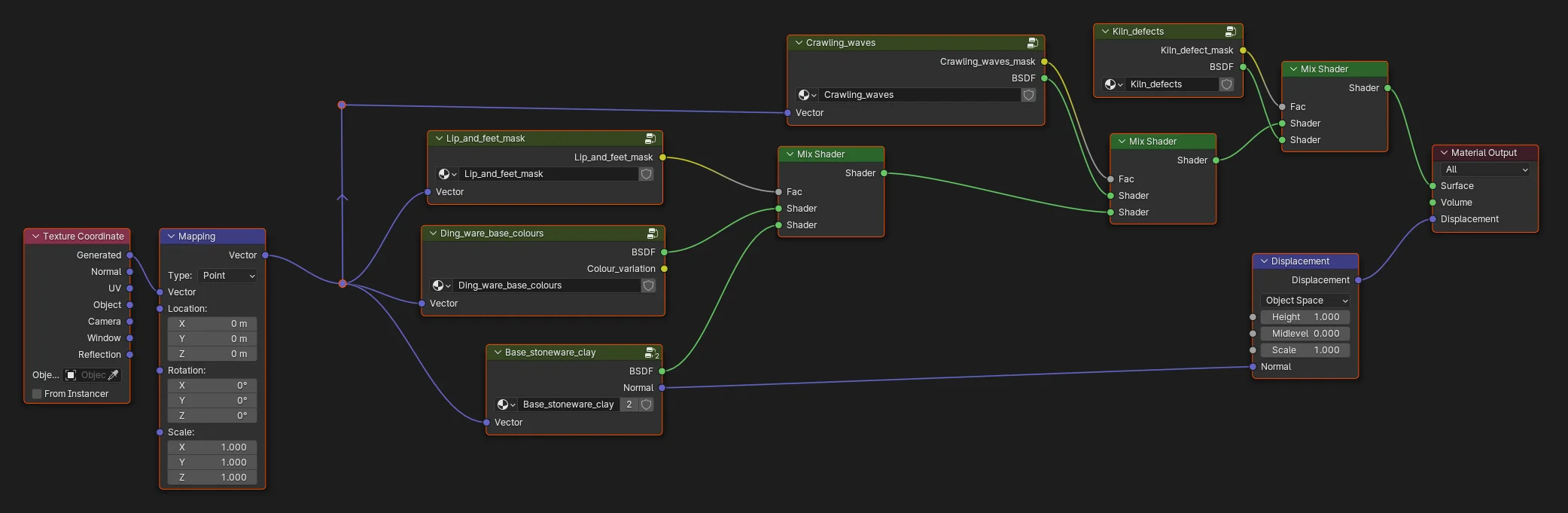
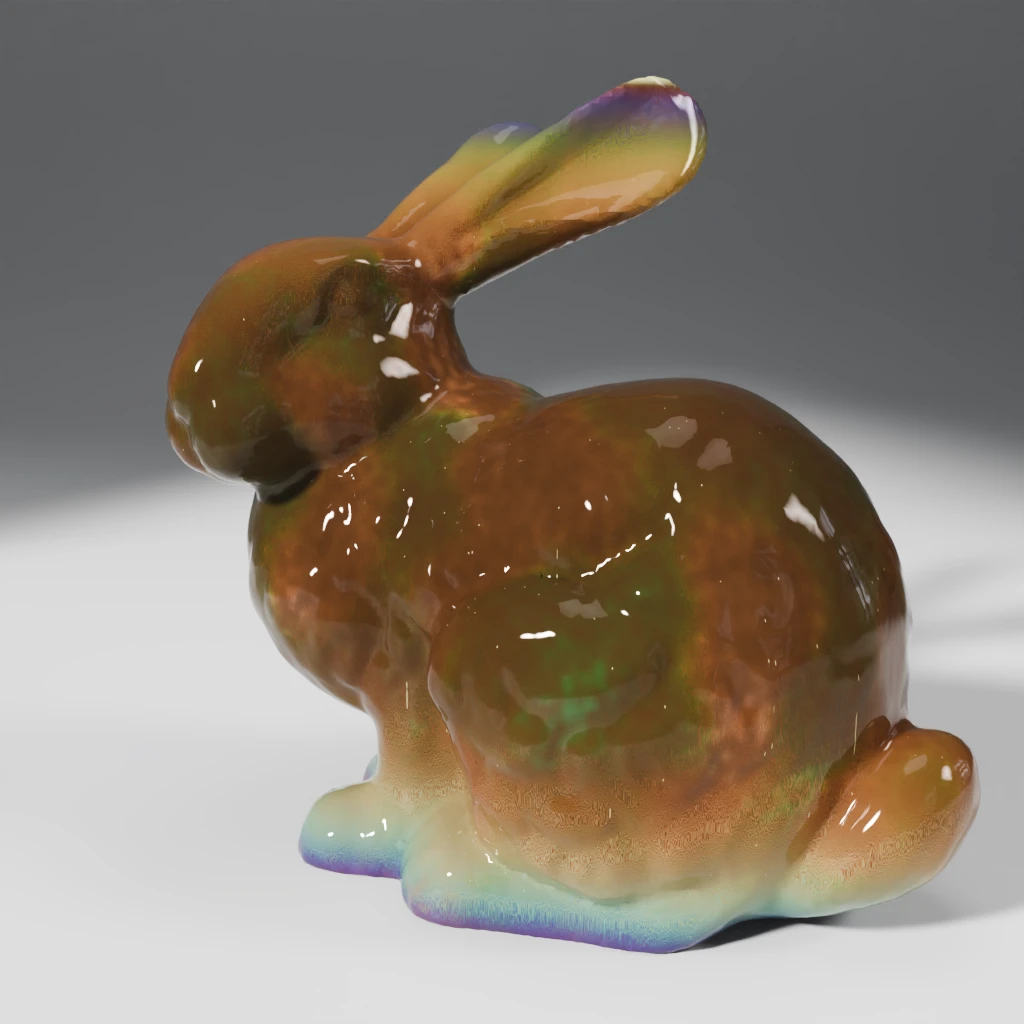
This one was the toughest one to crack. I am not fully satisfied with the results. The almost oily and rainbow-like effect is eluding me so far. I am as well dubious as to the surface reflection results, I’m not sure what the reality is like. I’d like to go and see some of these pieces in real life, some day, and then revisit the project.
Credit
Unless otherwise mentioned, all images credit to LGS.
Bibliography
Krahl, Regina; Harrison-Hall, Jessica (2009). Chinese Ceramics: Highlights of the Sir Percival David Collection. The British Museum Press.
Vainker, S.J., Chinese Pottery and Porcelain, 1991, British Museum Press
Valenstein, S. (1998). A handbook of Chinese ceramics, Metropolitan Museum of Art, New York. ISBN 9780870995149; about Jun kiln , p84 and f.
Rastelli, Sabrina, “The Concept of the Five Famous Wares of the Song Dynasty—A Modern Invention”, 宋代五大名窑科学技术国际学术讨论会论文集, Proceedings of International Symposium on Science and Technology of Five Great Wares of the Song Dynasty, 2016
Rice, P. M. 1987. “Pottery analysis: A sourcebook, second edition”, 2015, Chicago: University of Chicago Press.
Images and references
Bowl (Wan), China, Henan Province, Jin dynasty, 1127-1234, Jun ware, wheel-thrown stoneware with blue glaze and purple splashes, Los Angeles County Museum of Art, Public domain.
Brush Washer, China, Henan Province, Northern Song Dynasty, 960-1127, Ru ware, wheel-thrown stoneware, Cleveland Museum of Art
Bowl, Guan ware, Hangzhou, Zhejiang province, China, Southern Song dynasty, 12th-13th century AD, stoneware with Guan glaze, Freer Gallery of Art, Daderot CC0 via Wikimedia Commons
Bowl with notched rim, Ding ware, Hebei province, China, Northern Song dynasty, 11th-early 12th century AD, porcelain with iron glaze, Freer Gallery of Art, Smithsonian Museum
The Stanford bunny, available on the Stanford 3D scanning repository
Blender add-on
Node screen print add-on, PrintNodes, works on Blender 4.1.
Contact
If any of you, dear reader, want to further the conversation, you can do so on Mastodon or Pixelfed.