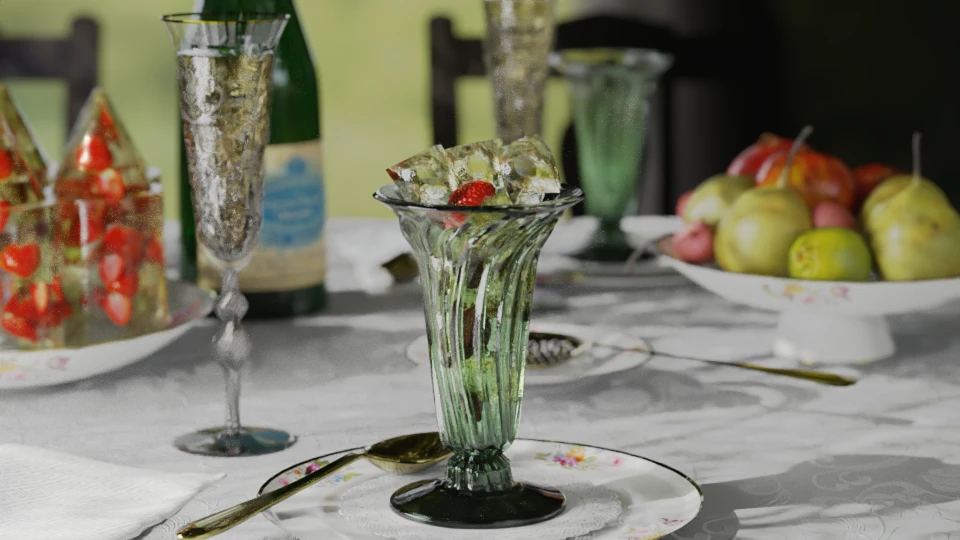
Crystal and a calf’s feet
The following texts and images are the results of a training exercise to go from the pictures or the description of an artifact to the creation of a 3D digital double, sometimes restored version of it. If you wish to know more about the process, every explanations are in A journey into learning a (3D!) restoration process workflow article.
This time, we have a go at a playing with crystal and a little bit of kitchen magic.
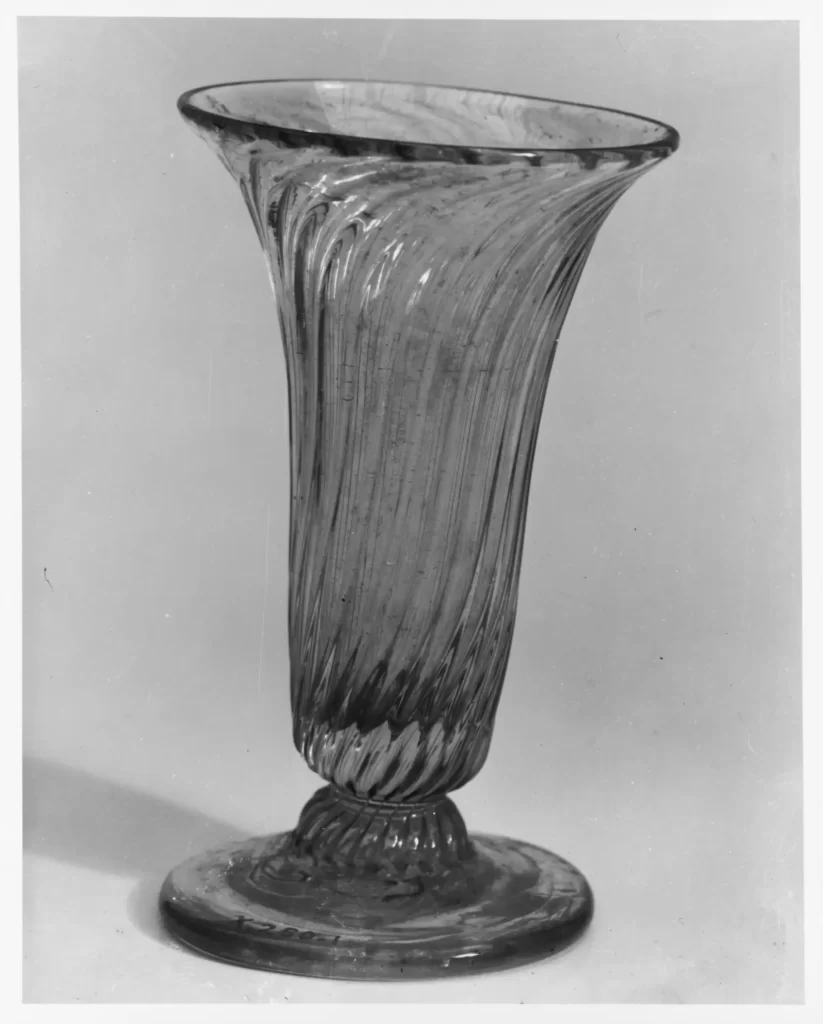
Title: Jelly Glass, Metropolitan museum, INV n°X.2
Datation: 1785–1825
Provenance: Possibly made in England; Possibly made in United States
Dimensions: H. 10.2 cm
Media: Blown pattern-molded glass
Description and Historical context
As the Metropolitan Museum of Art puts it, the turn of the XIXth century in England is the apex of the “Industrial Revolution”, “the period of transition from manual to mechanical labour”.
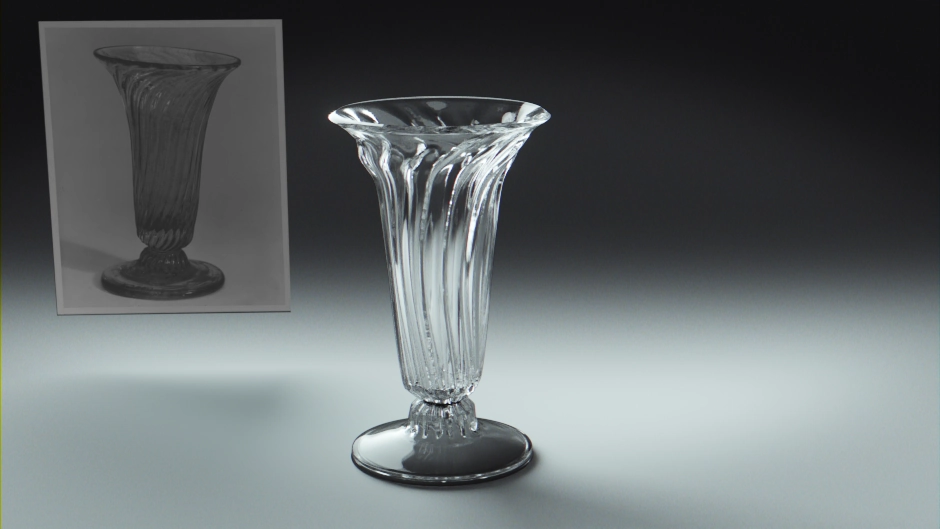
This glass is most certainly partly moulded then twisted as a finish. This texture of ribbed glass on a high rimmed glass is common in jelly glasses in the last part of the XVIIIth century, like this almost identical example from the Victoria and Albert museum in London.
As to why these vessels are particularly good for jelly, let’s hear the conclusions of Mrs Isabella Beeton, renown since 1861 for her compilation of English recipes and culinary practices in the “Book of Household Management” (p.986).
“Jellies may be described as solutions of gelatine in water, with wine, fruit, and other additions, and their clear, brilliant transparency one of their chief recommendations. However, jellies of this class do not comprise the whole list, for in addition there are the opaque nourishing milk and egg jellies, and also those made of apples and other fruit. Calf’s foot jelly, which is stiffened by the gelatine extracted from the feet by boiling, has the advantage of being perfectly pure, but it is not more nourishing than the jelly made from bought gelatine. When nourishing jelly is required, it is better made from good veal stock. For ordinary garnishing and masking purposes, jelly made from leaf gelatine is more frequently employed than that made from meat. A plain lemon jelly answers admirably for coating the moulds for creams; and variously coloured and flavoured, it forms the basis of many other jellies. By adding a little gold and silver leaf or a few drops of yellow, red, or green vegetable colouring matter, considerable variety may be introduced at small cost. Pleasing effects may be produced by filling the projecting divisions of a mould with gold, silver, or coloured jelly, and the body of the mould with jelly that differs either in colour or character. Of course the colours must be blended artistically; bright-coloured creams, like strawberry, should be very simply decorated; and the creamy- white of the almond or the delicate green of the pistachio nut, imbedded in the amber-hued jelly with which the mould is lined, contrast favourably with chocolate, as also does finely flaked gold leaf…”
p988
“..Sweets of this description are usually garnished with a macédoine of fruit, whipped cream, or jelly. As a rule the jelly is chopped, and the more coarsely the better is the effect, for large pieces reflect the light, whereas finely-chopped jelly has a slightly opaque appearance…”
So, it’s, well, for show ! The height allows displaying all the layers and the elements the jelly contains.
Because, you know I care for you, dear reader, here’s the lady’s recipe for Champagne Jelly (“Gelée au vin de champagne”).
p992
“Ingredients. — 1 pint of water [0.5 L], 1/4 of a pint of champagne, 1/4 [140 ml] of a pint of sherry, 6 ozs. [150 g] of loaf sugar, 1 and 1/4 ozs. [25g] of gelatine, the juice and finely-cut rind of 1 lemon, the juice and finely-cut rind of 1 small orange, 2 cloves, 1 inch [2.5cm] of cinnamon, the white and shell of 2 eggs.
Method. — Put all these ingredients into a stewpan, and bring to the boil, stirring meanwhile. Simmer for about 10 minutes, strain through a hot jelly-bag or cloth, and pour into a wetted mould. When firm, turn out […]
Time. — About 40 minutes…”
Yes. Eggshells. It seems the calcium it contains act as an activator and reinforces the action of the gelatin, but don’t take my word for it !
Visible condition report
Beside being not so clean, as far as the only reference we have goes, the glass doesn’t seem to have withstood any particular damages.
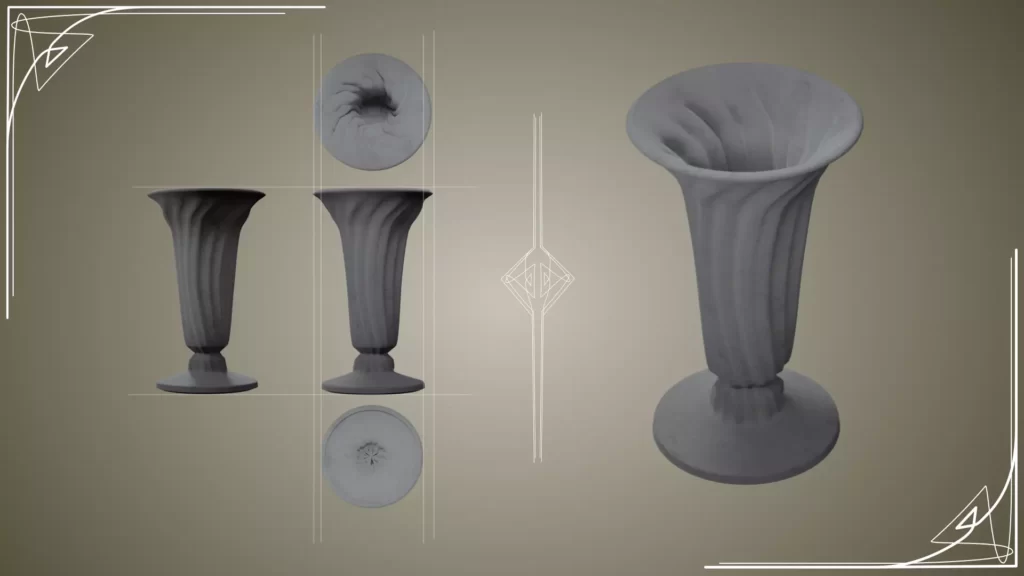
The trick will be to mimic the grooves and the ribs. They show with a specific torsion pattern that isn’t fully linear. That is to say, it is compressed at the rim and the foot, where the torsion effect is also more pronounced.
There are a few gas bubbles trapped in the material, increasing in numbers at the torsion points and the extremities.
Creation of a 3D model of the piece
Disclaimer : this is an exercise, shown for documentation purposes only
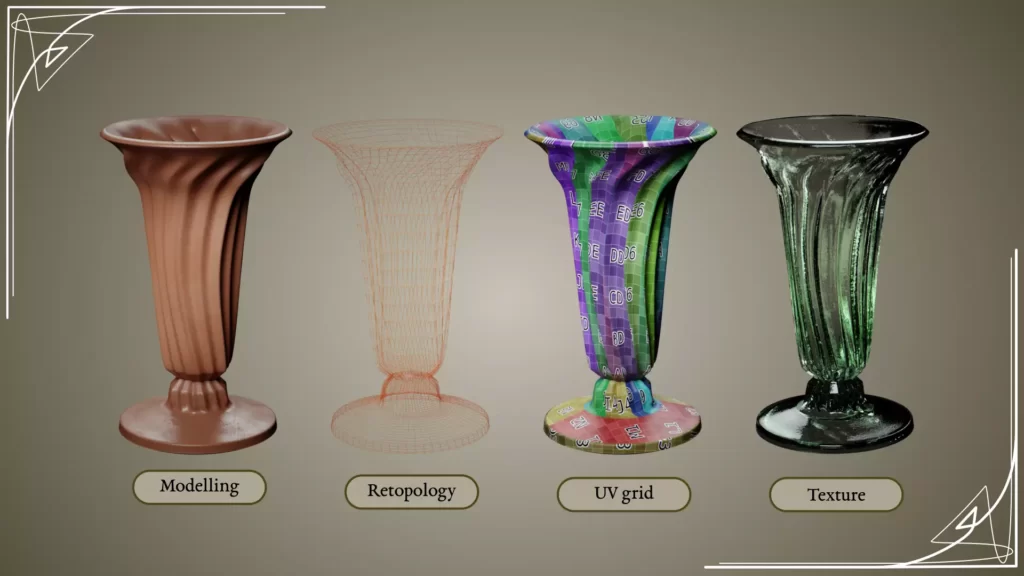
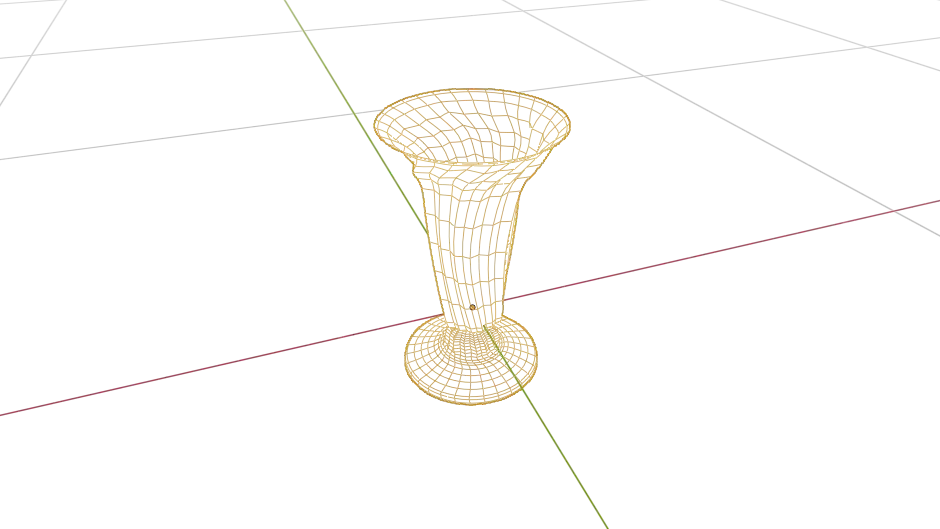
Model the shape
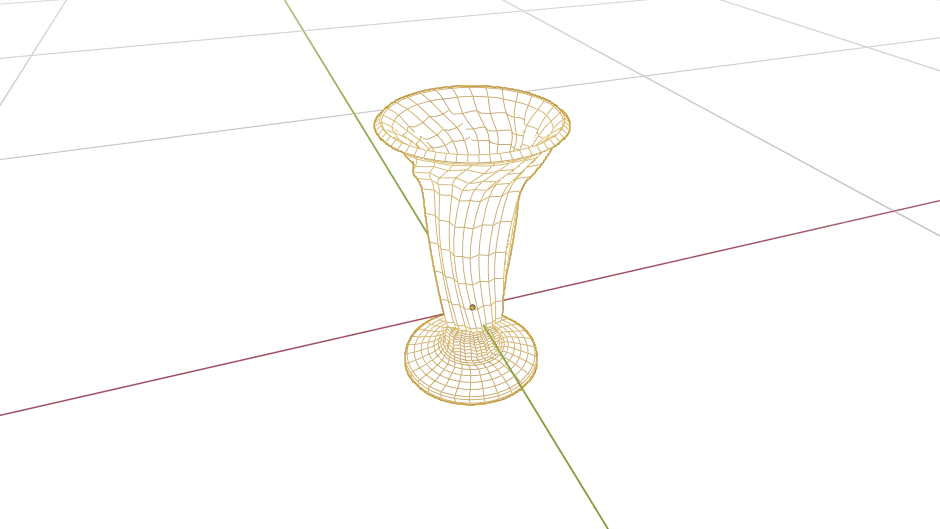
The basic silhouette of the shape is relatively straightforward. A simple deformed cylinder will do the trick. Add a sub-surface modifier and a solidify one to deal with the thickness, turn the vertices on the z axis for the ribbed part to get the torsion flow, and we’re done.
Texture the shape
From the quick condition assessment, we know we somehow need some bubbles in the material.
But what about the colour ?
The reference we have is a black and white image.
It seems quite normal to us that the glass is clear. But this is a (roughly) 1800s piece. There is a strong possibility that there is actually a tint to it, as in the aforementioned example. The most common would be green or aquamarine, because it stems from the almost ever present iron in the sand used to create the glass mix. A pinkish undertone or amethyst is also frequent. Don’t get me wrong, at the time, glassmakers have long known how to make clear. But it requires a special quality of sand, limited to specific sources. As with all things rare, it is a pricey commodity ! In the hypothesis of a USA made product, compound sand used to create clear glass is imported from Europe.
We also have to keep in mind that a perfect hostess have to have at least 6 pieces of the same glass to serve her guests with. This is a refined piece, but not as elegant and thin as others of the same era. My take on this is that it probably is a middle class market piece from a set. So, in order to cut production costs, the clear glass may have been the first element to go !
Therefore, I choose to add a light green tint to it to illustrate that fact. This is a choice, more than an educated guess. Only people having seen the actual piece and/or know its whole story will know the truth. I might be completely wrong.
After a few failed attempts, here’s a first result of a glass like material. It is almost fully procedural. I am using a normal map for the bubbles, just because it is easier and faster for me on this project.
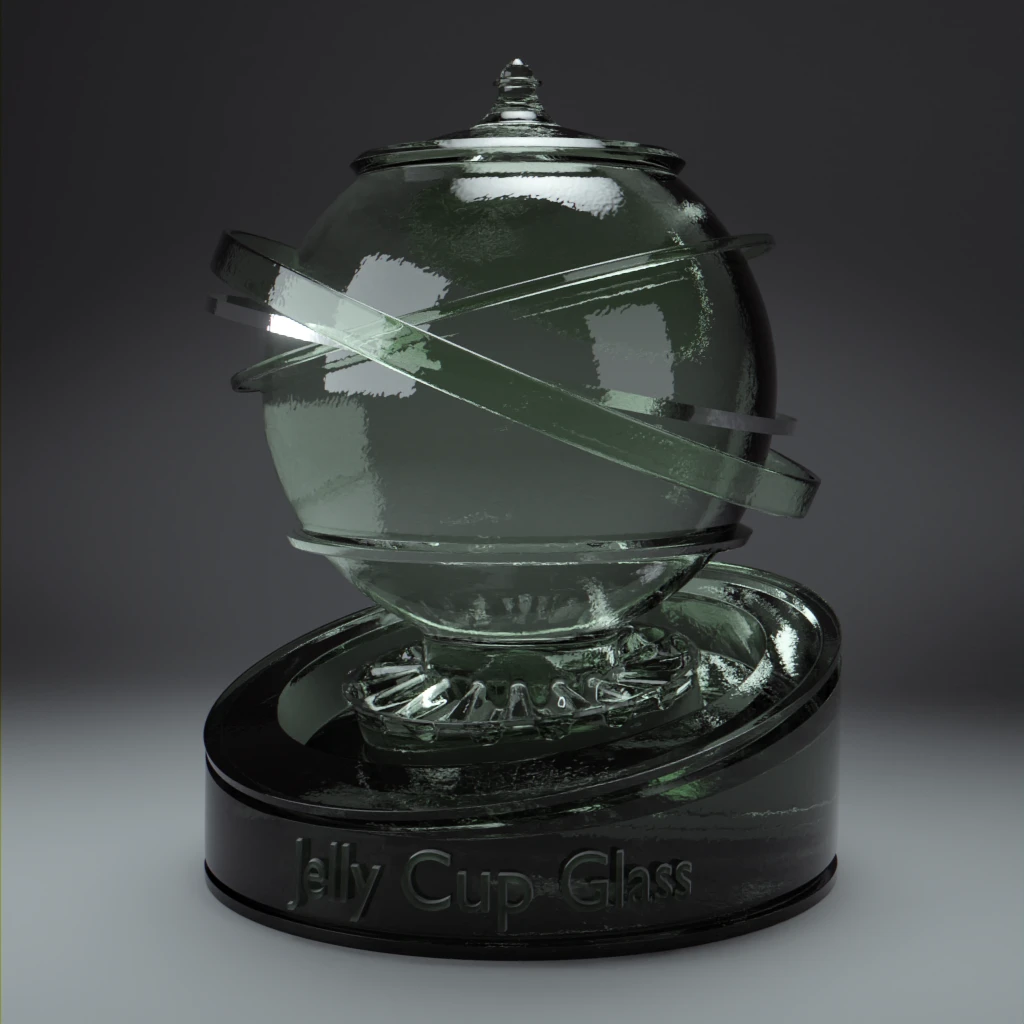
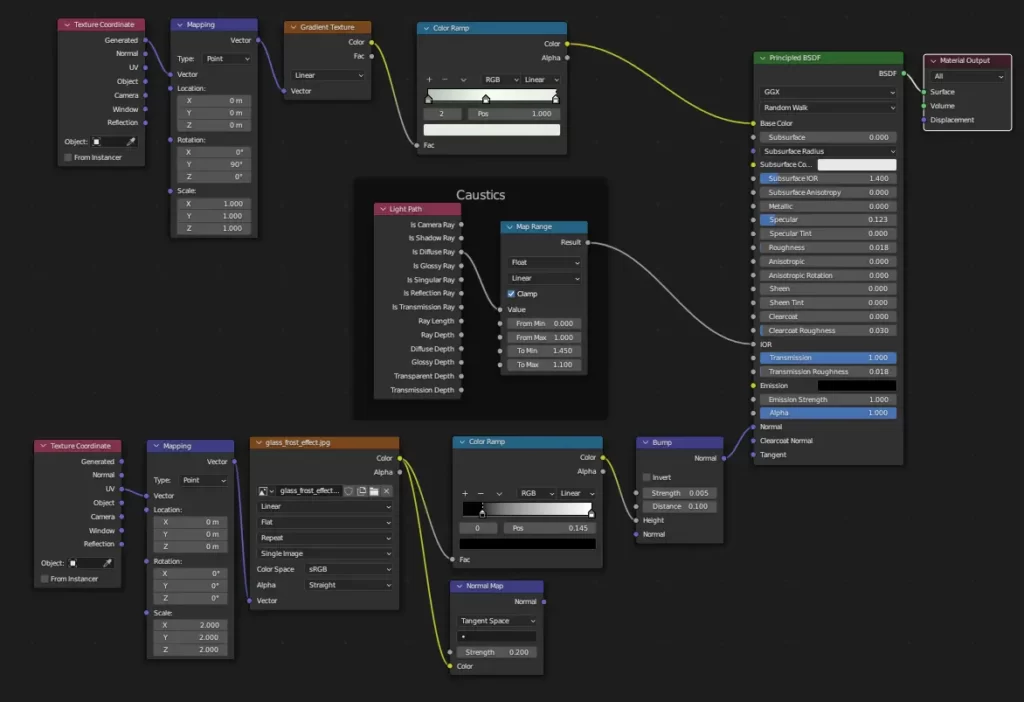
This version is okay, but there is something missing. The transparency is not fully there as I want it to be. I think it is because the light refraction is too soft. Let’s try to fix that !
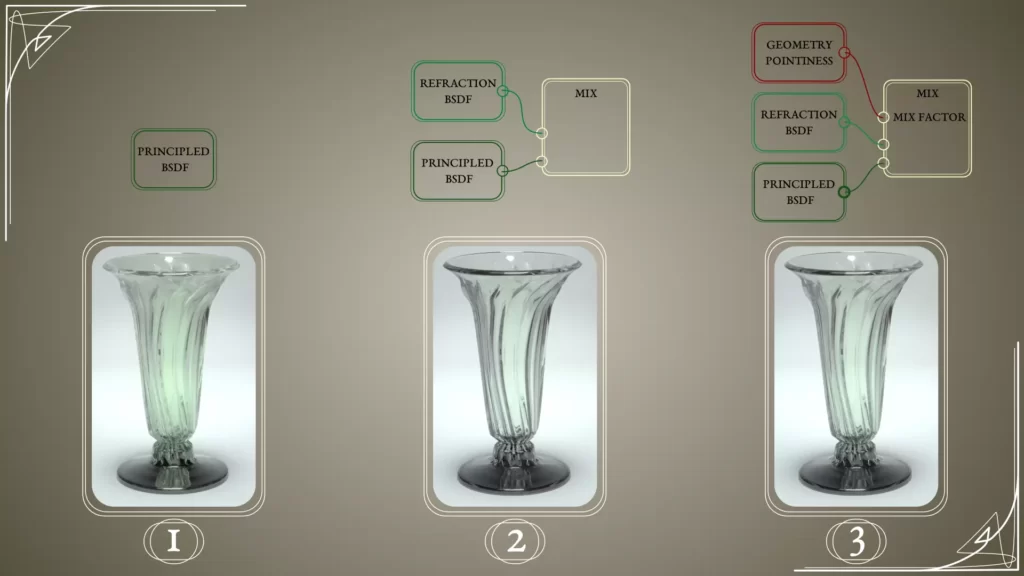
I think that using a refraction node mixed with the principled BSDF one gives too hard a result. After testing a few options, I found I liked it better when modulated using the pointiness output of the geometry node. Here’s the final effect : it is a little too clear, but this will be adjusted on the piece itself.
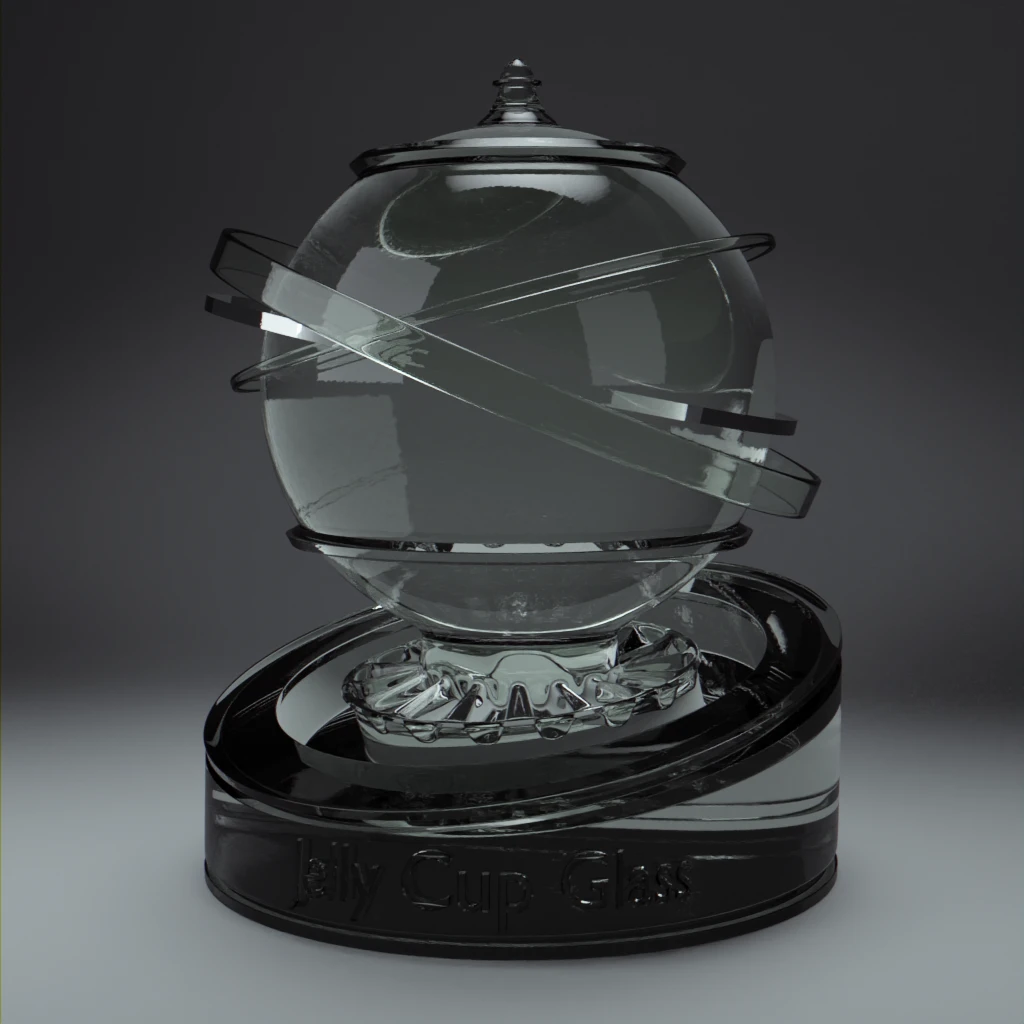
Shine a little light: stills renders using blender
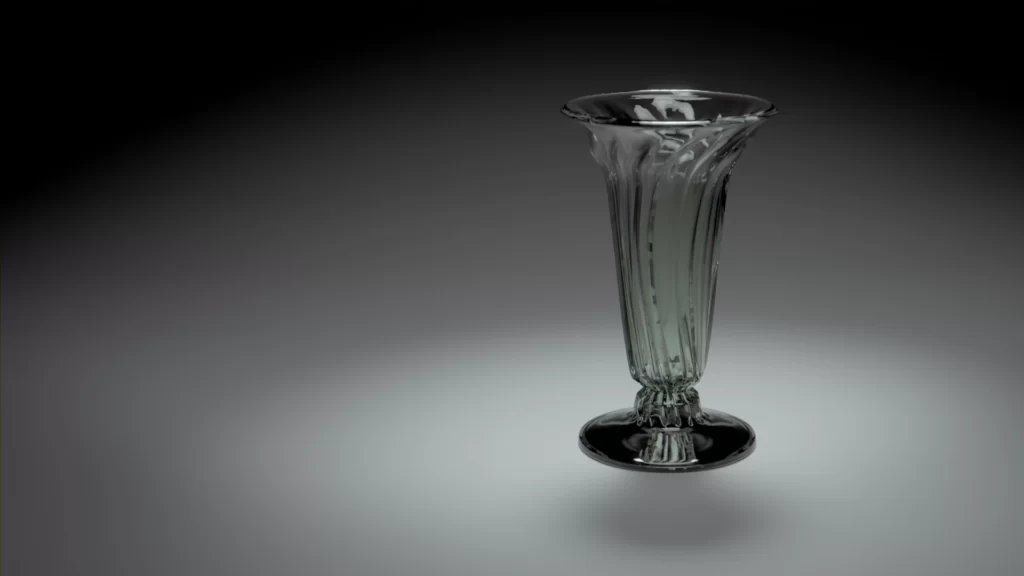
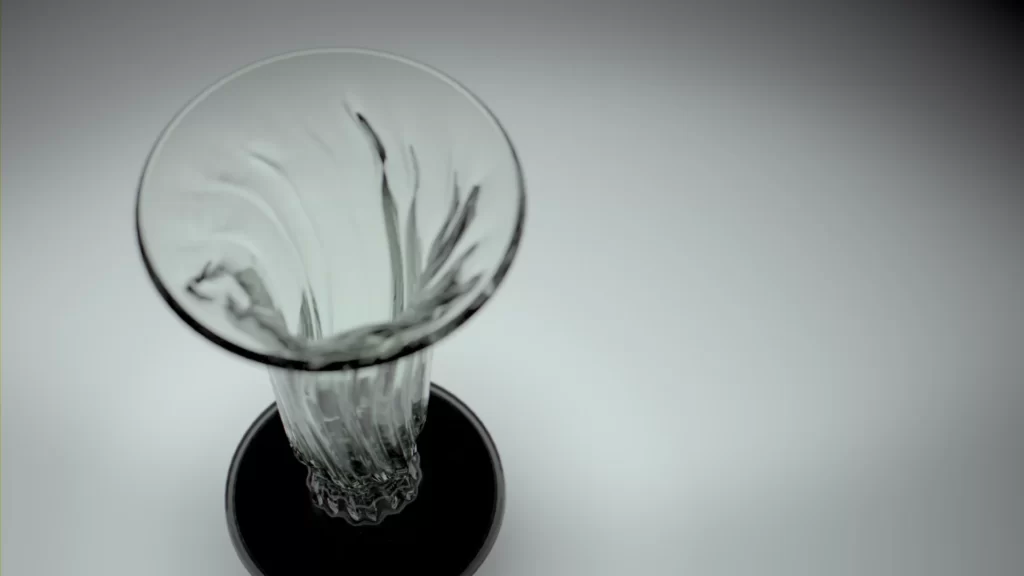
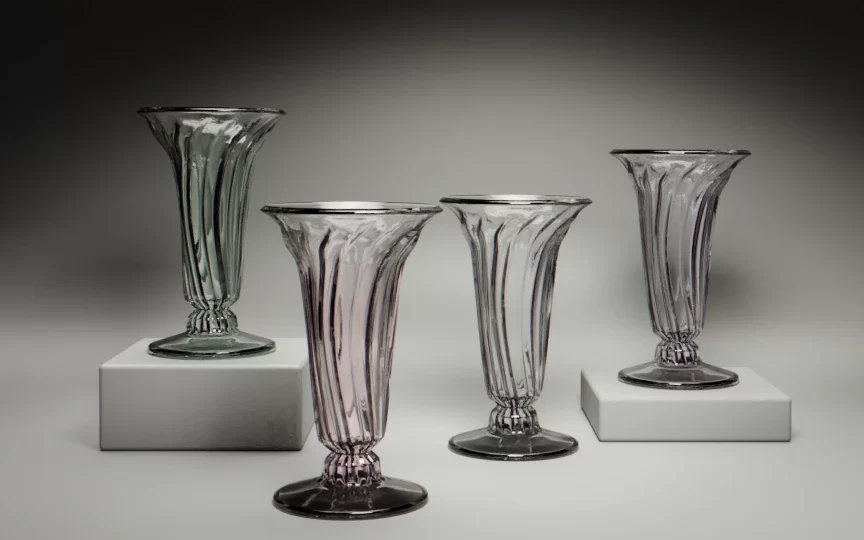
Now, let’s mix shape and material together. For added cheekiness, because it is just a colour choice away, let’s also try and see what other colours would look like.
Now, let’s mix shape and material together. For added cheekiness, because it is just a colour choice away, let’s also try and see what other colours would look like.
Interactive rendering
All hands on code: glass, colour and normals
Aaah, glass material in webGL. A treat.
Actually, this model was not the most difficult once I accepted the fact that there would have to be limitations to what is now possible for me to do and stick to the “official” examples.
One of the most -weird- issue was to try to have a satisfying colour rendering. I’m not certain what happened and if it is linked to the colour management in three.js. My guess is part of the problem is also that my 3DWeb viewer doesn’t allow for a background image, i.e. the transparency has nothing for the eye to evaluate against. This is one of the known limitation of this system: it is light, but there are limits added to the three.js limits. I suppose that it is also why, in this case, the transparency is not effective on the glass: if you tilt the glass, you’ll notice that you can’t see the rest of it.
The only map needed is the normal map (remember the bubbles !). The rest is coded.
Note: yes, it must be possible to create a texture for the bubbles in a WebGL shader. There is also no way I could have achieved it in a decent amount of time, so we stick with the basics !
The same way, I could have tried a coded shader for the glass material itself, following the key points of this thick glass with floating-point texture. Someday, I will. Someday I will open the book of shaders and manage to go beyond the “getting started” part. Someday.
Glass, code lines and headaches.
Here are the most relevant lines of codes behind the materials of the model in the web viewer. Remember that I’m working with a JSON file to feed the model to the viewer, so the syntax is irrelevant here. Just gather the information you require from it !
"textures" : {
	"roughnessMap":"/assets/models/jellyglass/textures/jelly_cup_norm.webp"
},
"values" : {
"normalScale": [0.5, 0.5],
"roughness": 0,
"metalness": 0,
"transmission": 1,
"thickness" : 0.01,
"opacity": 0.02,
"ior":1.9,
"specularIntensity": 0.8,
"specularColor": "#254028",
"reflectivity": 1,
"envMapIntensity": 1.5,

"needsUpdate" : true

},
"modules" : {
"side": "DoubleSide",
"envMap": "hdrEquirect"
}
3D view
You can learn more about the 3D web viewer in this article.
Disclaimer : technical limitation to material render in web app can let artefacts and scintillations show, particularly in zoomed views.
This link will get you to the full view (this will open a new tab in your browser).
Bonus level : We need dessert !
Now, this is all well and good, but I’m now finding myself craving a dessert. We need a context for this piece: how about making it a sugary one ?
Think about a refreshing pudding, al fresco, under a pergola, on a delightful afternoon at the beginning of summer…