

Snakes and Falcons
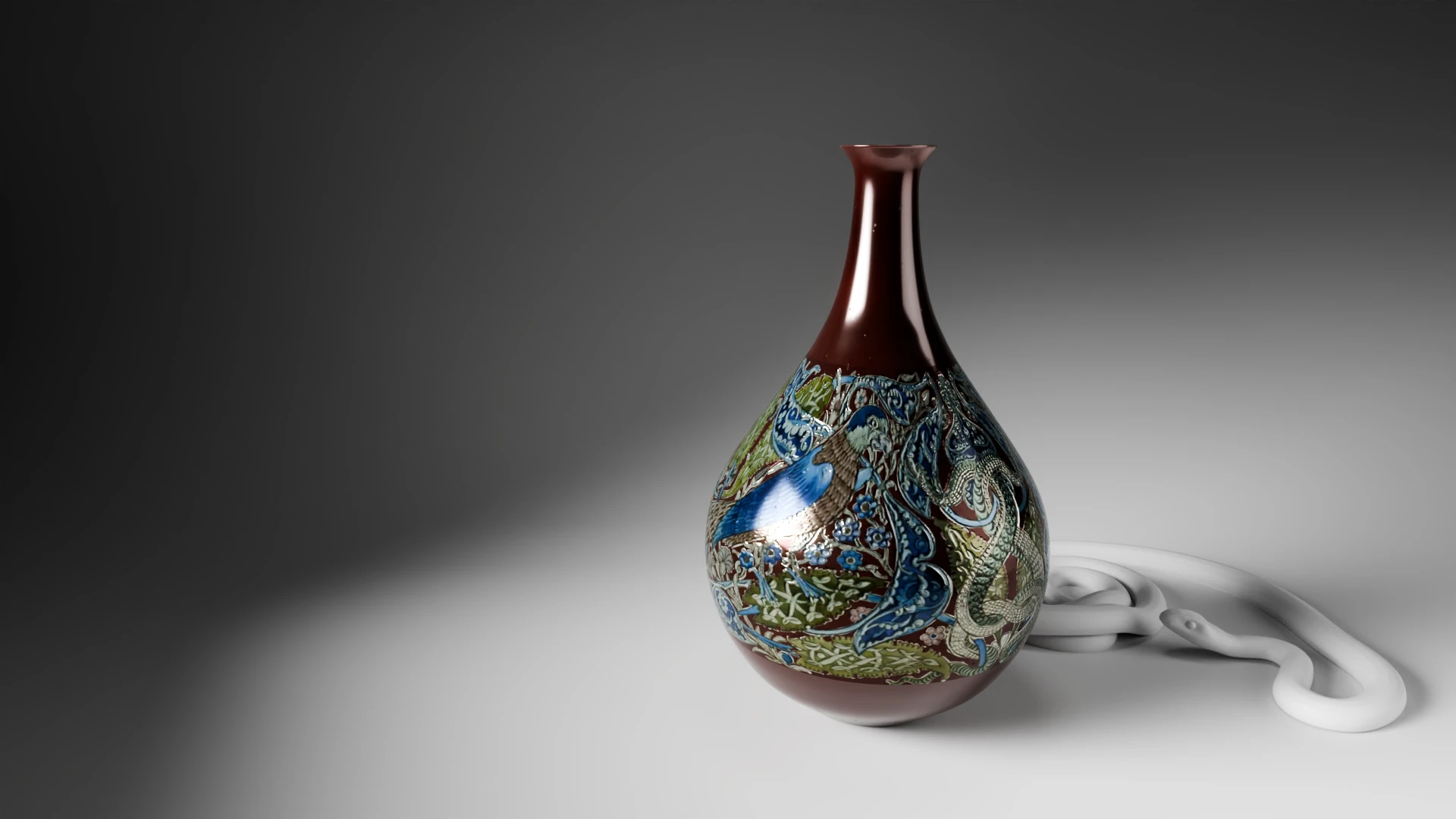
The following texts and images are the results of a training exercise to go from the pictures or the description of an artefact to the creation of a 3D digital double, sometimes restored version of it. If you wish to know more about the process, explanations are in A journey into learning a (3D!) restoration process workflow article.
I like ceramics. I like animals. In that regard, I have a fondness for the work of William de Morgan, a 19th century potter that mixes both to an extraordinary extent. Moreover, a very large corpus of his sketches are easily available as references. Because these pieces are now lost or were never made, I thought it could be a good exercise to try to make a digital version of the one I liked the most.
Yes, yes, this is probably going to turn into a series.
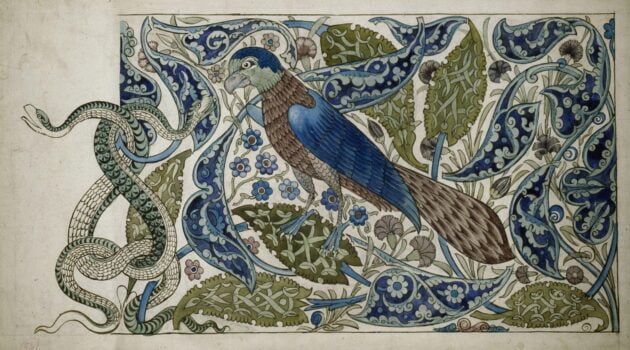
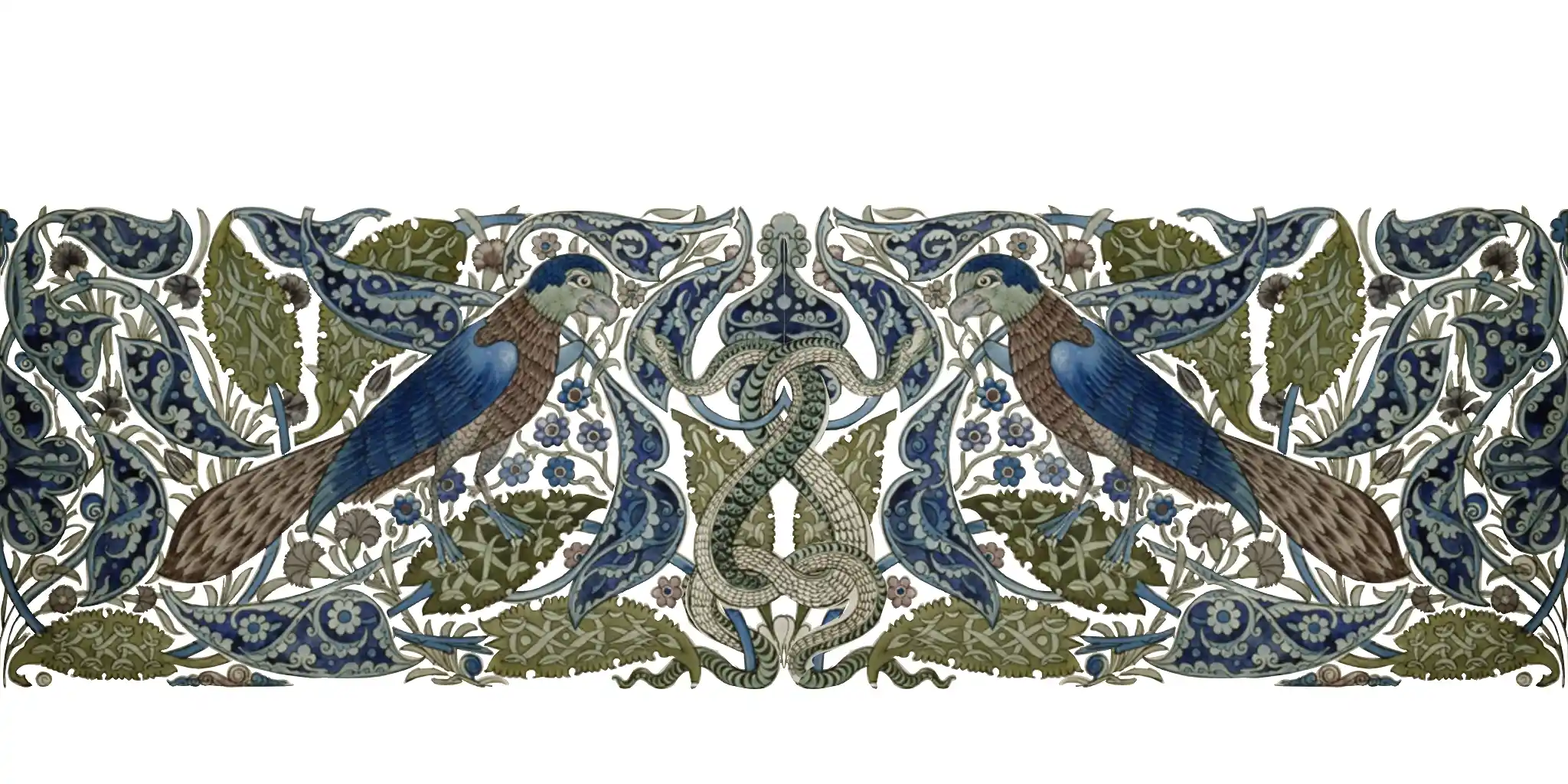
Title: Falcon, snakes and leaves (Design for decoration and ornament for pottery and tile work)
Artist: William de Morgan
Datation: late 19th
Provenance: England
Dimensions: 50×90.5 cm
Source image: E.428-1917, Victoria and Albert Museum
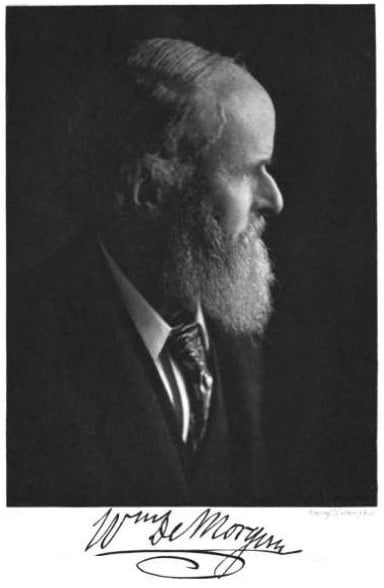
William de Morgan (1839 – 1917)
Your regular polymath
Among other things, William de Morgan was an English potter, inspired both by nature, arts from all around the globe and new techniques. His ties to Morris and Co and the Pre-raphaelite movement, concur to making him a figure of the arts and crafts movement that eventually lead to the Art Nouveau style.
De Morgan was keen on using many references, notably medieval Europe and the Islamic world, as well as experimenting with new and old techniques. His work with the centuries old yet tricky lusterware is well known – a type of ceramic treated to look like metal with a distinctive iridescence-. He even designed his own kilns ! How cool is that ?
Intricacies and delicate hues
The model I chose comes from the corpus of sketches and drafts given to the Victoria and Albert Museum by de Morgan’s widow, artist Evelyn de Morgan.
I think it was probably intended as a symmetric panel piece, with a very distinctive reference to Islamic art both in subject and style. The motifs are intricately woven together while remaining discernible, and the colours are delicate, with soft hues and delicate camaieus.
Symmetrize and colourize
Disclaimer : this is an exercise, shown for documentation purposes only
In order to make sure we can draw a usable motif from the piece, I think the most logical path would be to start there. If not, we need to find another one.
SPOILER ALERT: We won’t, it works, I’ve seen the end of the article !
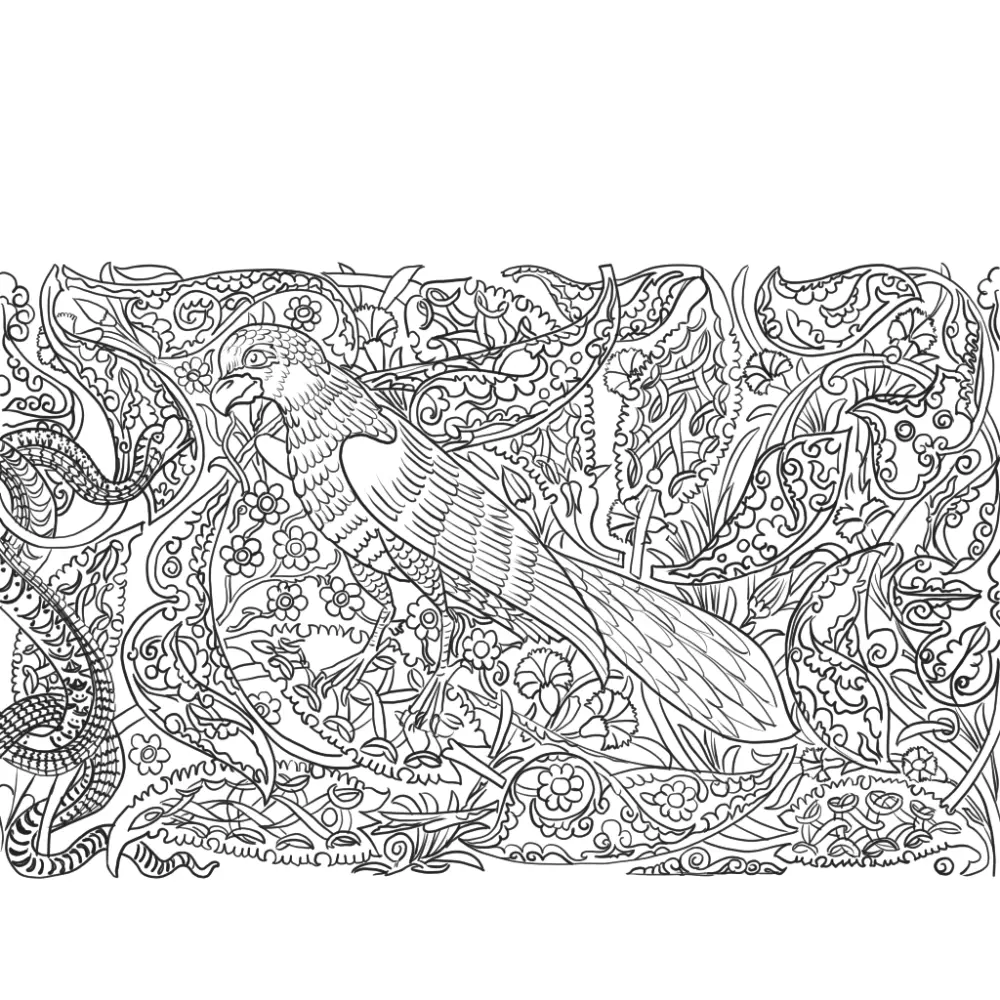
First thing first, in order to obtain a usable motif, we need to symmetrize it. It will be easier with clear contours: off to tracing with a constant line width tool we go. We are using the very (very) old method of cartooning: using the artist’s model, the cartoon, as a reference and duplicating it on different media and sizes.
The snakes were the main issue: they are not symmetrical, and the knot they create is not either. So they needed a little hands on drawing after duplication. It was also nice to be able to understand the motif that way.
Then I initially thought I should re-colourize it all. But, with masks and an efficient use of the drawn lines, I managed to keep de Morgan’s original colouring.
Now, on what shape should we put it on ?
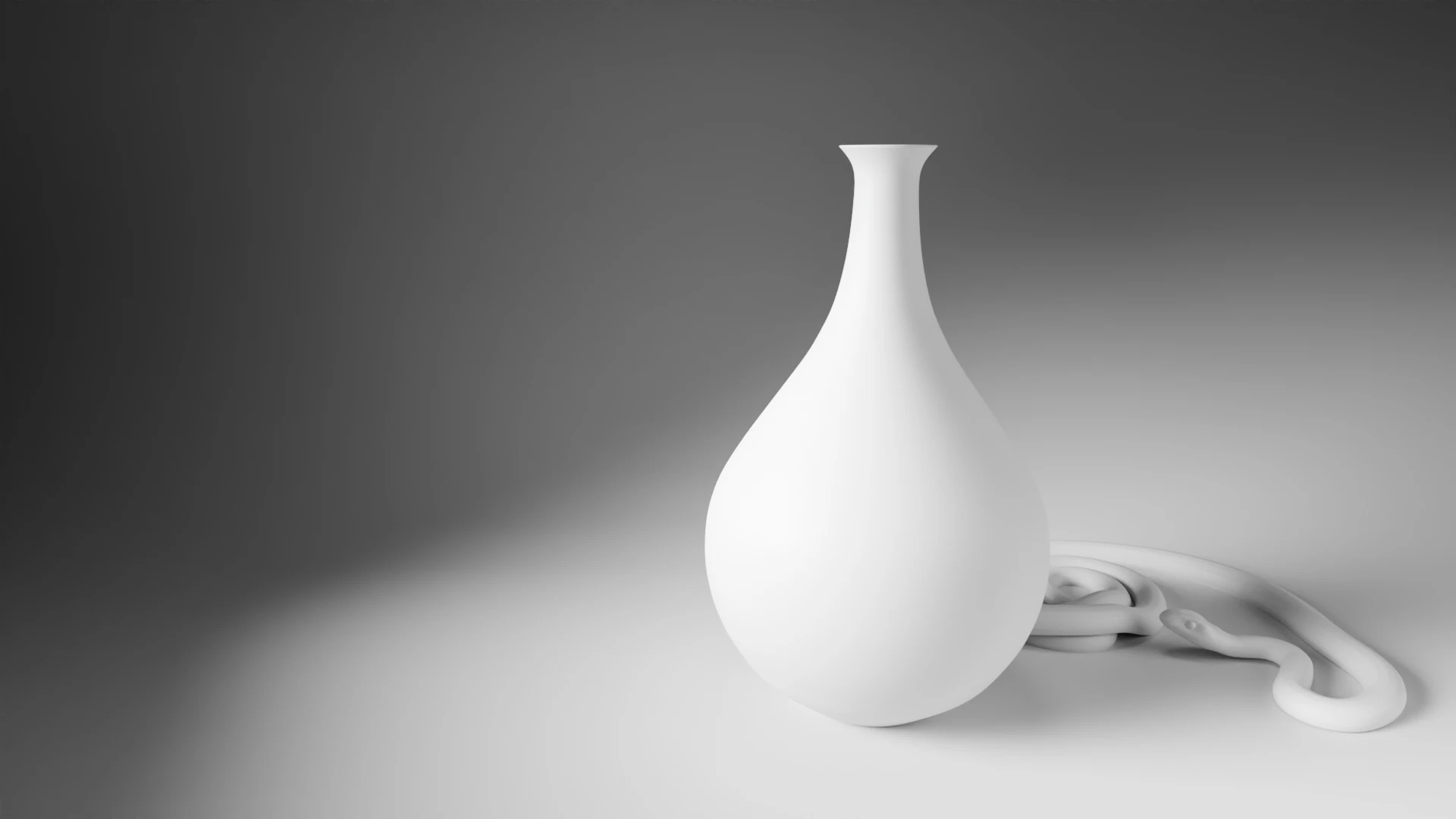
A panel is the obvious answer, and maybe I’ll do it someday as part of a whole room but, for now, I think a vase would be fun. I think something along the line of a long-necked vessel with a soft oblong belly can put the motif forward.
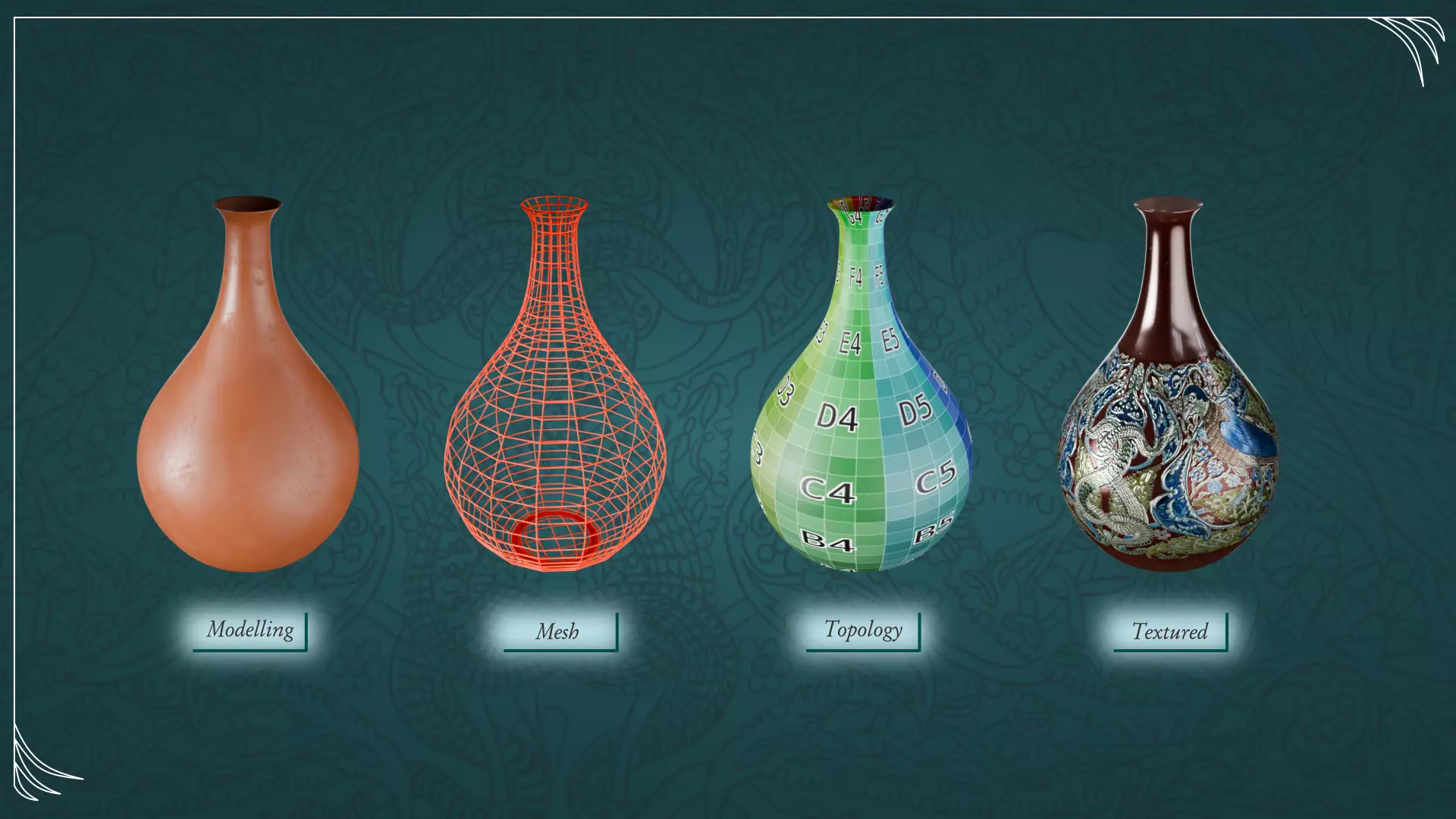
What is left to do ?
Well:
- choose a background colour and give the ceramic parts an interesting texture, crack, bubbles and all
- find a way to make the texture of the motif stand out; not as a relief but as the very faint effect layers of enamels will give a piece when it with a low angled light
- play with the light and make sure we have the desired lustre effect
All together now. Let’s put the texture on the shape, play with the normals.
And add a snake, just for funsies.
Interactive rendering
All hands on code: iridescence all around !
Three.js has been supporting iridescence on 3D scene since version 0.155. This was the perfect opportunity to finally play with it a little: it is a literal requirement for lusterware !
I dabbled and had way too many moments looking at the shiny elements moving on the screen.
Code
Here are the most relevant lines of codes behind the materials of the model in the web viewer. Remember that I’m working with a JSON file to feed the model to the viewer, so the syntax is irrelevant here. Just gather the information you need from it !
  "3Dmodel": "./assets/models/demorgan_hawk_vase/de_morgan_plates_vase_falcons.glb",
  "meshes": [
    {
      "name": "vase_hawk_substance",
      "textures": {
        "map": "./assets/models/demorgan_hawk_vase/textures/vase_falcon_diff.webp",
        "normalMap": "./assets/models/demorgan_hawk_vase/textures/vase_falcon_norm.webp",
        "roughnessMap": "./assets/models/demorgan_hawk_vase/textures/vase_falcon_rough.webp",
        "metalnessMap": "./assets/models/demorgan_hawk_vase/textures/vase_falcon_met.webp"
      },
      "values": {
        "iridescence": 0.8,
        "iridescenceIOR": 1.33,
        "normalScale": [
          0.39,
          0.39
        ],
        "metalness": 1,
        "roughness": 1,
        "envMapIntensity": 1,
        "needsUpdate": true
      },
      "modules": {
        "side": "FrontSide",
        "envMap": "hdrEquirect"
      }
3D view
Disclaimer : technical limitation to material render in web app can let artefacts show, particularly in zoomed views.
See the full screen view (this will open a new tab in your browser).
Credits
Unless otherwise mentioned, all images credit to LGS.
“Model 60B – Cyprus Racer Snake Mesh” by DigitalLife3D, licensed under Creative Commons Attribution-NonCommercial .
Portrait of William de Morgan, by Anna Stirling, Public domain, cc0, Wikimedia Commons
