

A cat’s lair
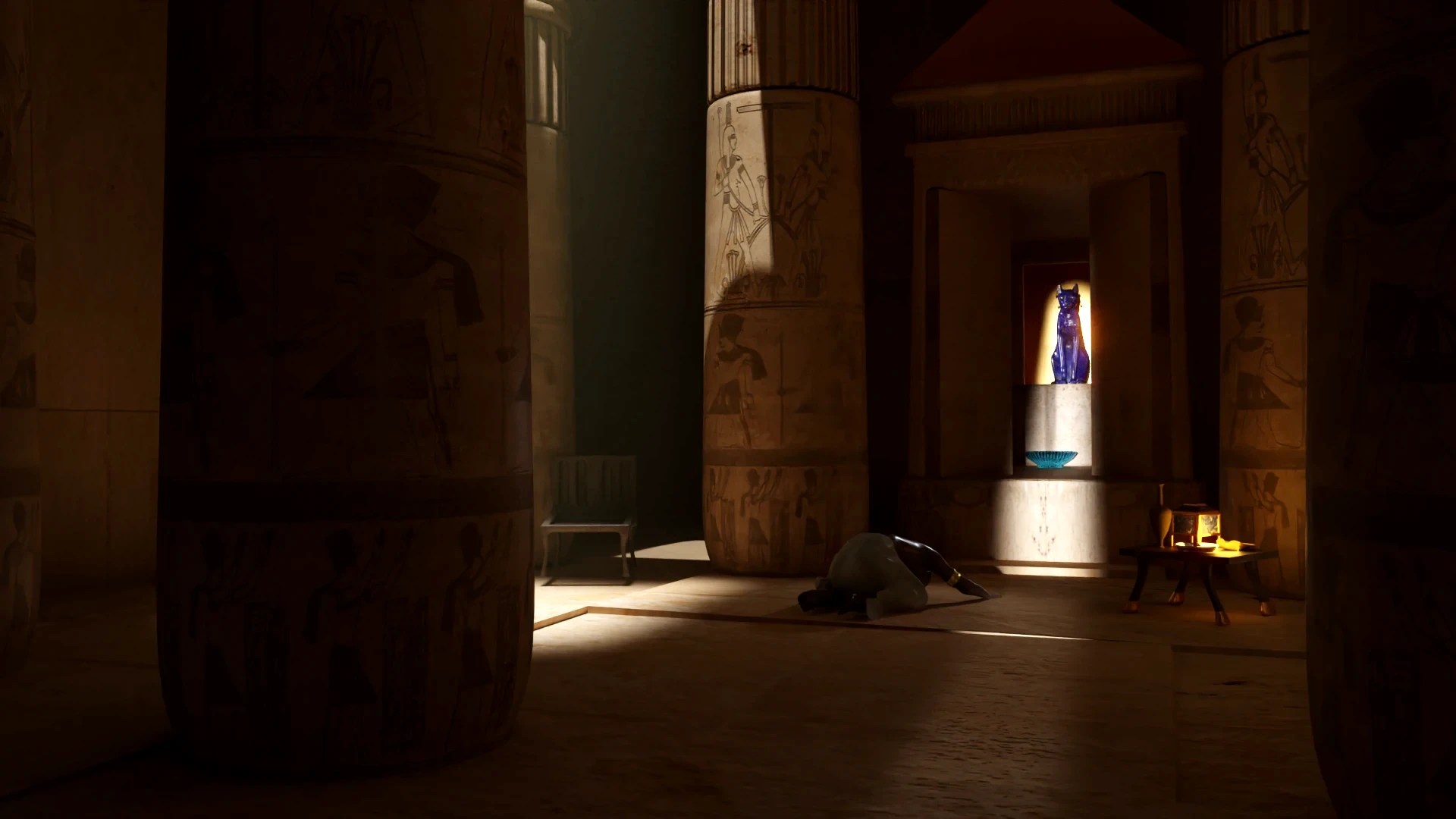
The following texts and images are the results of a training exercise to go from the pictures or the description of an artefact to the creation of a 3D digital double, sometimes restored version of it. If you wish to know more about the process, explanations are in A journey into learning a (3D!) restoration process workflow article.
As we have already seen about the antique Egyptian gods physiology and how to try to create lapis-lazuli, how about putting all that in context ?
Historical context
The base piece is still the same, the good old Gayer-Anderson cat, for which we digitally swapped the green bronze colour for a precious lapis-lazuli material.
This time, I thought it would be nice to have an idea of where such a statue could be situated. I want to try and build a digital naos for the statue.
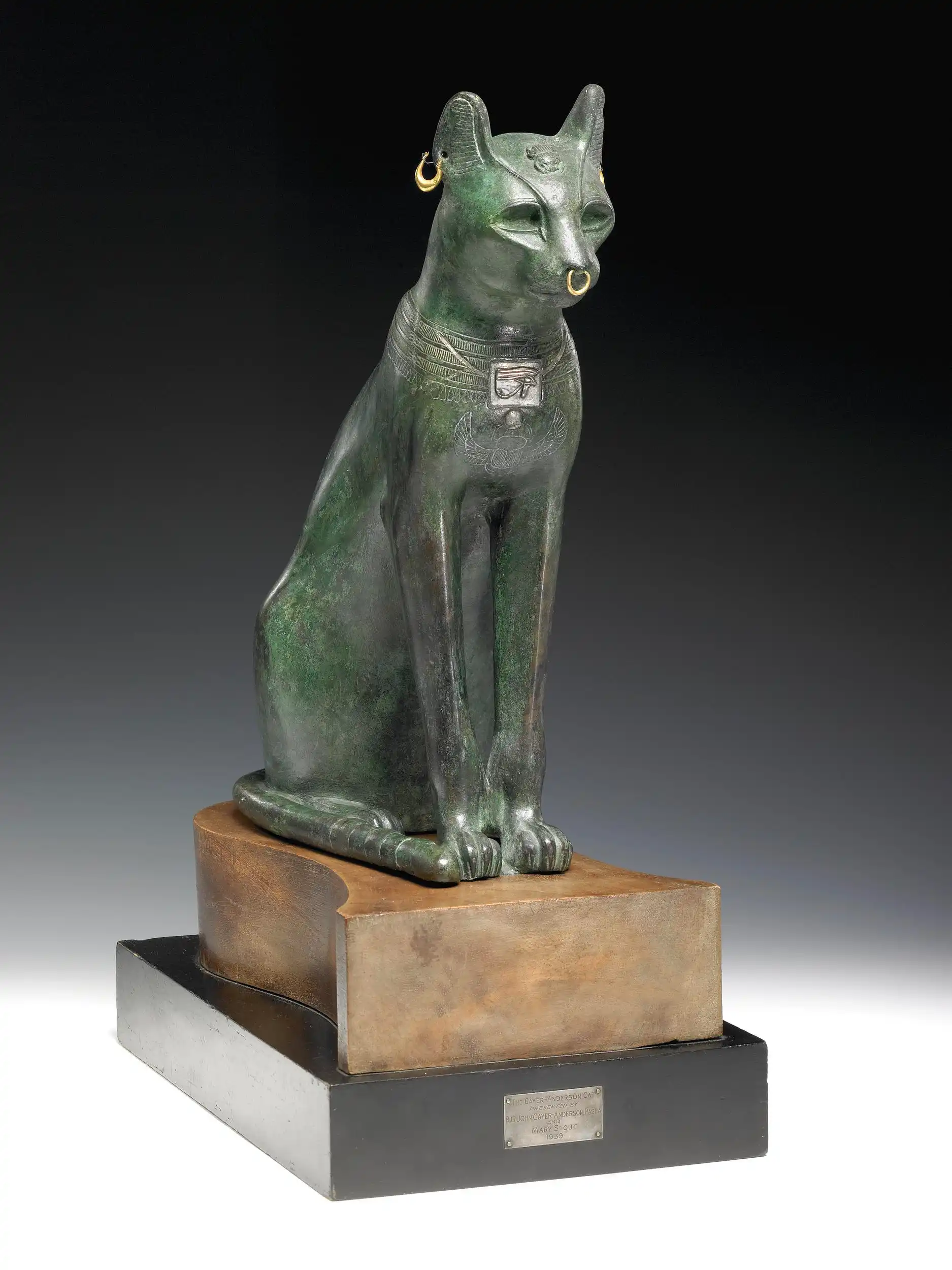
Title: Gayer-Anderson Cat
Datation: Late Period (ca. 713–332 BCE)
Provenance: Saqqara, Memphis ?
Dimensions:
Height: 42 centimetres (With base)
Width: 14 centimetres (Without base)
Weight: 7.8 kilograms (Without base)
Media: Copper alloy
Bast Naos in Bubastis
Now, we need to find references.
The goddess known now as Bastet hagiography is complex. Her face and role have changed through times. Scholars seems to agree that her cat-like form dates back only somewhere around the end of the new kingdom era.
Though revered domestically throughout Egypt, Bastet’s only known temple complex to date is the one in the city of Per-Bast, now Bubastis, in the Nile delta.
The complex dates back to the third intermediary period. The Gayer-Anderson cat is younger.
Remember, this is an exercise. Because chances are a cat-shaped statue of the goddess was present in the naos, we’re going to try anyway ! We are using archaeology, but we are not, this time, doing a scientifically correct rendering.
Let’s put that under the “artistic licence” and “practice as much as possible” categories.
One naos too many
It seems there are two main naoi in Per-Bast. Scholars are modifying their opinions on what goes where, along with the ongoing digs findings. Scholars are also disagreeing with one another, but I guess it is part of the process.
So far I was able to find two distinct naoi, both documented. A 2006 study from Neal Spencer and Daniela Rosenow for the British museum depicts the naos of Nekhthorheb. A 2008 study from Daniela Rosenow depicts the “Bastet Lady of the shrine” naos.
Both studies are very rich in information and scientifically backed visual reconstitutions. Because of reproduction rights, I can’t show some of them in this article. Please follow the links above to be able to see for yourselves. All that follows is based, albeit loosely, on the information I was able to grasp from the teams work.
This is where I strayed from the scientific path
In a nutshell, for those of you who never encountered an Egyptian naos before, we’re talking about the holiest of holy places, inside the sanctuary. The furthest place away from the entrance of the temple.
The place where the literal goddess/ god “lives”. The place only high priests (and a selected few) are allowed to see . Most of the time, it’s a sort of stone “cupboard” that protects the statue that embodies the deity.
This naos is placed in a chamber, the pro-naos where the attendants move and honour the divine at regular intervals and during the calendar celebrations. The various architectural elements are adorned with rich decors and reliefs. Everything seems to have been highly coloured, though most of it is now lost. The light in the pro-naos is dimmed, controlled.
This part of the temple has a low ceiling in contrast with the huge hypostyles rooms by the entrance. In the room, or in adjacent rooms, are kept the onerous gifts from generous benefactors.
Now, you probably are starting to get the idea of what I’m aiming for. A kind of moody, atmospheric scene. And that, my dear reader, is anything but scientific !
A plan, grab your pith helmet old chap, we need a plan !
Disclaimer : this is an exercise, shown for documentation purposes only
The roof conundrum
We now have a few key points to base the creation of the room in which we’ll set up our scene. One key ingredient is missing, though.
The roof.
I know, I know. Nitpicking. Just throw a roof on top and be done with it. Sadly, I won’t be able to do that for lighting reasons.
The floor map of the archaeological references I found, whether for the Bubastis complex or other studied complexes like the Ramesseum, are just that, floor plans. I’m not certain how the roof was dealt with in the lower parts of the structure and how it influenced the light inside.
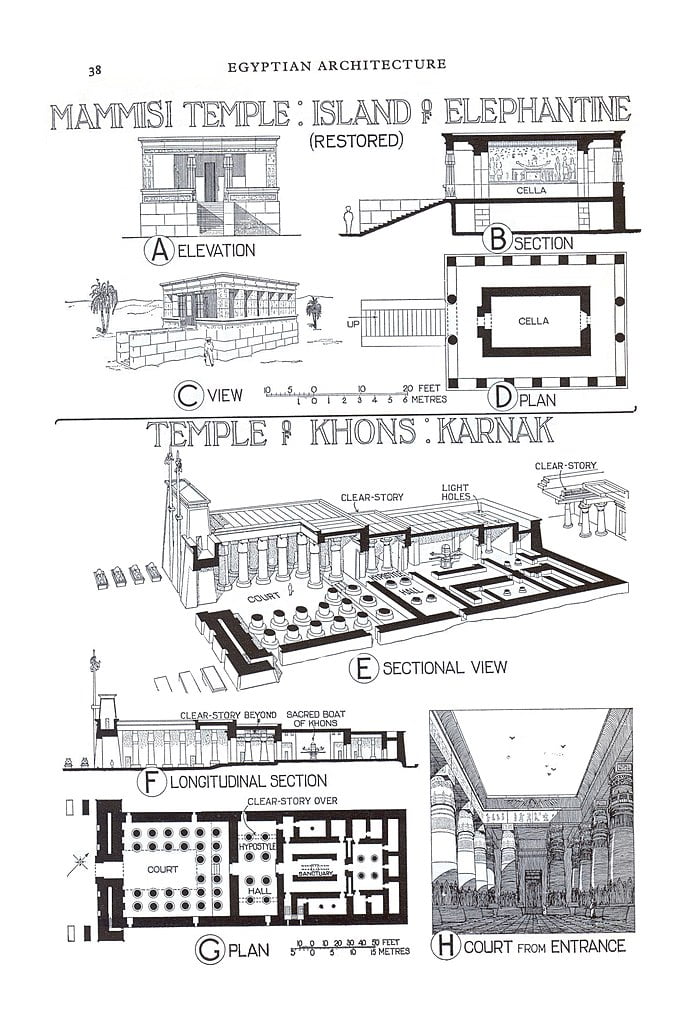
I finally found a reference about the temple of Khonsu in Karnak that shows a reconstructed elevation view.
The parts I’m interested in are the clear story descriptions and the light holes mentioned in the right part of the image. I’m choosing to put the naos in the farthest room on the right and therefore using light holes as a primary source of lighting.
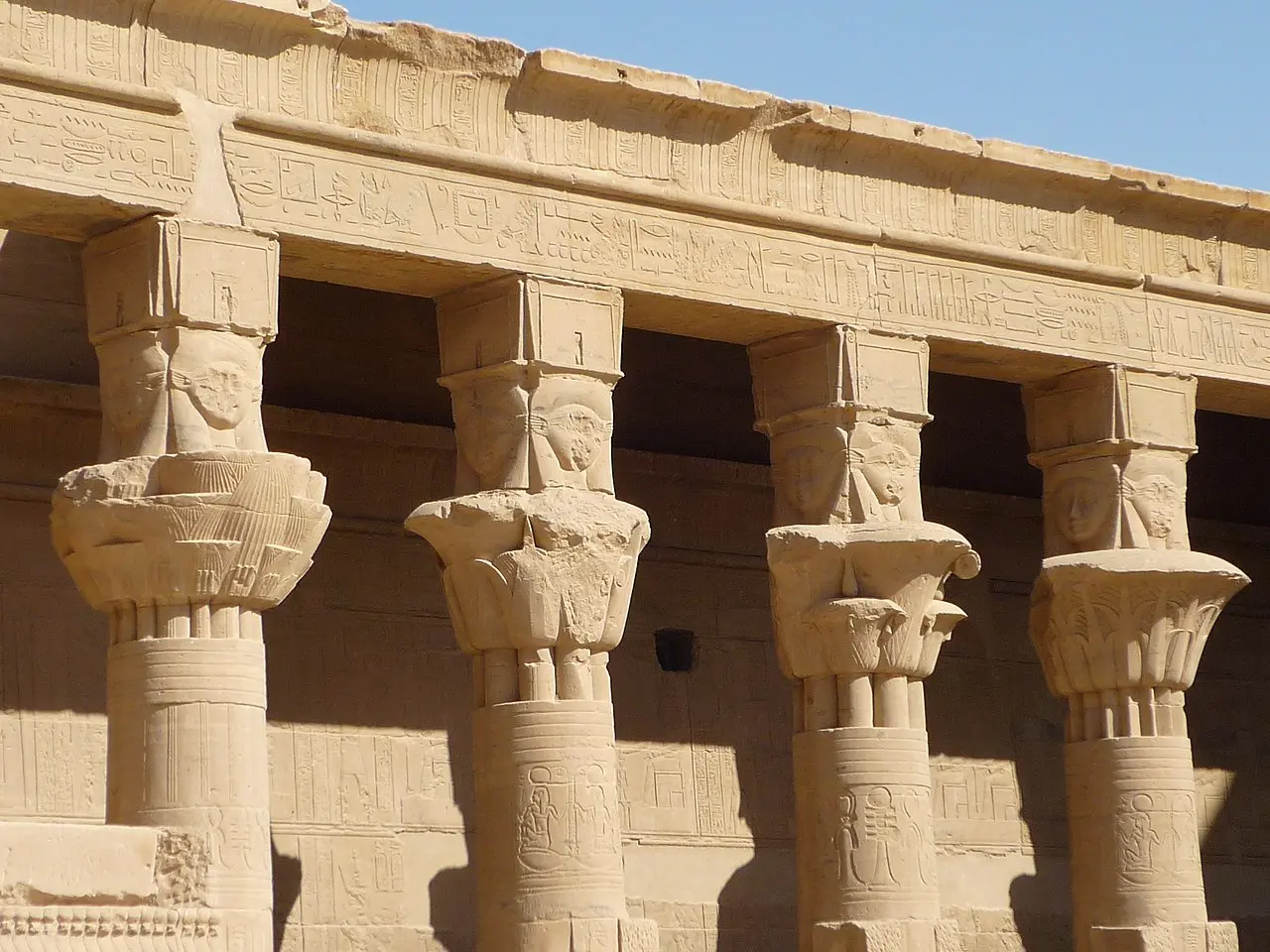
The columns debate
As you can see in the reference, the roof slates are supported by columns. We know for a fact that the grand hypostyles rooms of the Per-Bast sanctuary were Hathoric ones. That means representing the head of the goddess Hathor, like these from the Isis temple in Philae.
I have no idea what kind of columns went on in the pro-naos in Bubastis though, if there were some. So, I’m making the executive decision to render them as “papyriform-ish”, very very very loosely inspired by the Theban complex ones. Because I can. I discovered modelling columns was soothing. But one has to eventually move on with one’s life after the 447th iteration.
I have issues.
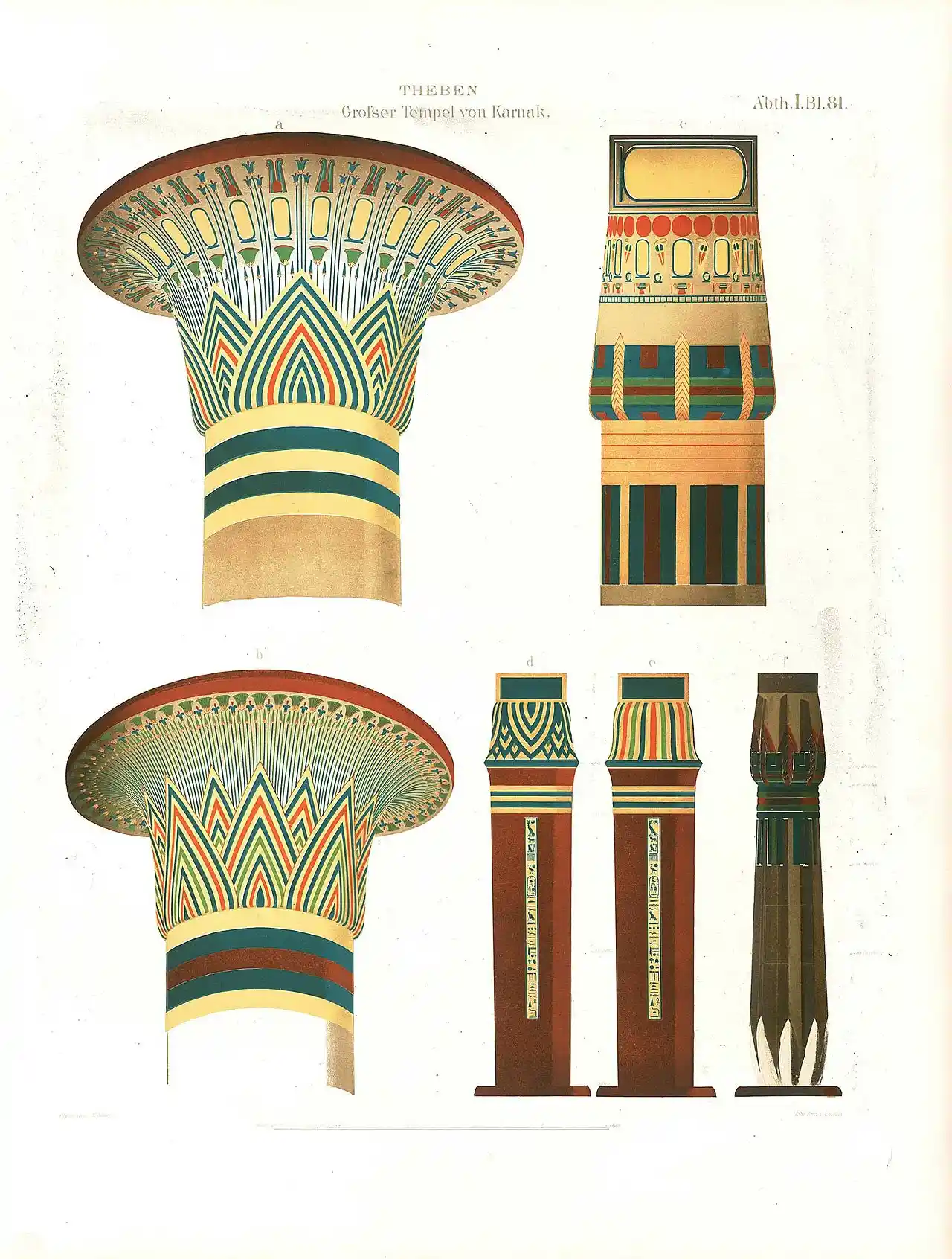
Very very much a WIP
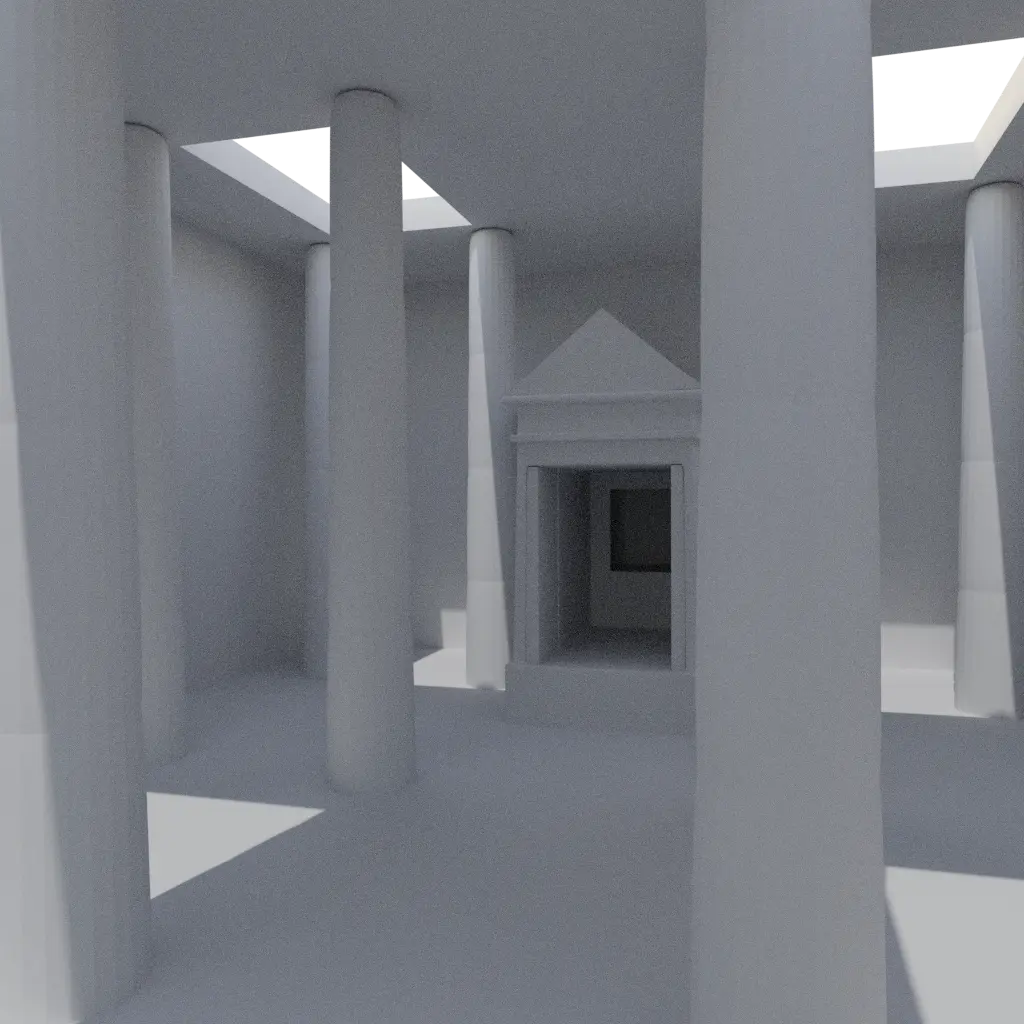
Blocking shapes, base lighting and adding furniture.
The first draft of the room was for more or less blocking the scene roughly. I modified this version almost immediately and filled the two light holes nearest to the naos.
Let’s add a few details, including the hero. To further the exploration of the positions of the elements, and keep working on the light and atmosphere, I added slap-dash textures.
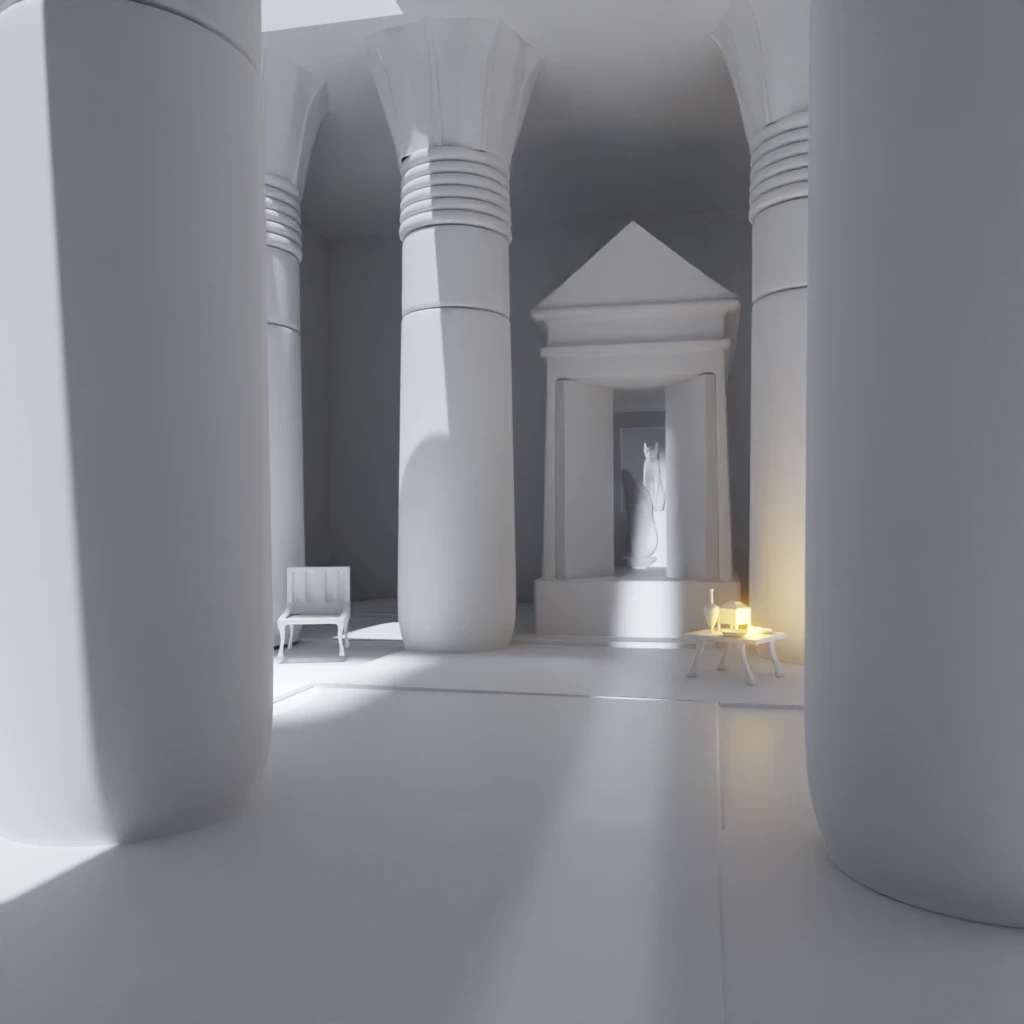
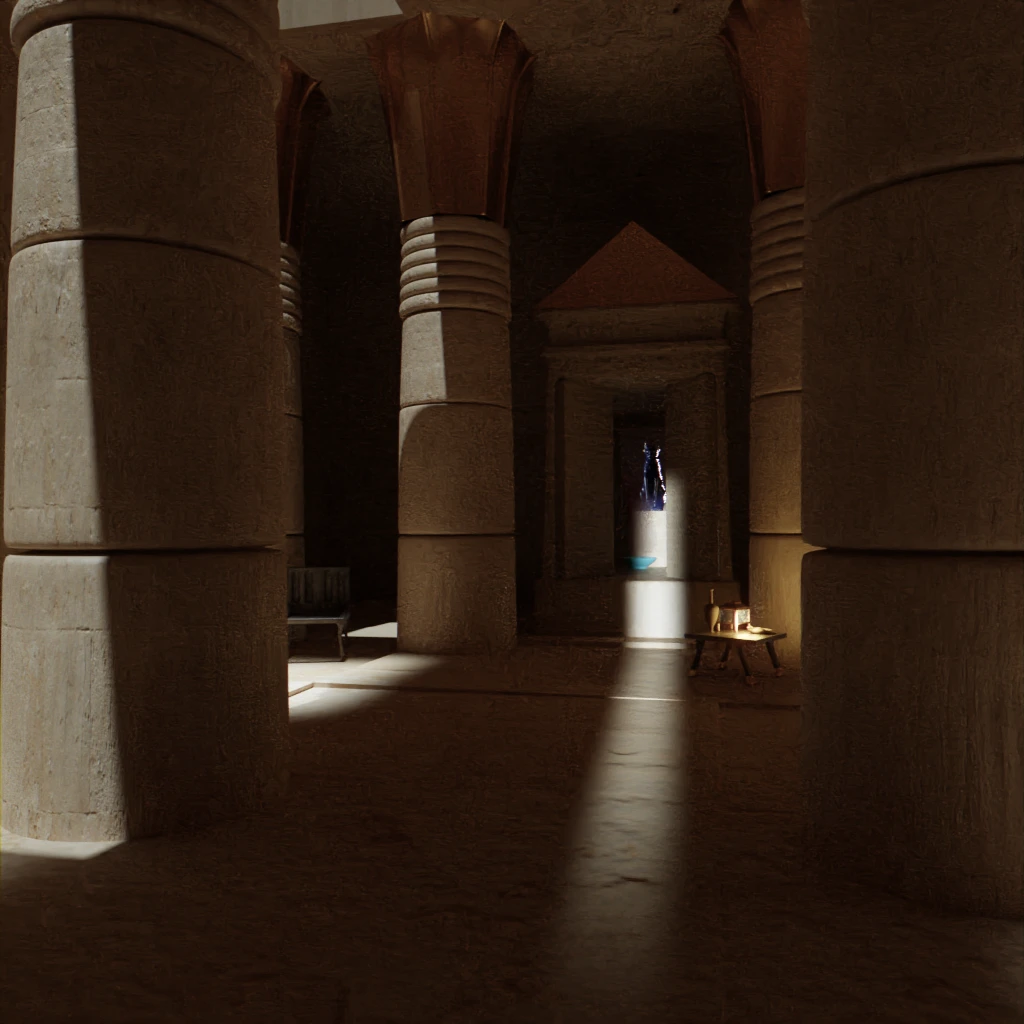
The attendant table and its elements, as well as the chair, are later additions to help the viewer enter the scene via familiar elements.
The inspiration for these pieces come from the following objects. As they will not be prominent in the scene, a simple low poly version is enough.
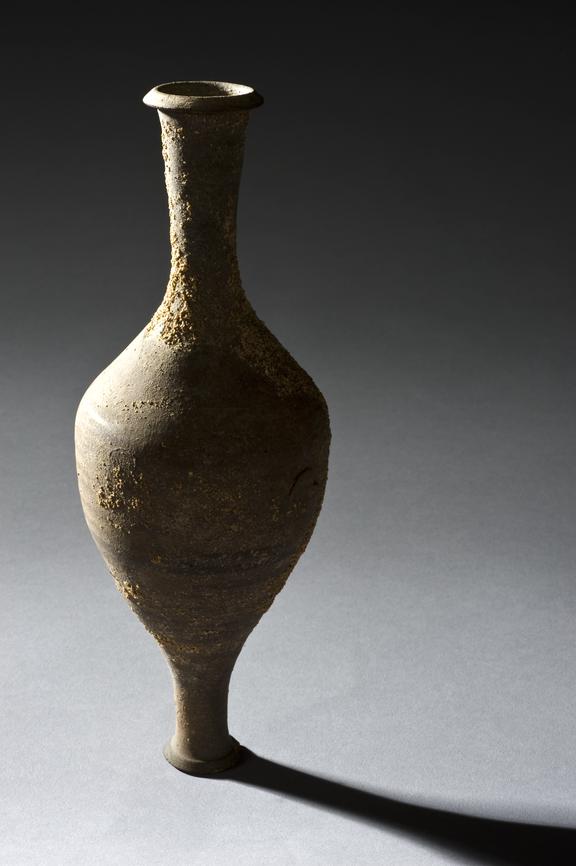
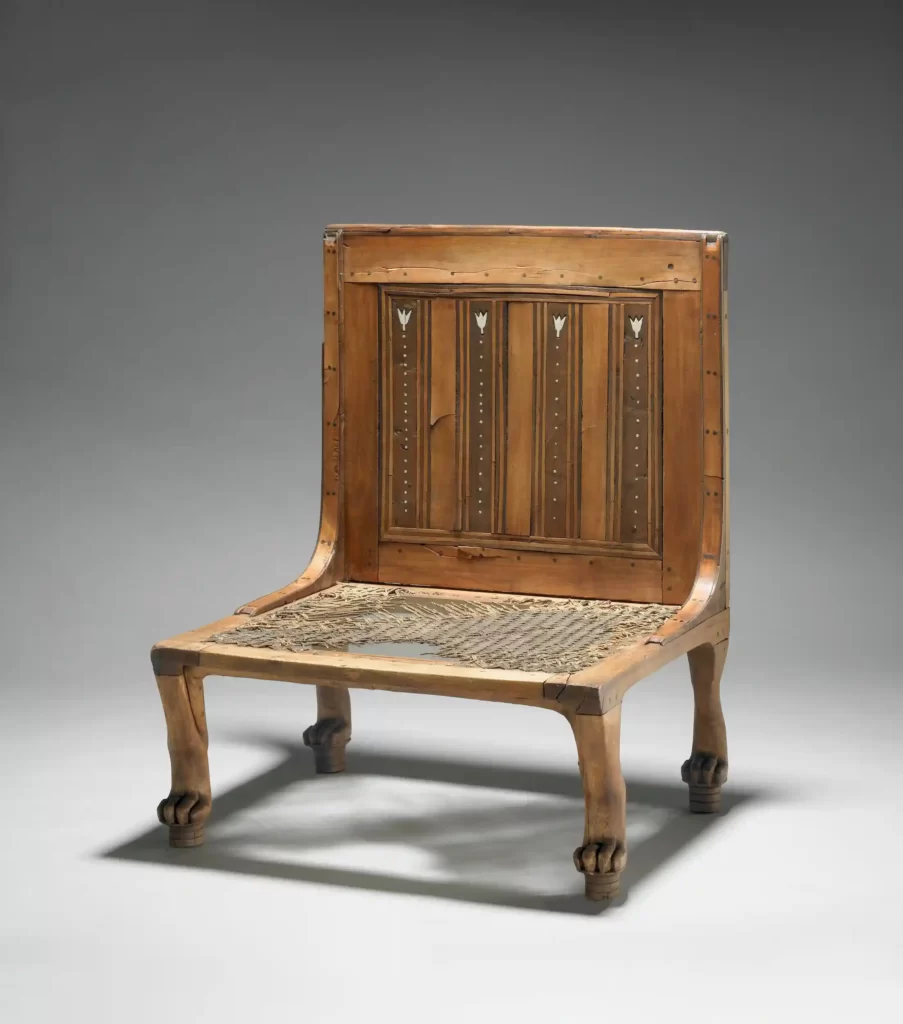
I then found out a treasure trove of information about the “treasures from tell Basta” in a 2012 article by Christine Lilyquist and available on the Met publications site. Because of the nature of this scene, that level of details is not needed. I will, however, certainly revisit it and try to digitally recreate some of the lacunary pieces mentioned at a later stage.
For the time being, it has served as a reference for some of the objects on the table and for the incense bowl inside the naos.
A temple requires a high priest
With a little volumetric dust setting in, the scene is shaping up nicely, but we’re not there yet.
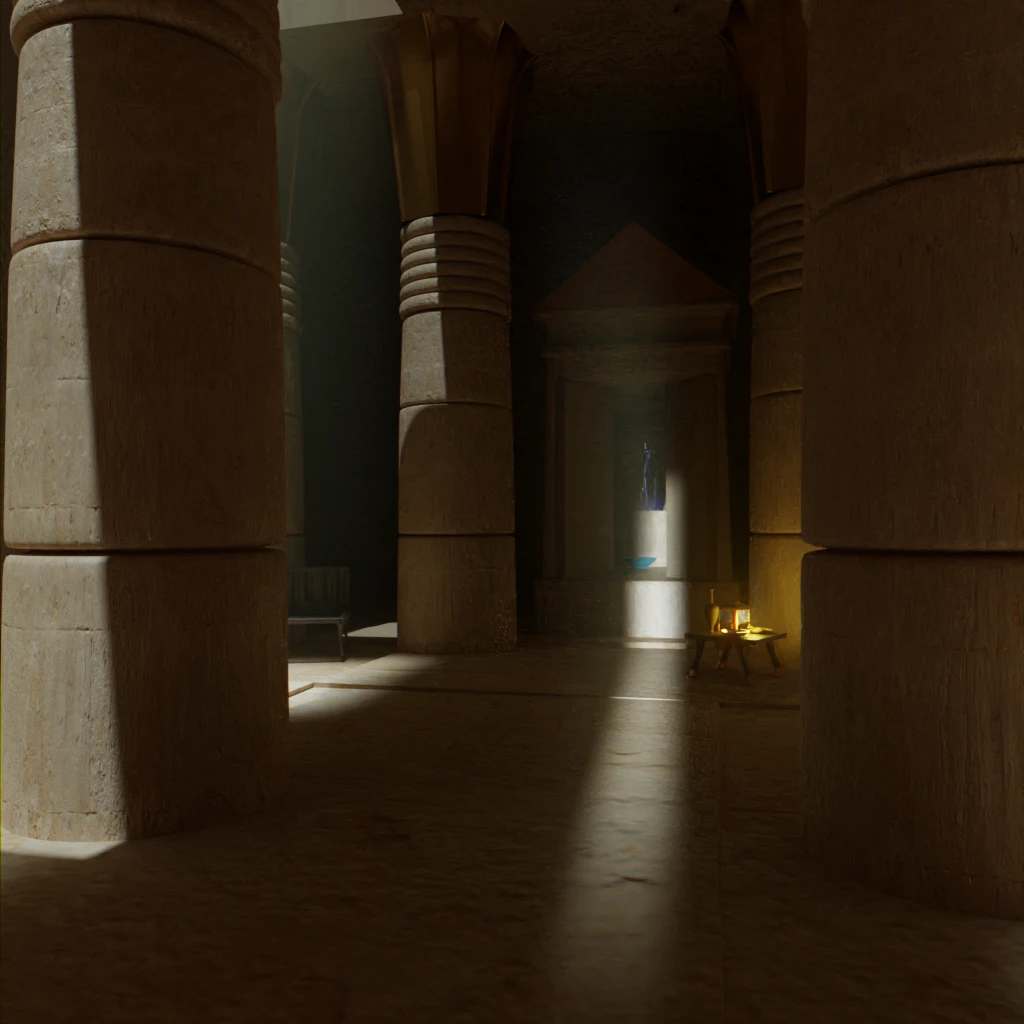
First, it is very empty despite the few elements drawing the eye in.
Though I like it that way, let’s face it, if such a place ever existed in Egypt, its dimensions will probably never have been this. I fear it is a little too grand, a tad too much “Hollywood”. So we need to make the space feel smaller.
Then, the columns are bare. That would not do. I will however not try to colour them. I lack the references to do so at the moment. That would be a very interesting future exercise.
Let’s add a priestly figure and a first try at reliefs on the columns.
Interesting, interesting.
But M. High Priest cannot stay in the nude ! His pose needs some attention too.
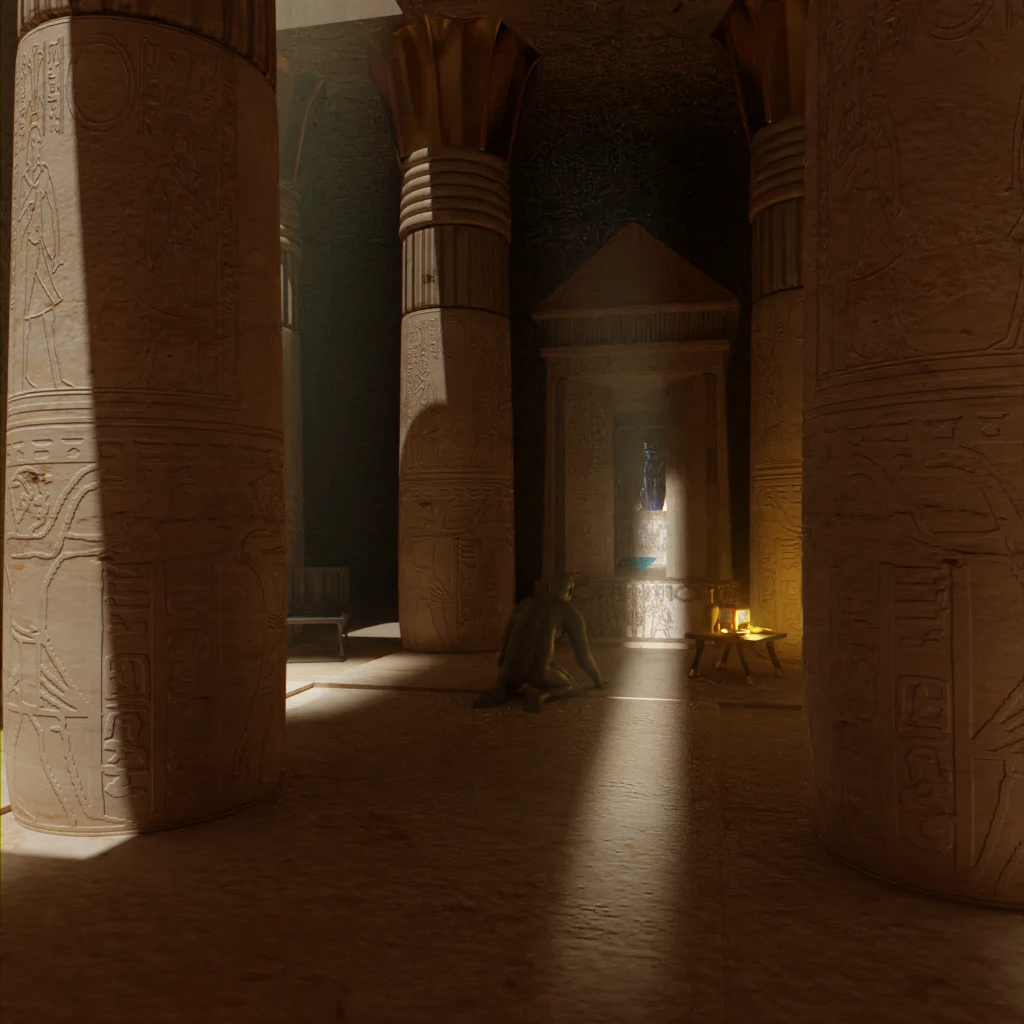
That is better !
The priest’s garments are inspired by the multiple occurrences of Egyptian society wearing a shendyt, a simple linen wrap around skirt, on stelae and reliefs.
The attendant position wasn’t easy to find. I’m not at all familiar with the goings-on in the daily rituals of antique Egyptian clergymen. This prostrated position is probably a touch too dramatic. But as it emphasizes the impression of deference in front of the divine I’m looking for, I’m keeping it for now.
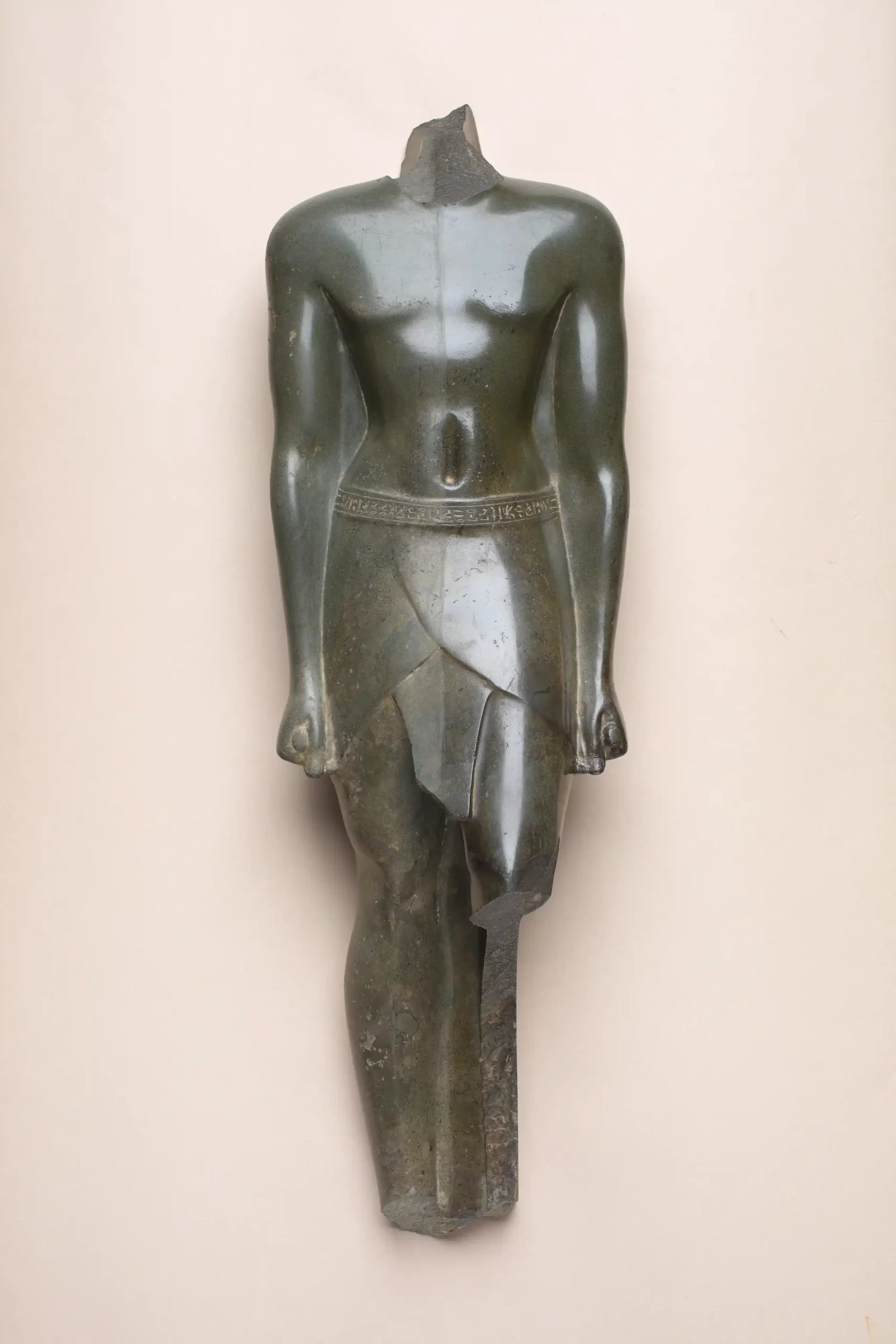
How to adorn columns when you have no idea how to
As you undoubtedly noticed, the decor on the columns is not that great.
This scene is not at all scientifically accurate; it is a mood scene to showcase the hypothetical lapis-lazuli statue. Therefore, spending a lot of time to render precise and historically relevant decors doesn’t really make sense. Besides, I would lack the references to do so, and one can never find an archaeologist quickly when one needs precise information.
Firstly, after a few observations of existing columns, let’s settle on a 3 tiers decor with the eye level ones taking more prominence.
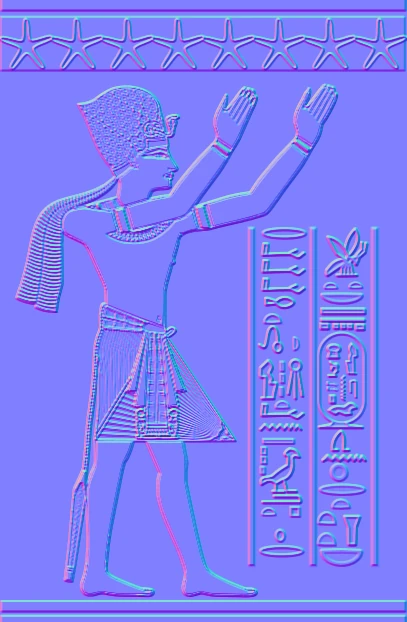
As for the technical method under the hood to render the reliefs, I will combine height map and normal map to emphasize the effect. Almost as I have done for the scarab of Shabaka. As I had learned then, a hand drawn normal map isn’t precise enough. It can work for small height maps, but the definition will suffer when pushed too hard. Let’s try the .svg method this time and then import them in Blender to create the normal maps.
I chose the models that seemed the less likely to feel particularly out of place. They must not distract from the main focal point.
Hapi, god of the annual flooding of the Nile
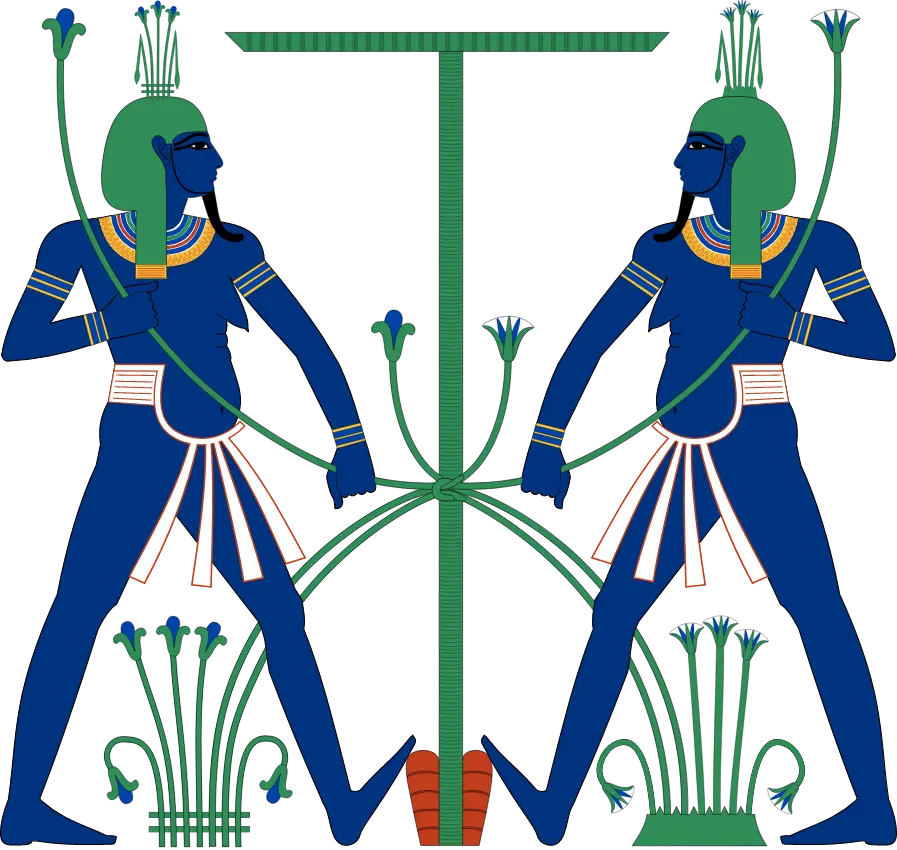
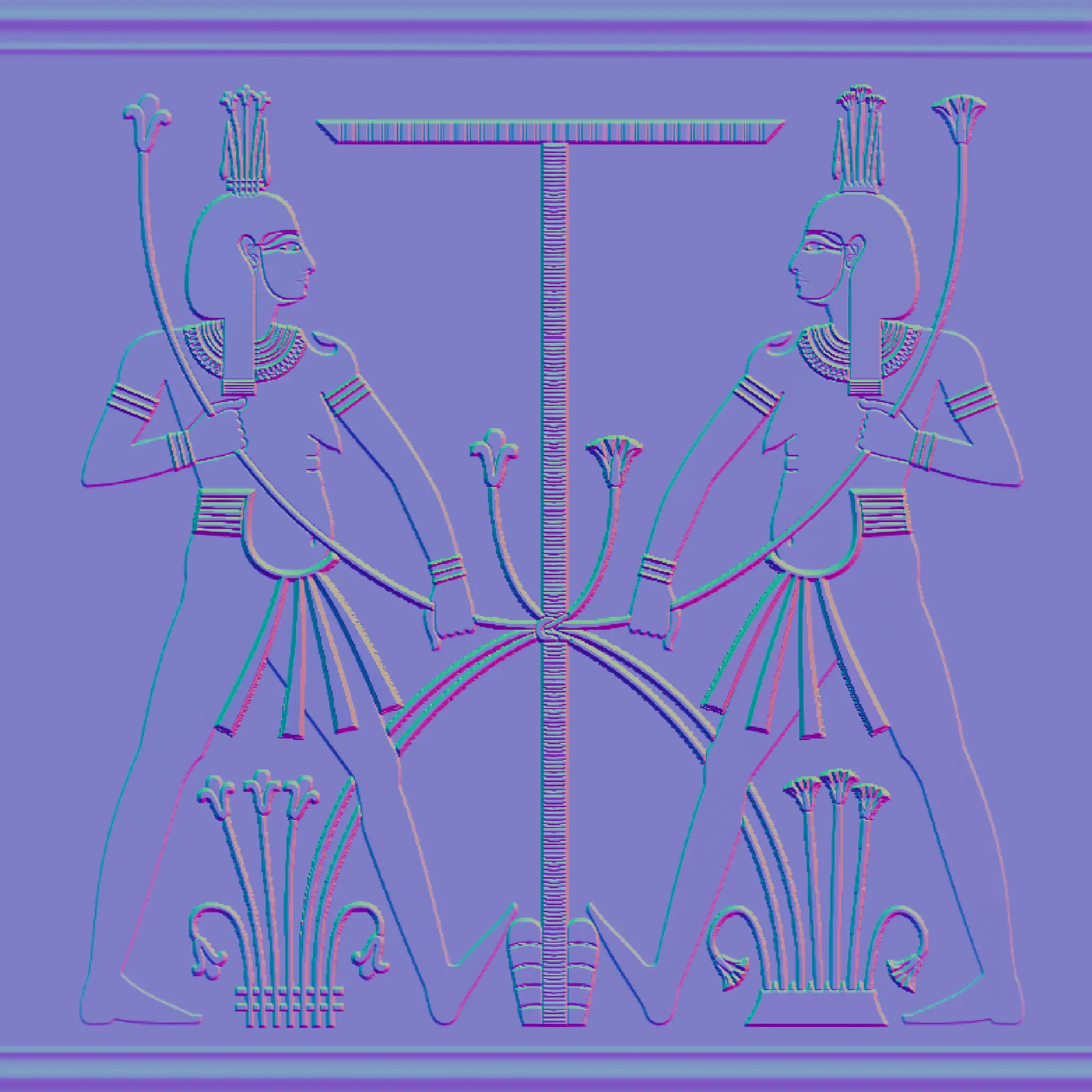
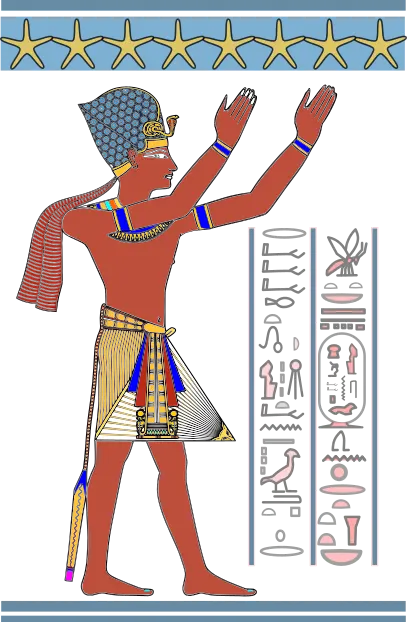
Image of kings supporting the sky
In the study of “Bastet lady of the shrine”, I noticed the relief described as “kings supporting the sky”.
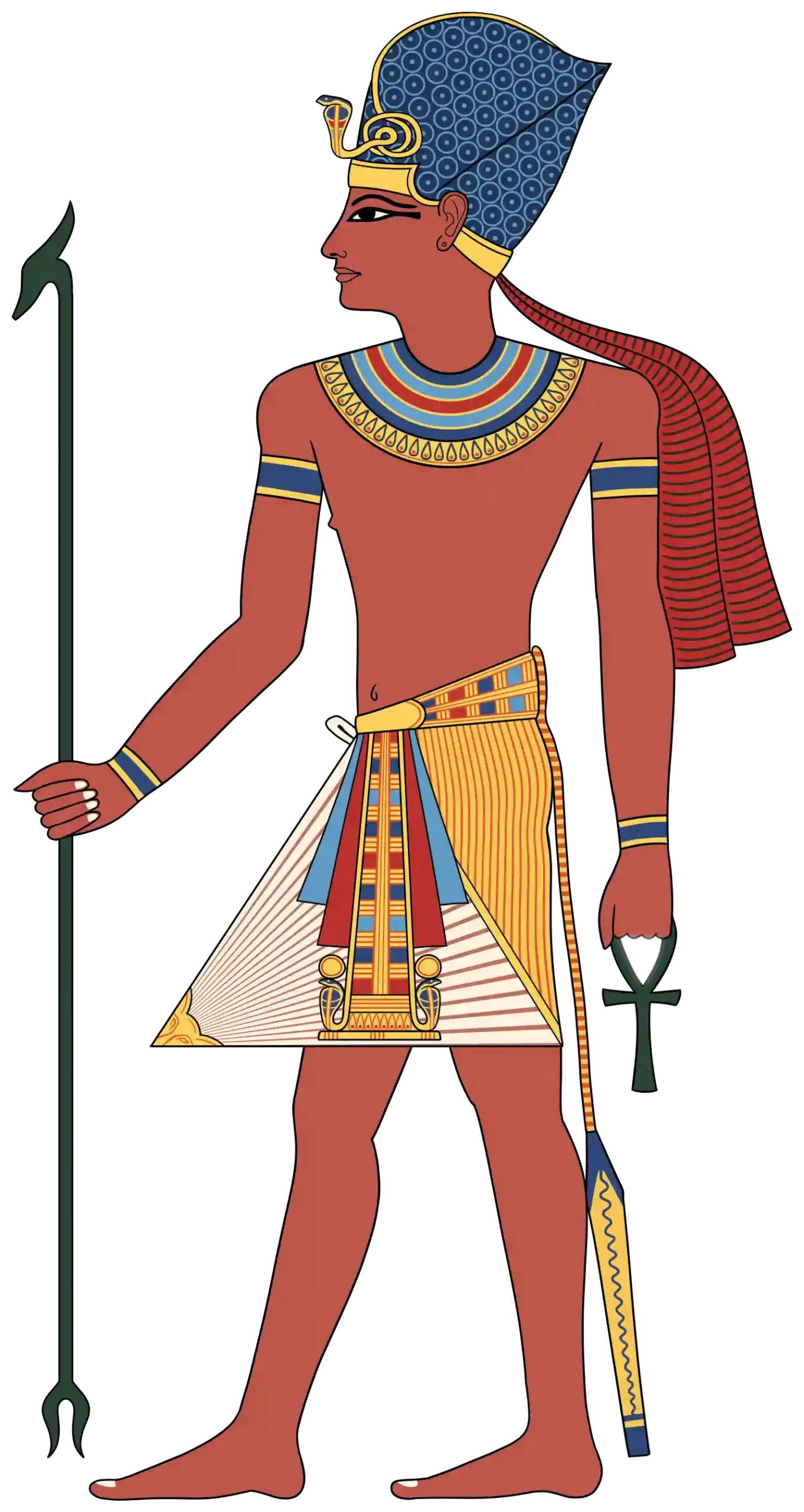
The figures there are basically variations of this image of the pharaoh holding the ankh.
After some reconfiguration and redrawing of the figure and a little decor, I ended up with this version.
Reliefs for the Naos
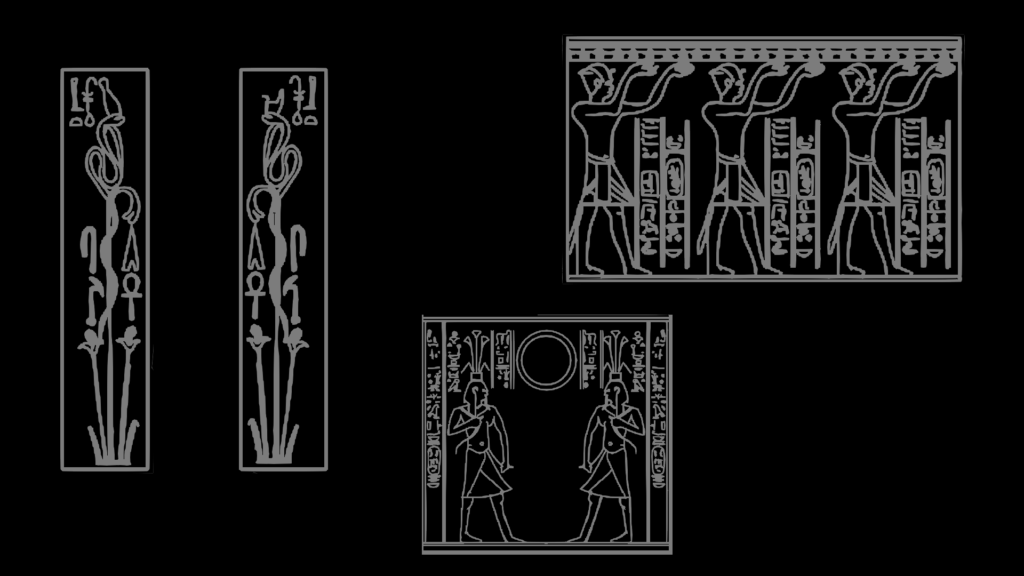
Last but not least, the naos decor. Both studies put forward the fact they were richly ornate. As you can see, on this particular scene, they’re almost invisible. For the ones that are, I based the reliefs on pieces from the actual naos, as indicated by the authors and gathered from museum collections.
The final render
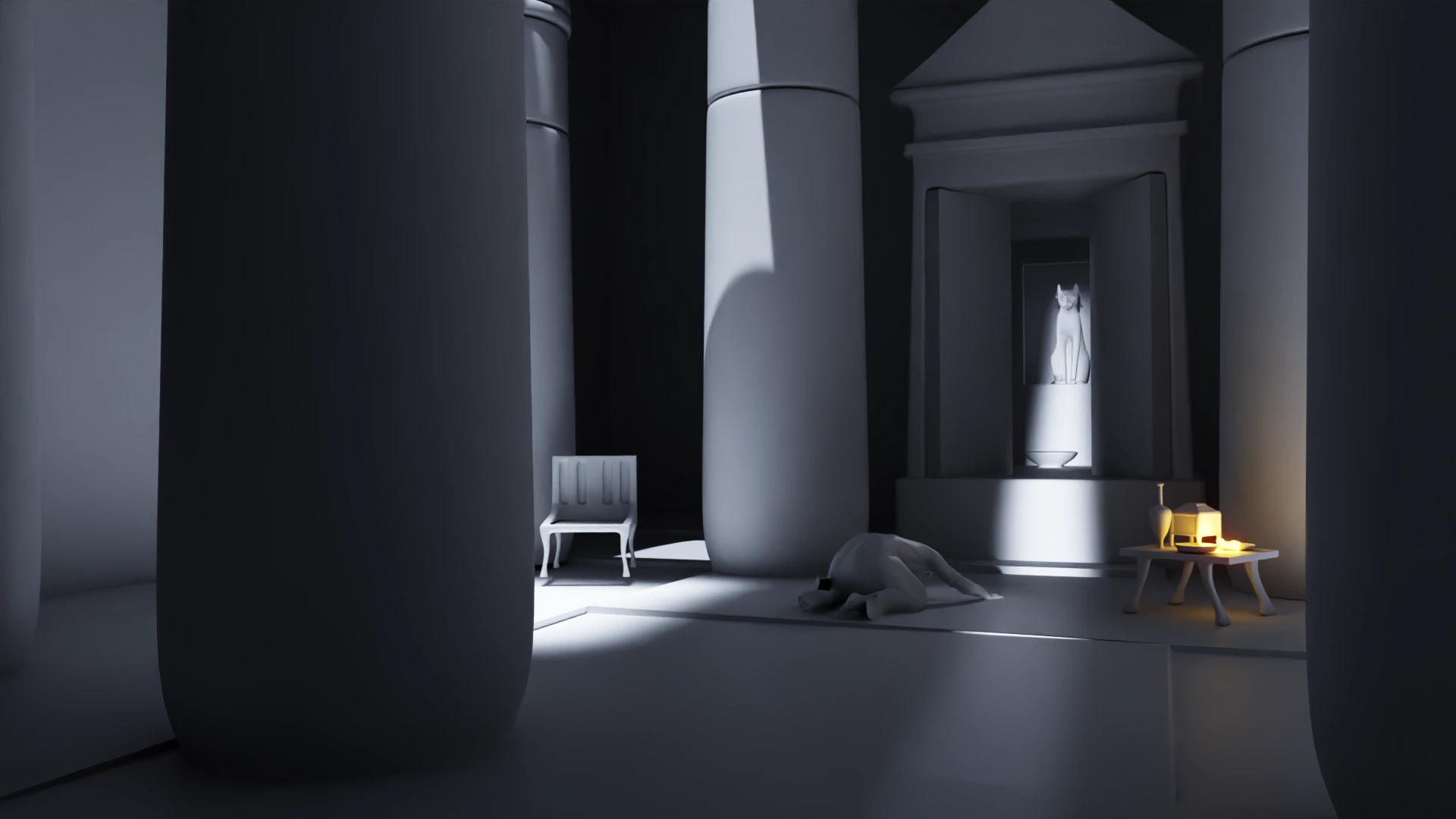
After many (many) iterations and refinements of the lighting system, here’s the final piece.
Credit
Watercolour image from Bastet statuette, Late Period–Ptolemaic Period, 664–30 BC, Metropolitan museum