

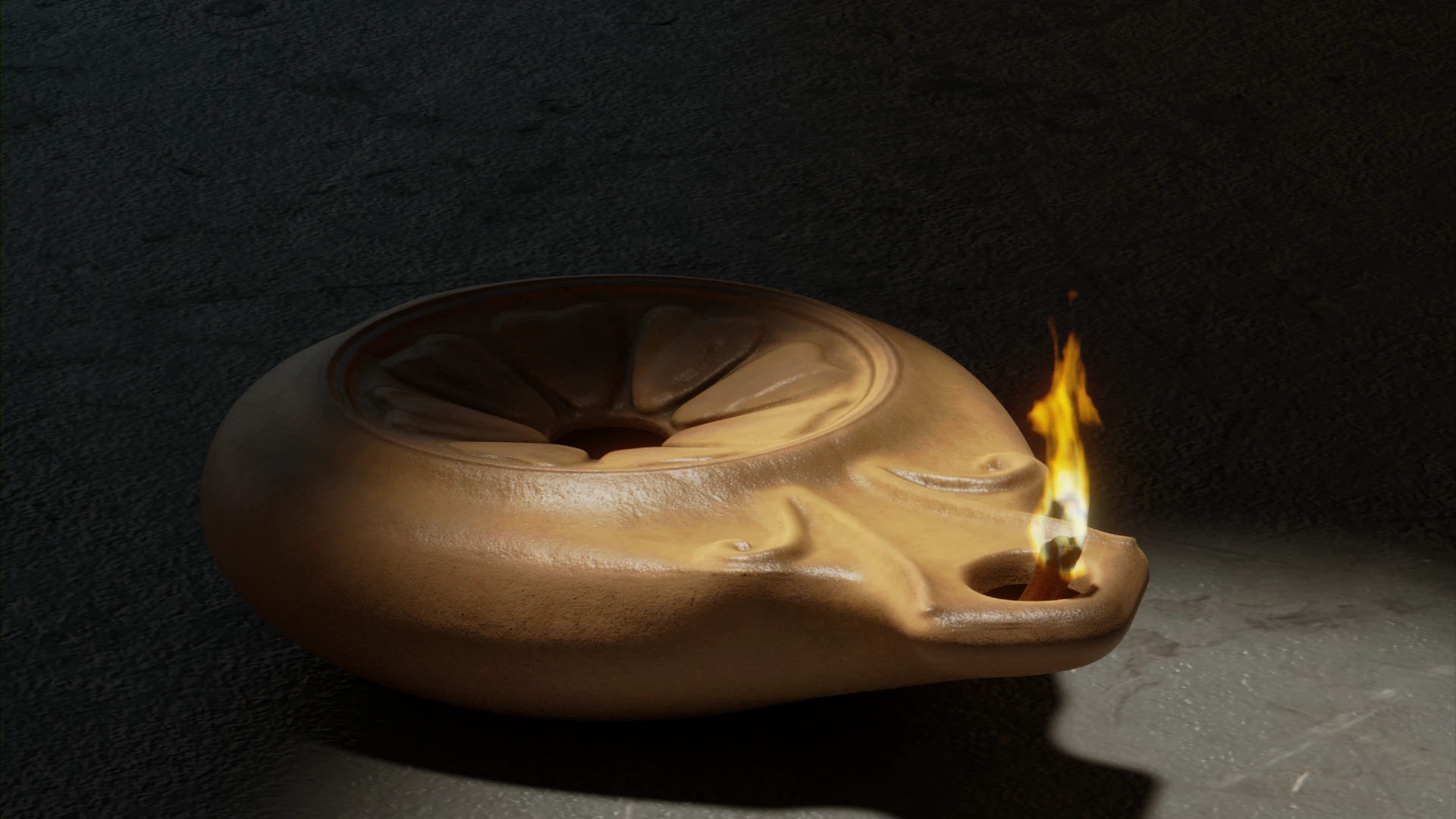
Terracotta oil lamp #1
The following texts and images are the results of a training exercise to go from the pictures or the description of an artefact to the creation of a 3D digital double, sometimes restored version of it. If you wish to know more about the process, explanations are in A journey into learning a (3D!) restoration process workflow article.
I like terracotta oil lamps. I needed the practice. There, you have it. There’s no real other reasons than that for this piece and probably the many others on the same kind.
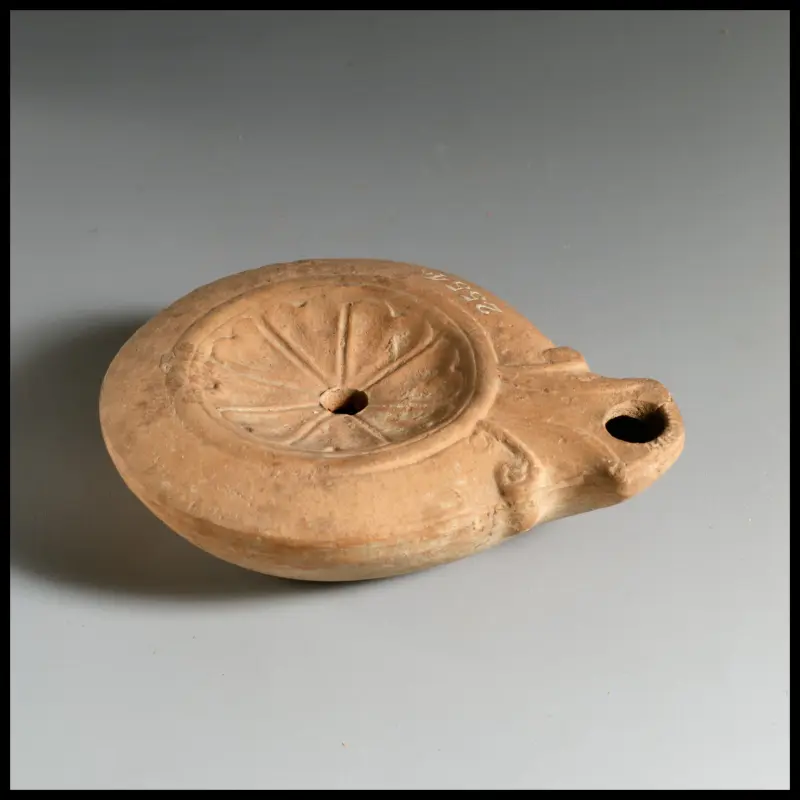
Title: Terracotta oil lamp
Datation: 1st century B.C.–1st century A.D.
Provenance: Roman or Cypriot
Dimensions: 2.5 x 9.1 cm
Media: Terracotta
Source image: INV 74.51.1827, CC0, Metropolitan Museum of Art
Burning the midnight oil.
Oil lamps have been part of mankind daily objects ever since someone discovered animal fat was burning longer and brighter than vegetal compounds. Vegetable oil refinement, a rudimentary wick and a few potter’s try-outs later : you have a portable vessel to guide you through the night. Oldest model includes but are not limited to: stone, like the Inuit Qulliq, or shell or any materials that can hold oil.
It gives terrible smoke and fumes as well as a very crude light, but when the alternative is potentially being eaten or injured in the dark, you can’t be picky !
The sheer volume of lamp production in Mediterranean antiquity called for a modern classification to try to identify most of them. There were born elements like the Bussière and Wohl system about the getty museum lamp collection.
3D notes: a 3D reconstitution process
Disclaimer : this is an exercise, shown for documentation purposes only.
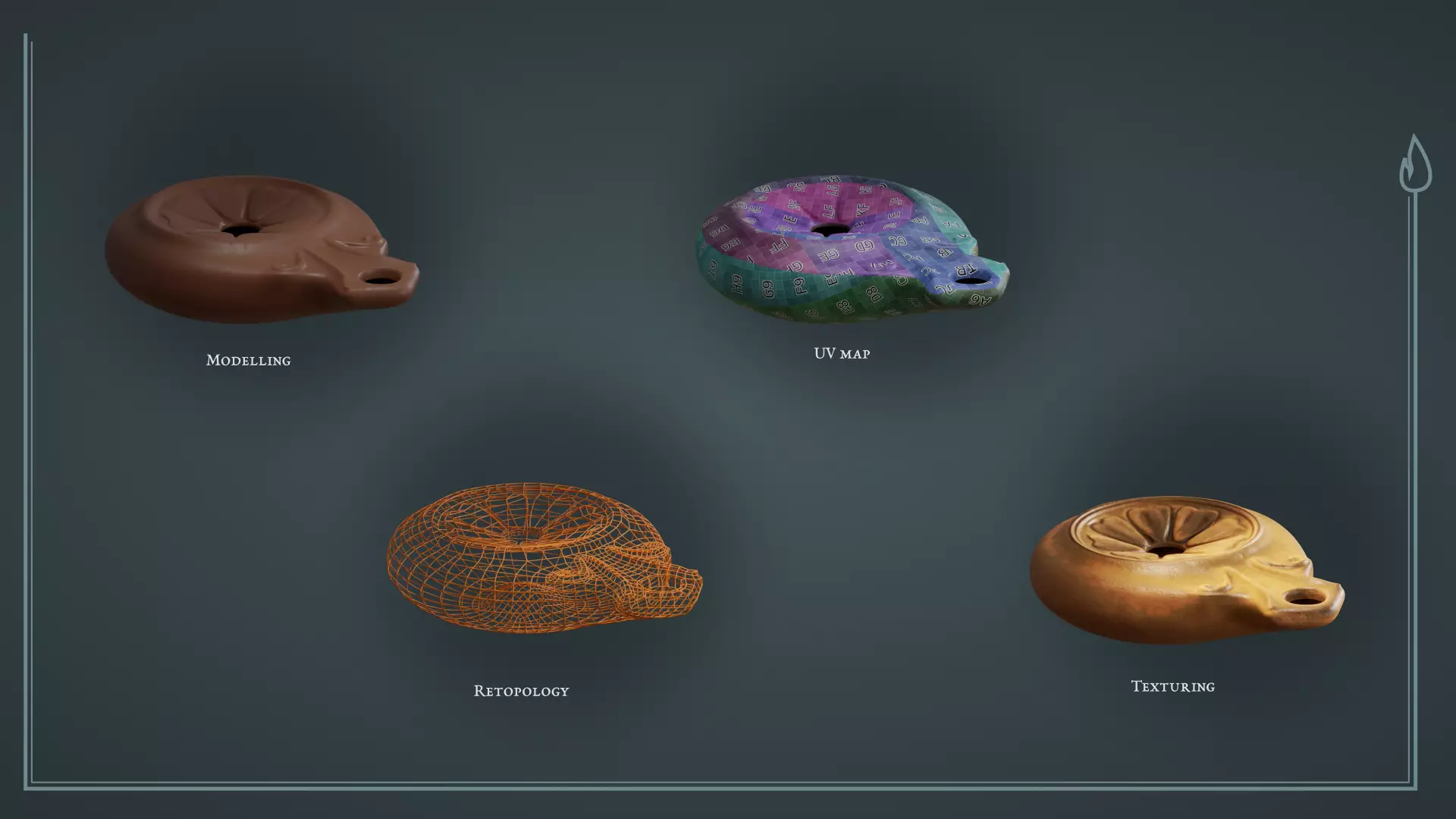
Modelling and texturing the shape notes
Modelling the shape was relatively straightforward, tough the spout decor is tricky when retopologizing.
Terracotta is the name given to modelling clay when it has been fired. As such, its texture is dependent on many factors, from the clay composition to the firing qualities.
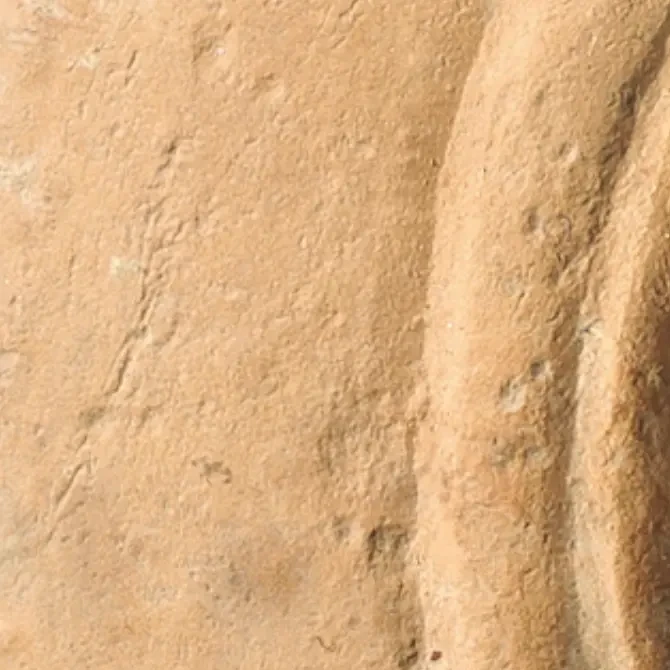
Each piece’s epidermis is unique, and I found out it was really tough to try to stay close to the original one with this few sources. Seeing the piece with my own eyes would have been ideal, but it’s not an option. So, in this particular case, I tried to make more of a realistic material than an exact copy of the piece’s one.
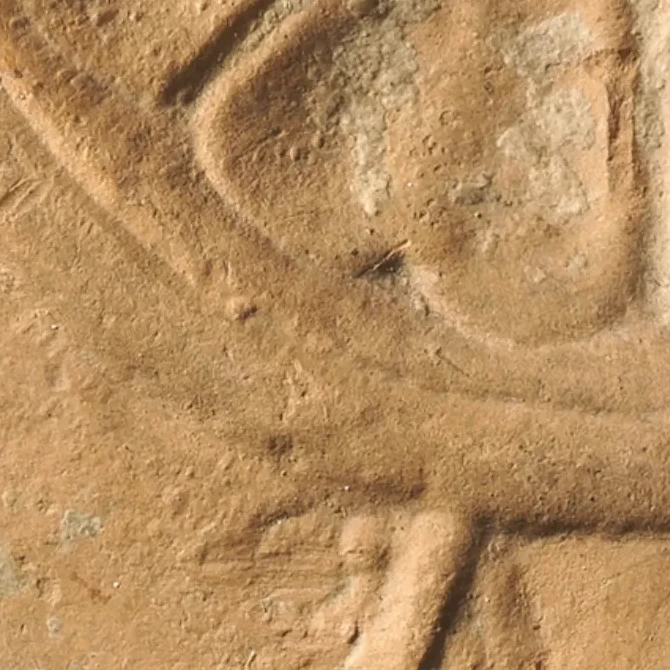
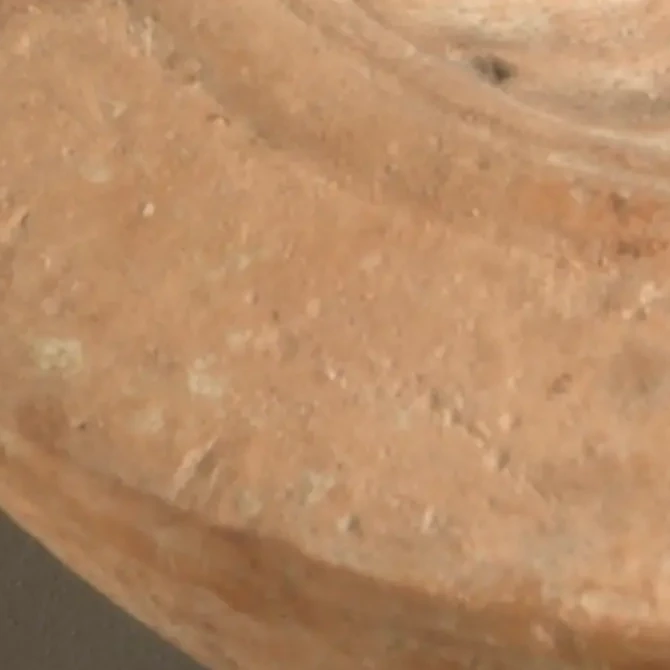
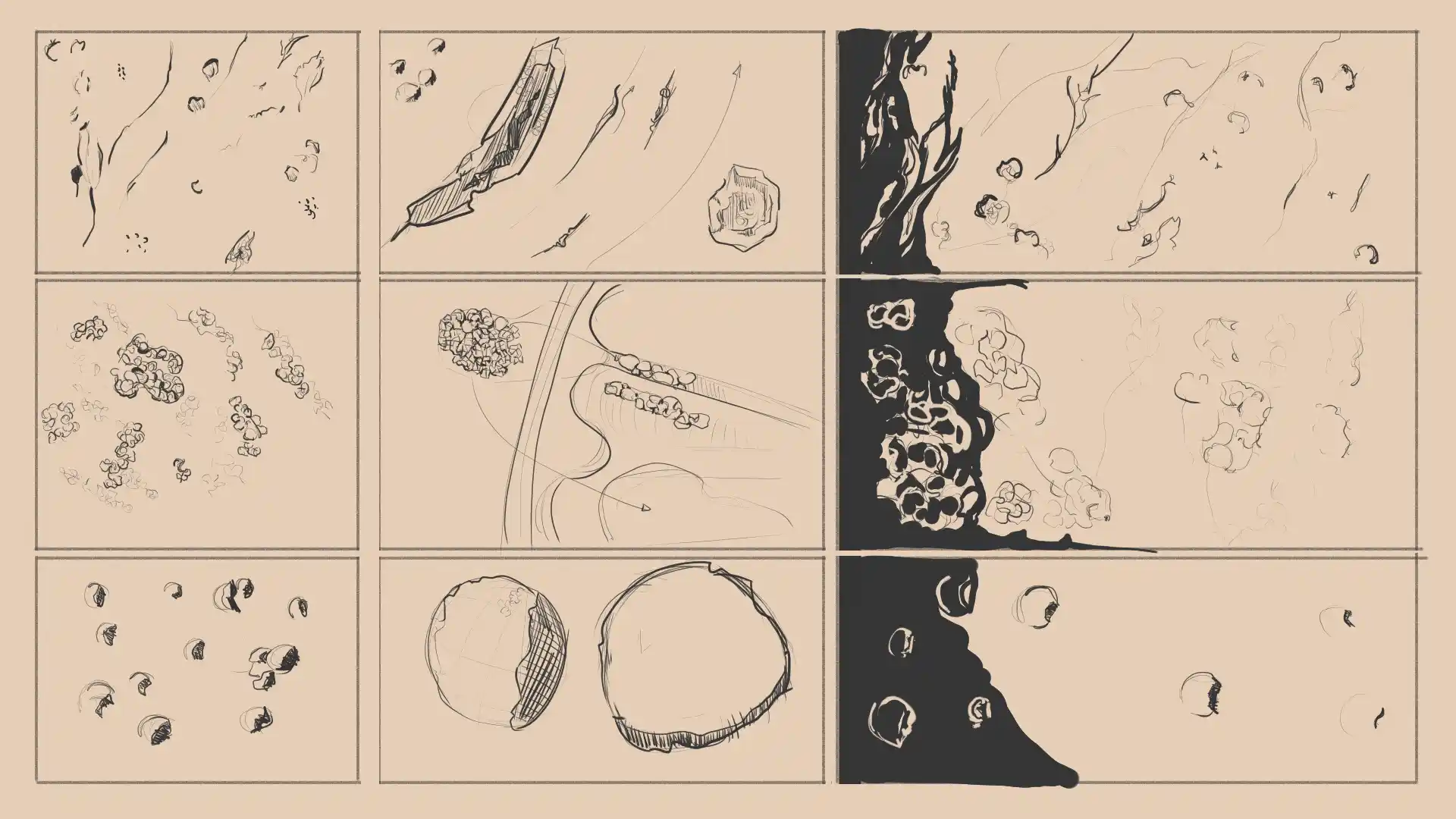
Then, I added a little fire, just for fun !
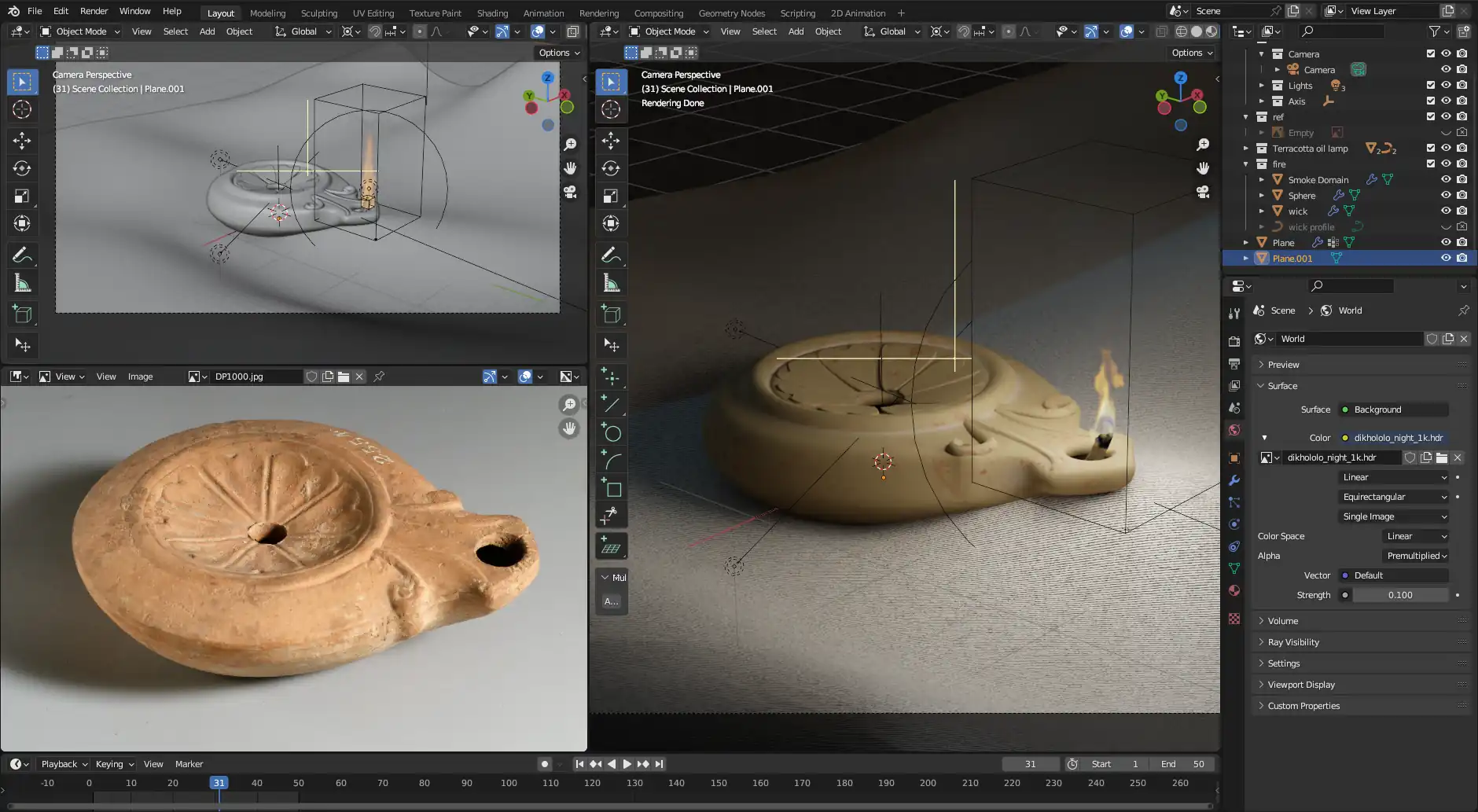
And here is the final result
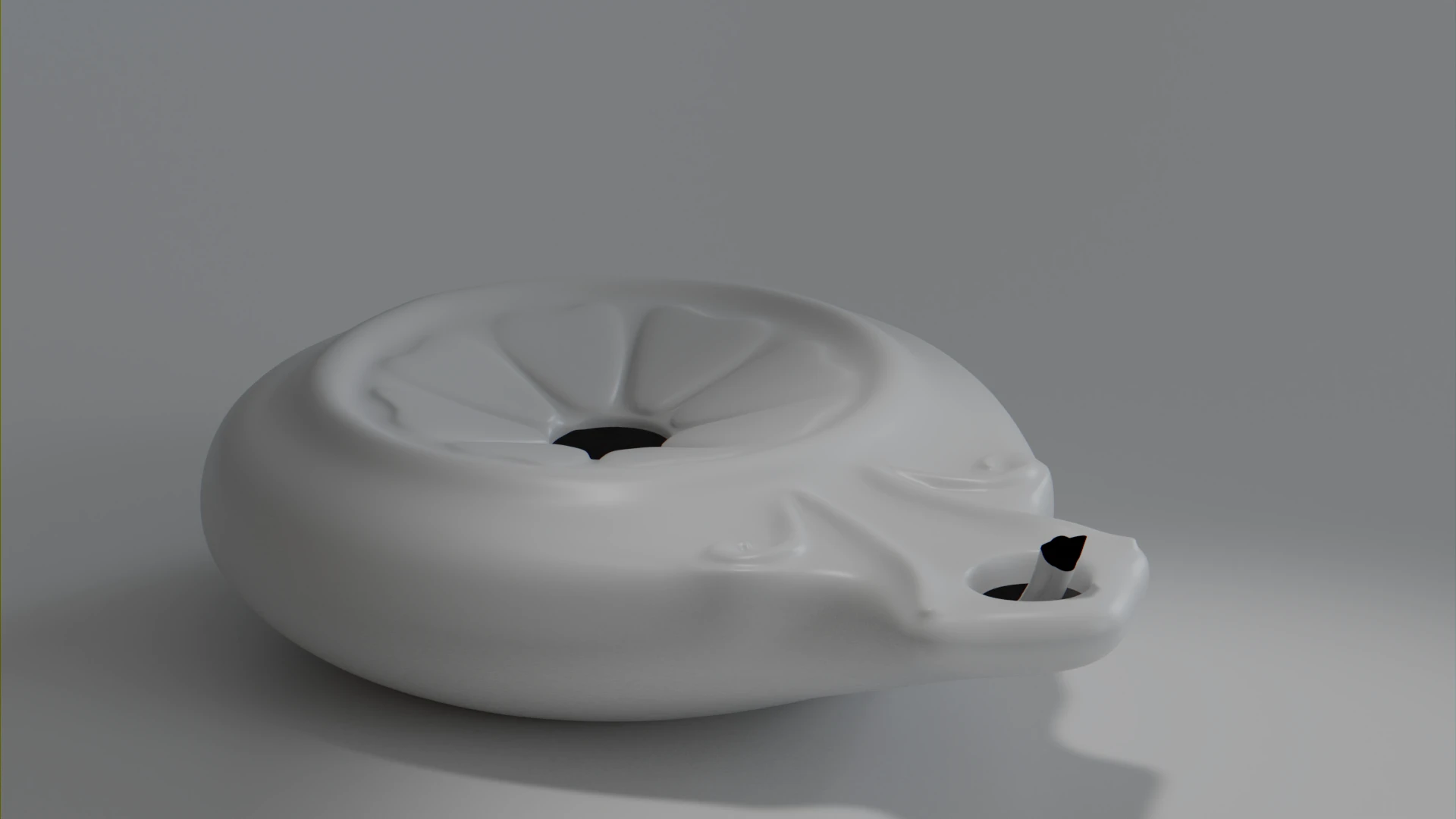
3D view
Disclaimer : technical limitation to material render in web app can let artefacts show, particularly in zoomed views.
See the full screen view (this will open a new tab in your browser).
Credit
Unless otherwise mentioned, all images credit to LGS.
Terracotta oil lamp, Roman, Cypriot, 1st century BCE–1st century CE, Metropolitan Museum of Art
Watercolour decor from Terracotta oil lamp, 1st century, Metropolitan museum