

Trefle incarnat
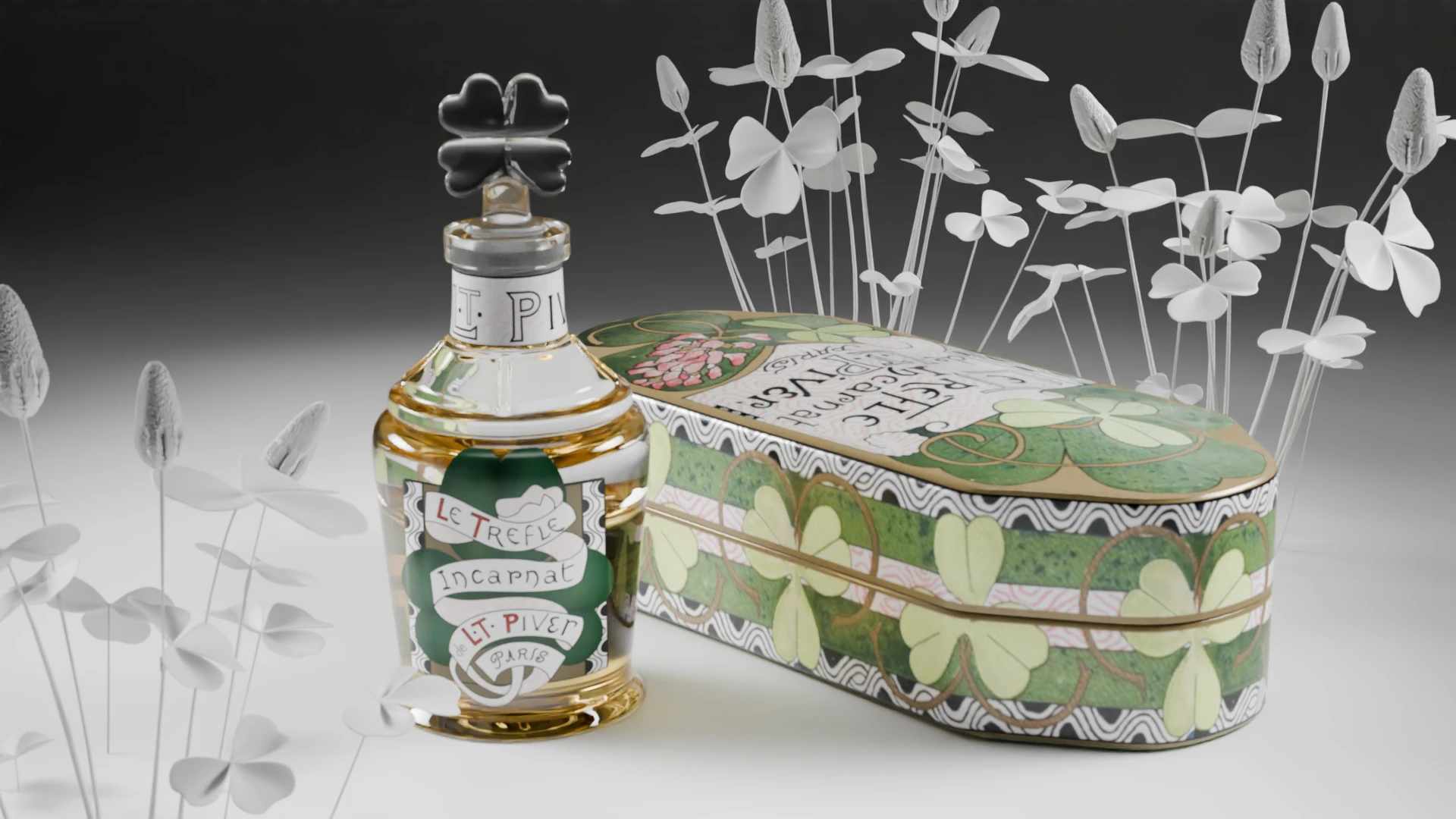
The following texts and images are the results of a training exercise to go from the pictures or the description of an artefact to the creation of a 3D digital double, sometimes restored version of it. If you wish to know more about the process, explanations are in A journey into learning a (3D!) restoration process workflow article.
In order to complete the contextualization scene for the Lalique necklace project, I had to model a few items for the same era. I thought it might be nice to put some of them under a more direct spotlight.
This one is a well known item from the perfume collector.
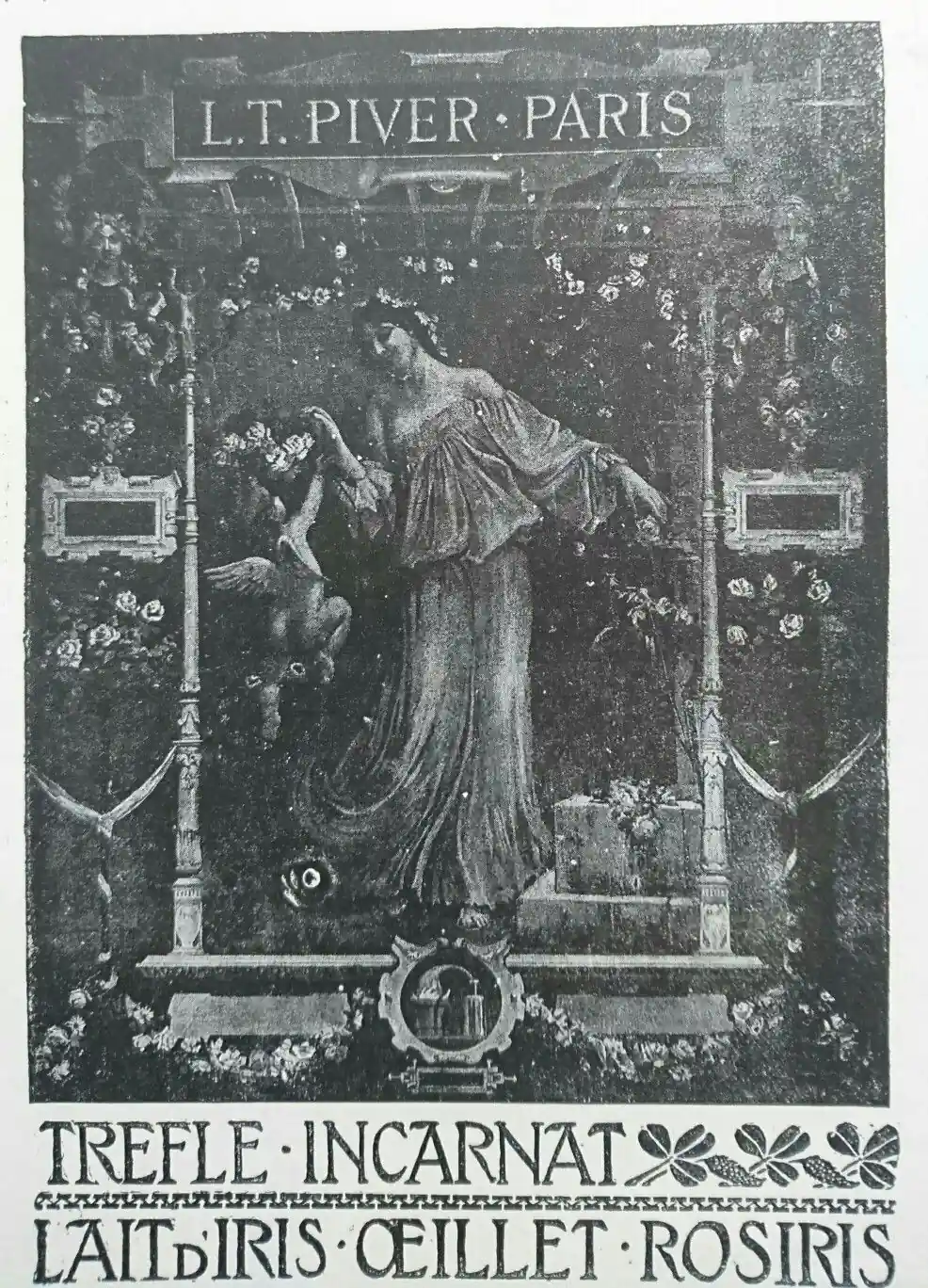
Title: Trefle Incarnat; Lait d’iris, oeillet, rosiris
Datation: 1901
Provenance: France
Media: paper
Source image: unknown
Historical context
The “Trefle incarnat” (crimson clover) is a perfume inspired by Trifolium incarnatum, launched in 1898 and was sold until 1920s. This fragrance was created for L.T. Piver by perfumer Jacques Rouché under the supervision of chemist Georges Darzens. It is based on amyl salicylates. It is said to have been one of the first fragrance combining synthetics and natural compounds.
Piver perfume house is one of the oldest one still in activity. I am intrigued by this perfume. I never had the chance to smell the flower it supposedly is a reference to, and I can but only guess at what the perfume evokes.
It is relatively easy to find references for the box and bottle. There seem to have been variations on the latter. I think the perfume and the “eau de parfum” had different bottles, but I can’t exactly pinpoint a date reference. I’m choosing the smallest version of the two, because it has the most glorious box !
Sadly, I was not able to find free of rights images to show you, dear reader.
Clovers and glass
Modelling the shapes
Disclaimer : this is an exercise, shown for documentation purposes only
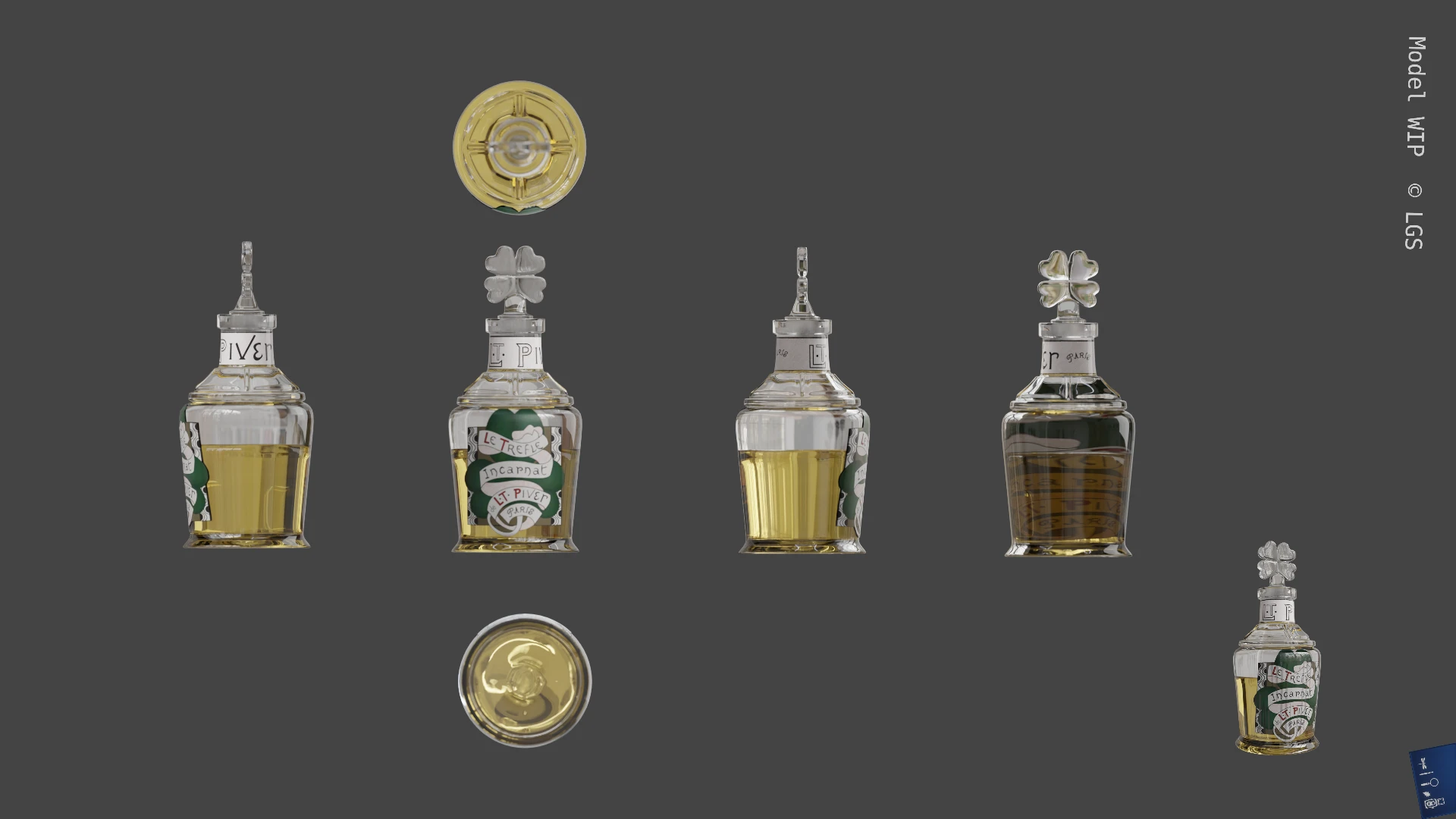
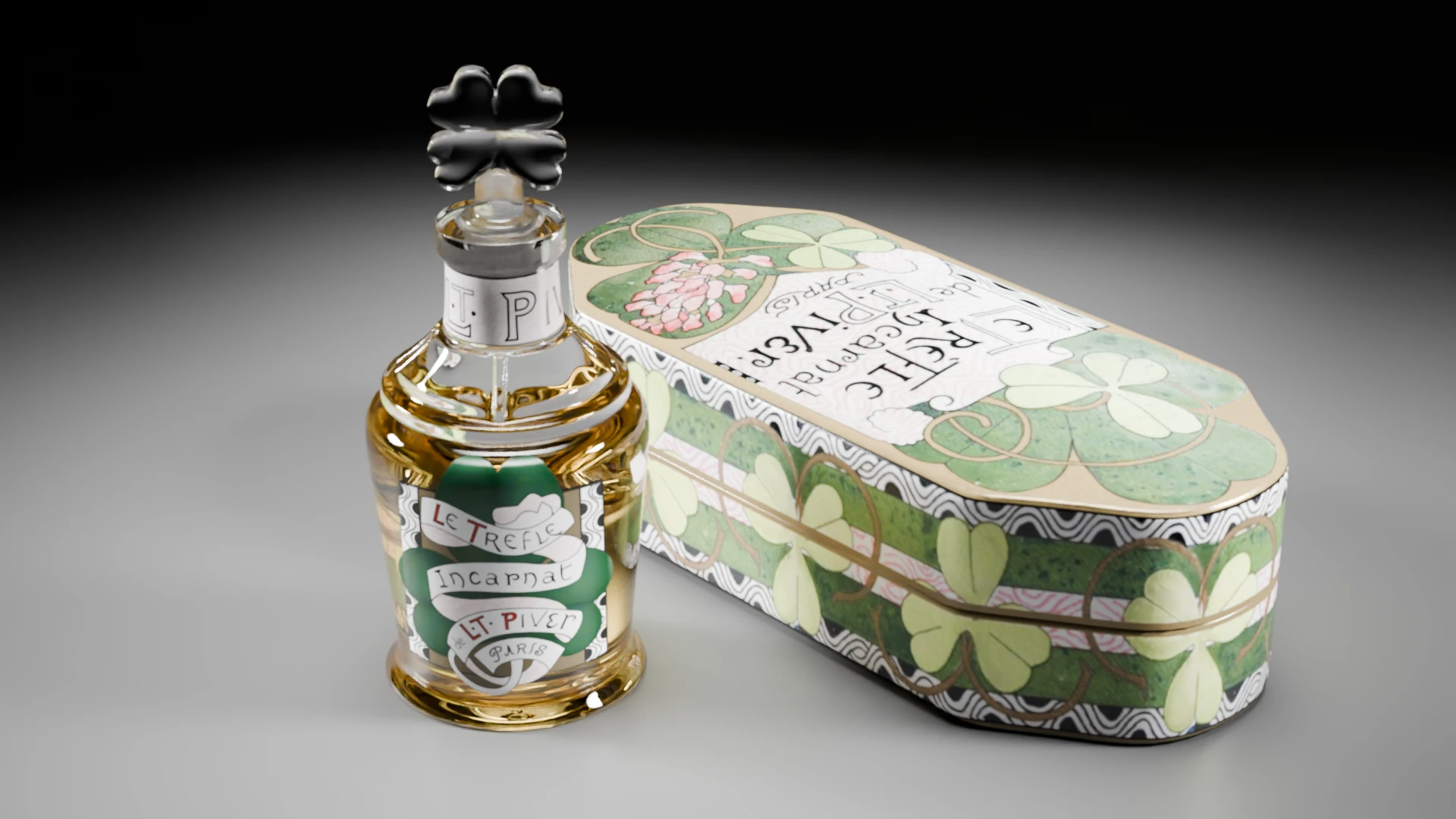
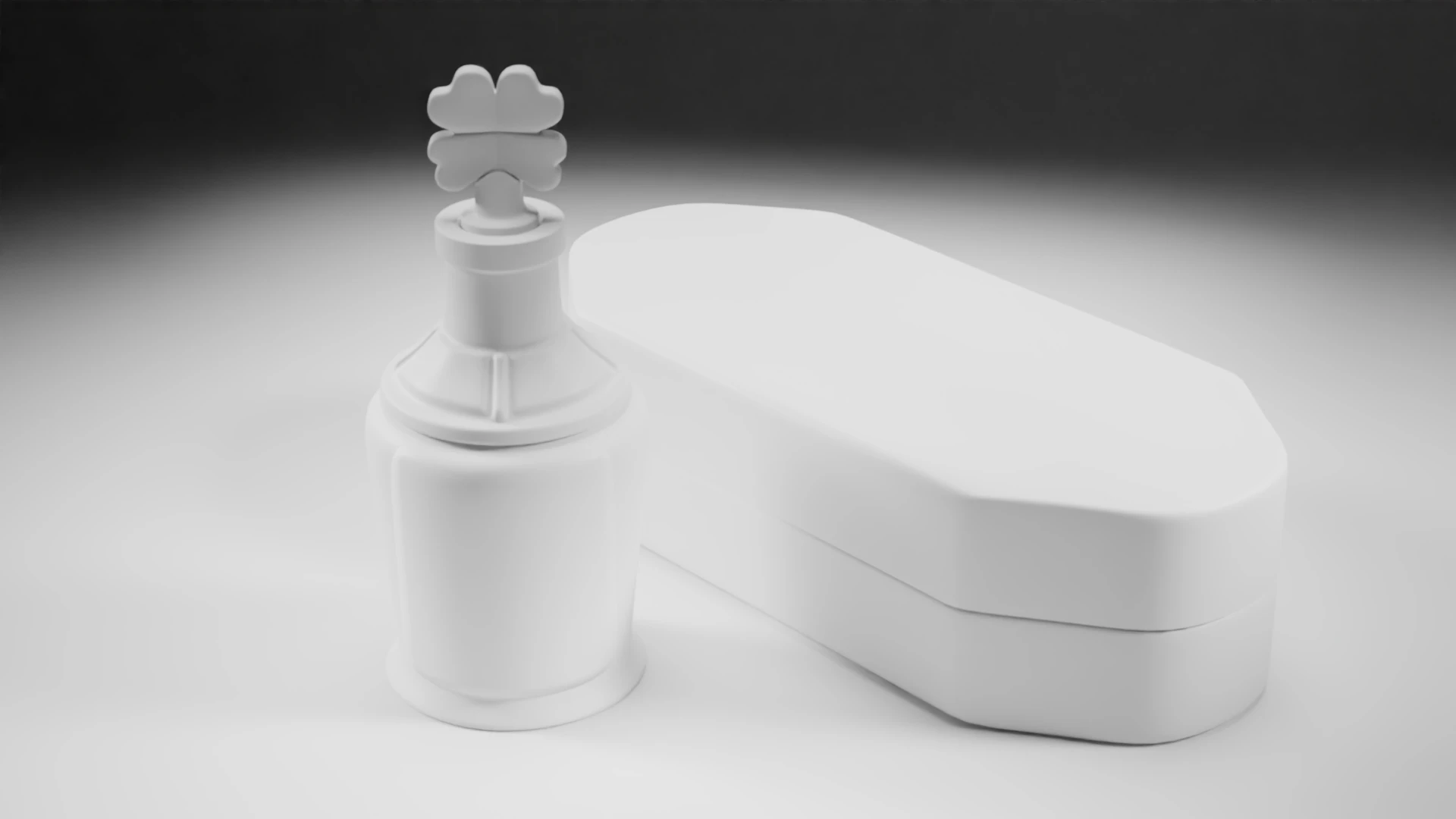
The bottle shape is a little tricky: the shoulder and neck have a pattern that I assumed were clover-like. I might be wrong in that.
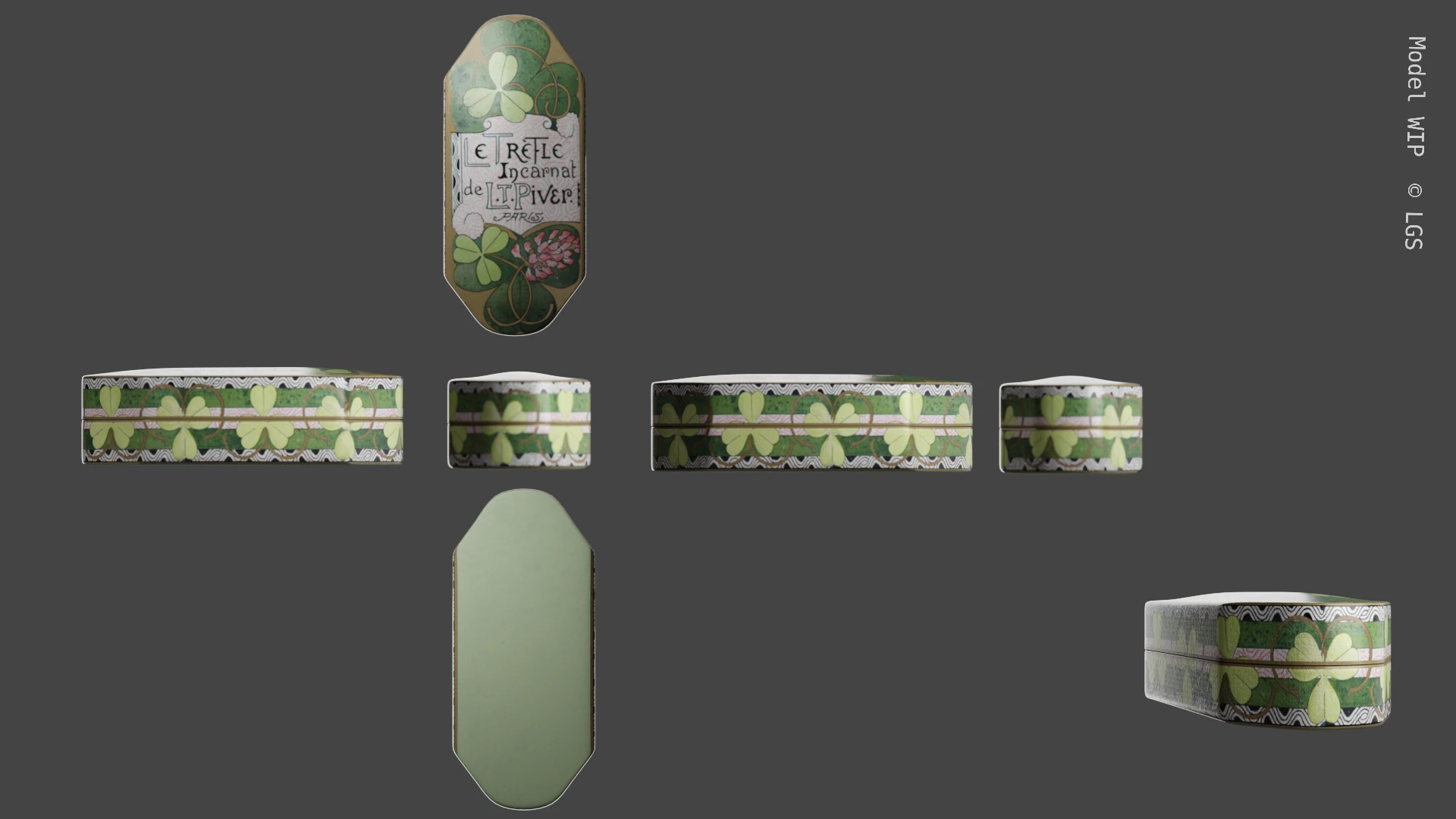
The box shape is relatively straightforward. I deem two elements uncertain, though. There is an upward slop on the lid I’m not sure the origin of (usage deformation or produced as is?). There also seem to be a will to create love leaves lobes at the extremities. It is more visible on the bottom part of the box.
Texturing the shapes
Because the reference images I found were of altered objects, I initially thought a little tidying up was necessary. That ended being a full reconstruction of the elements to ensure their good rendering.
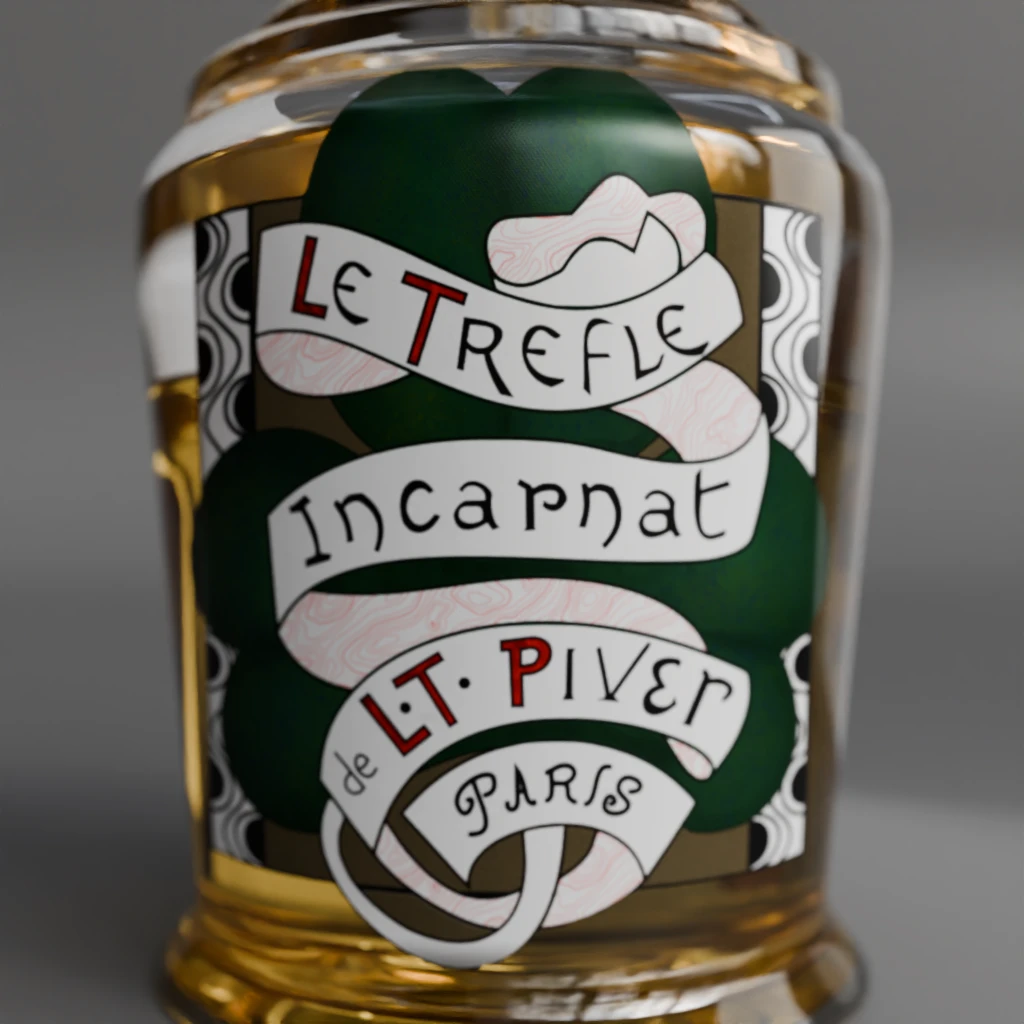
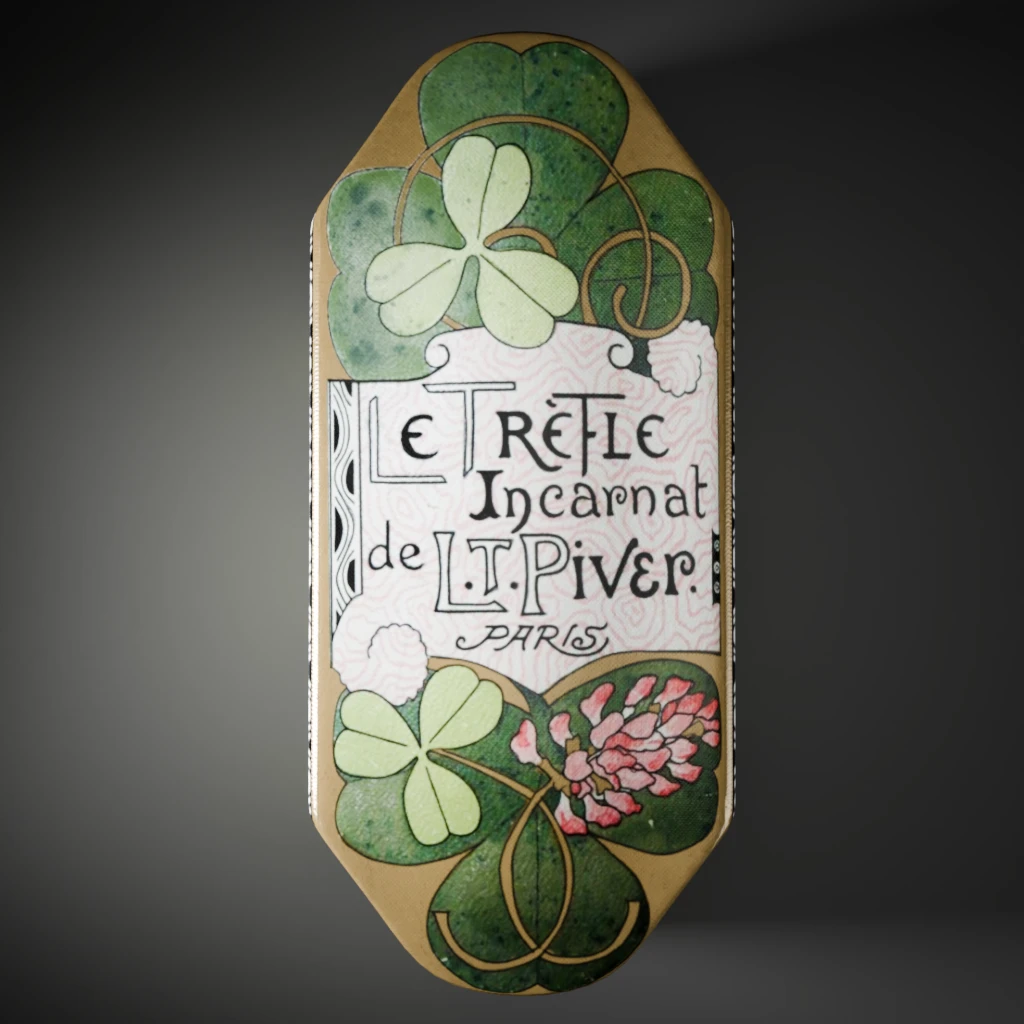
Shine a little light: stills renders using Blender’s Cycles engine
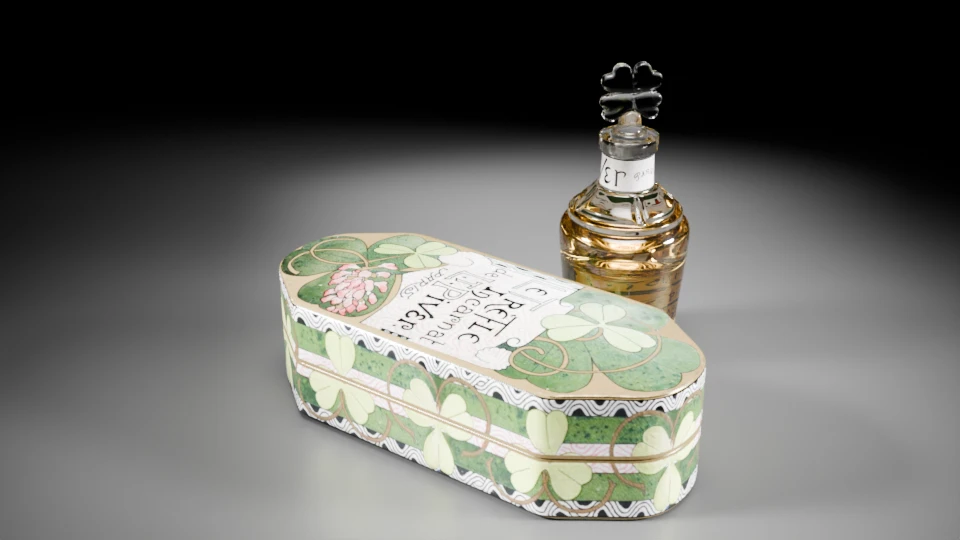
Making of
Credit
Unless otherwise mentioned, all images credit to LGS.
Kops Jan and F. W. van Eeden, Trifolium incarnatum extracted from “Flora Batava. Afbeelding en beschrijving der Nederlandsche Gewassen”, vol. 20, 1898, Public domain, via Wikimedia Commons

Decor
Mucha, Alfons, Lance parfum ” Rodo ” gesetzlich geschvetz Rodo erfrischt ohne nass oder fleekg zu machen , 1896, Bibliothèque nationale de France