

Fibula n°1
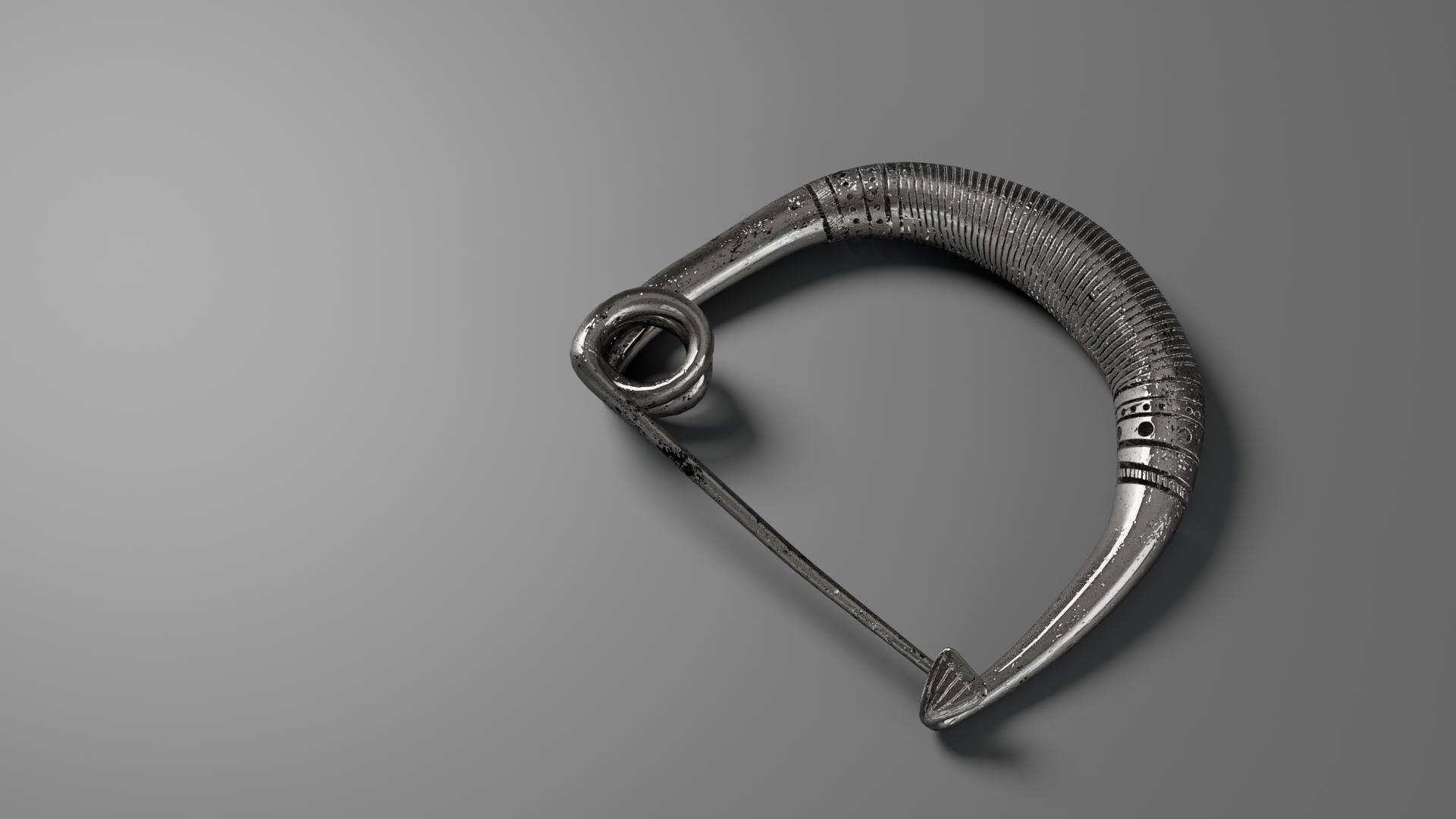
The following texts and images are the results of a training exercise to go from the pictures or the description of an artefact to the creation of a 3D digital double, sometimes restored version of it. If you wish to know more about the process, explanations are in A journey into learning a (3D!) restoration process workflow article.
In order to complete the contextualization scene for the owl shaped aryballos project, I had to model a few items for the same era. I thought it might be nice to put some of them under a more direct spotlight.
This one is a well known item of very archaeologist: the ever present fibula !
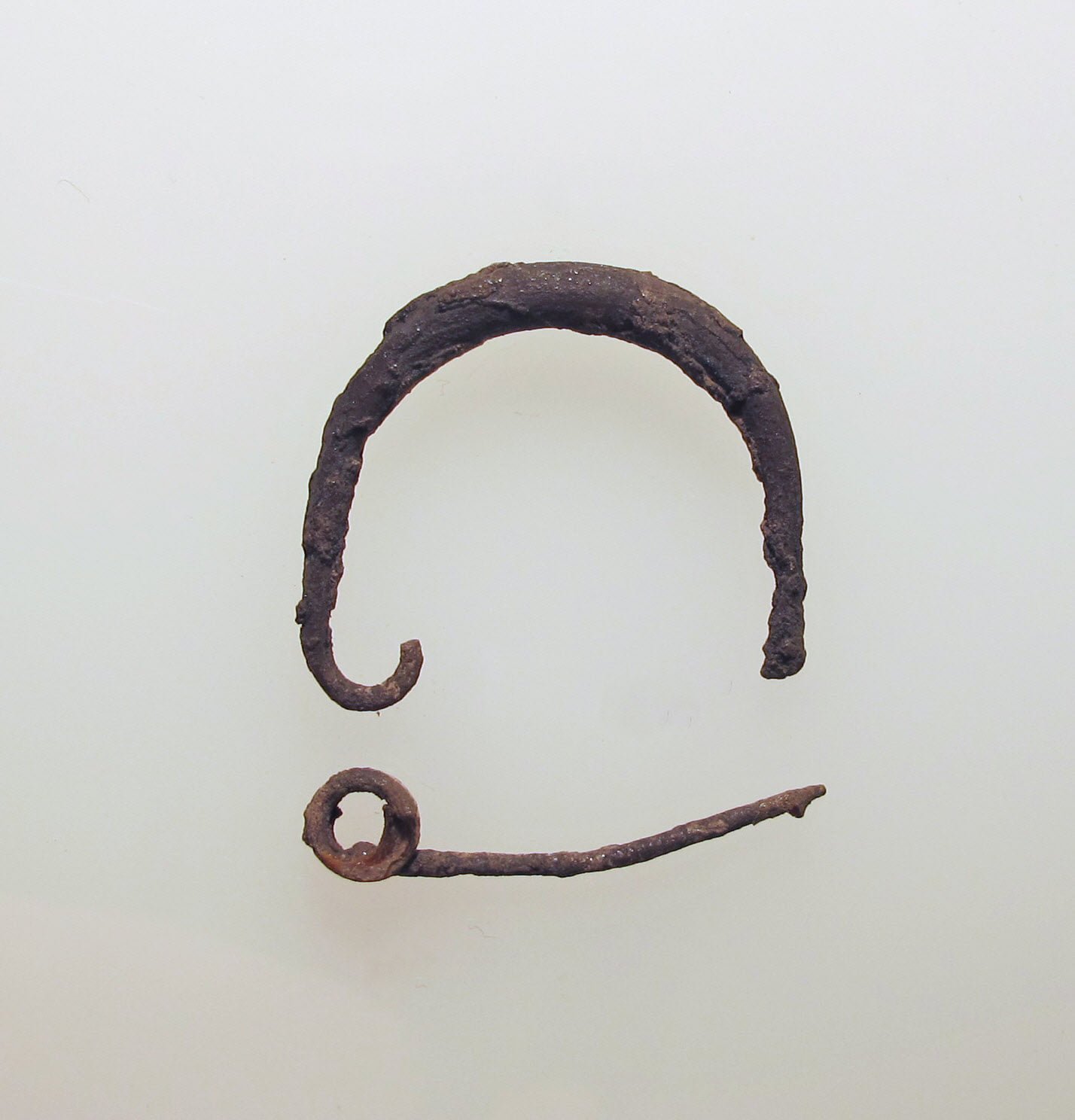
Title: Fibula
Datation: 7th – 4th century BCE
Provenance: Cyprus
Dimensions: 2.7×3.3×0.3 cm
Media: ferrous metal (with silvering?)
Source image: Accession Number: 74.51.3207, Metropolitan museum of Art
Historical context
A fibula is a brooch for fastening garments, particularly on the shoulder. Its plural is fibulae. In the Oriental world and Europe, the first examples of these objects appeared in the late Bronze Age and evolved in shapes and forms, ultimately creating the safety pin and the modern brooch we know today.
Visual assessment
The fibula is broken in two, not taking missing pieces into account. Although its surface is heavily altered by some sort of rust, its shape is still readable and –correct me, dear reader, if I’m wrong– looks like an arch type.
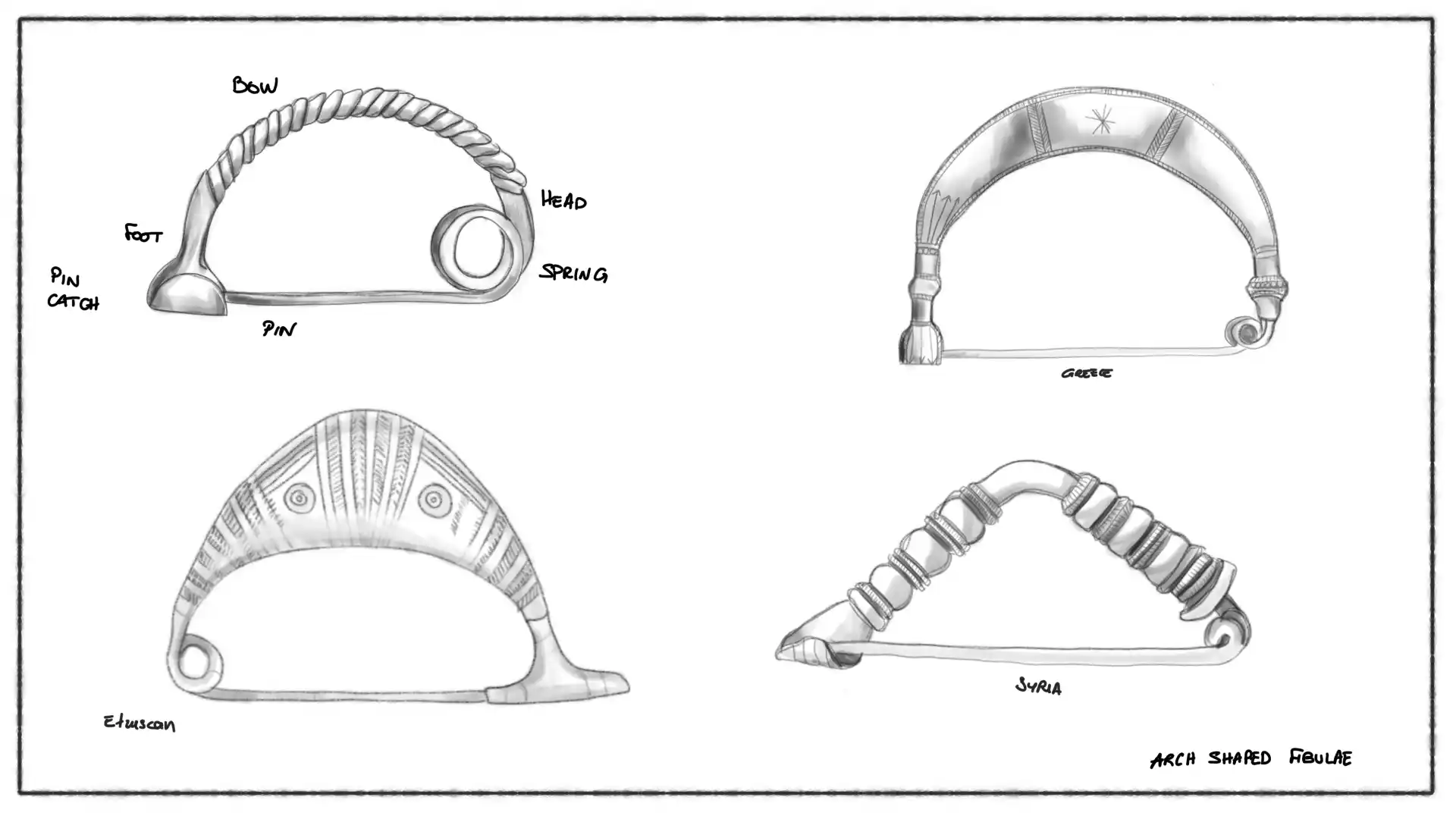
We need to extrapolate the complete shape from similar known and documented examples.
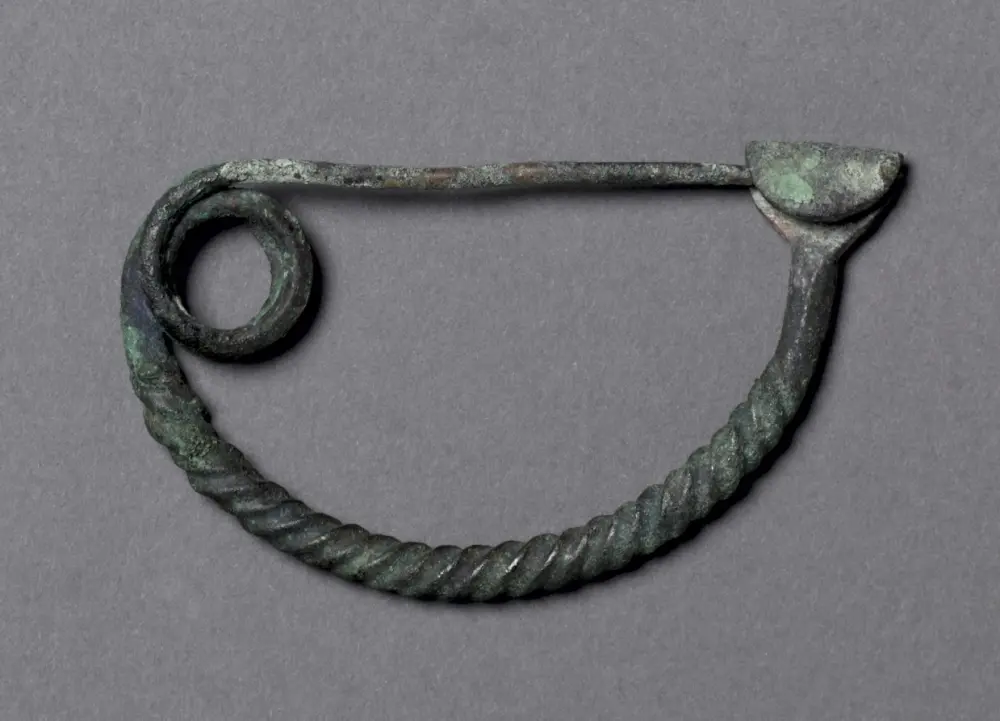
This artefact seems close in construction to one in the Cleveland art museum. I can use it as a guide for the reconstruction.
There is an unknown element though: the decor. Fibulae can be very simple or very ornate. The metallic alteration of our artefact doesn’t let any information show on that front.
I think I will try to add basic shapes, just for the heck of it, but there is nothing scientific about that choice, only observations or various fibulae collections…
On a material point of view, the museum’s cartel mentions “silver”. The metallic alterations (black-red) would concur with a ferrous metal base with silvering on top.
3D notes
Disclaimer : this is an exercise, shown for documentation purposes only.
Model the shape
Once the path is defined, the modelling and texturing process are easier.
The only drawback is to set a time limit to stop experimenting !
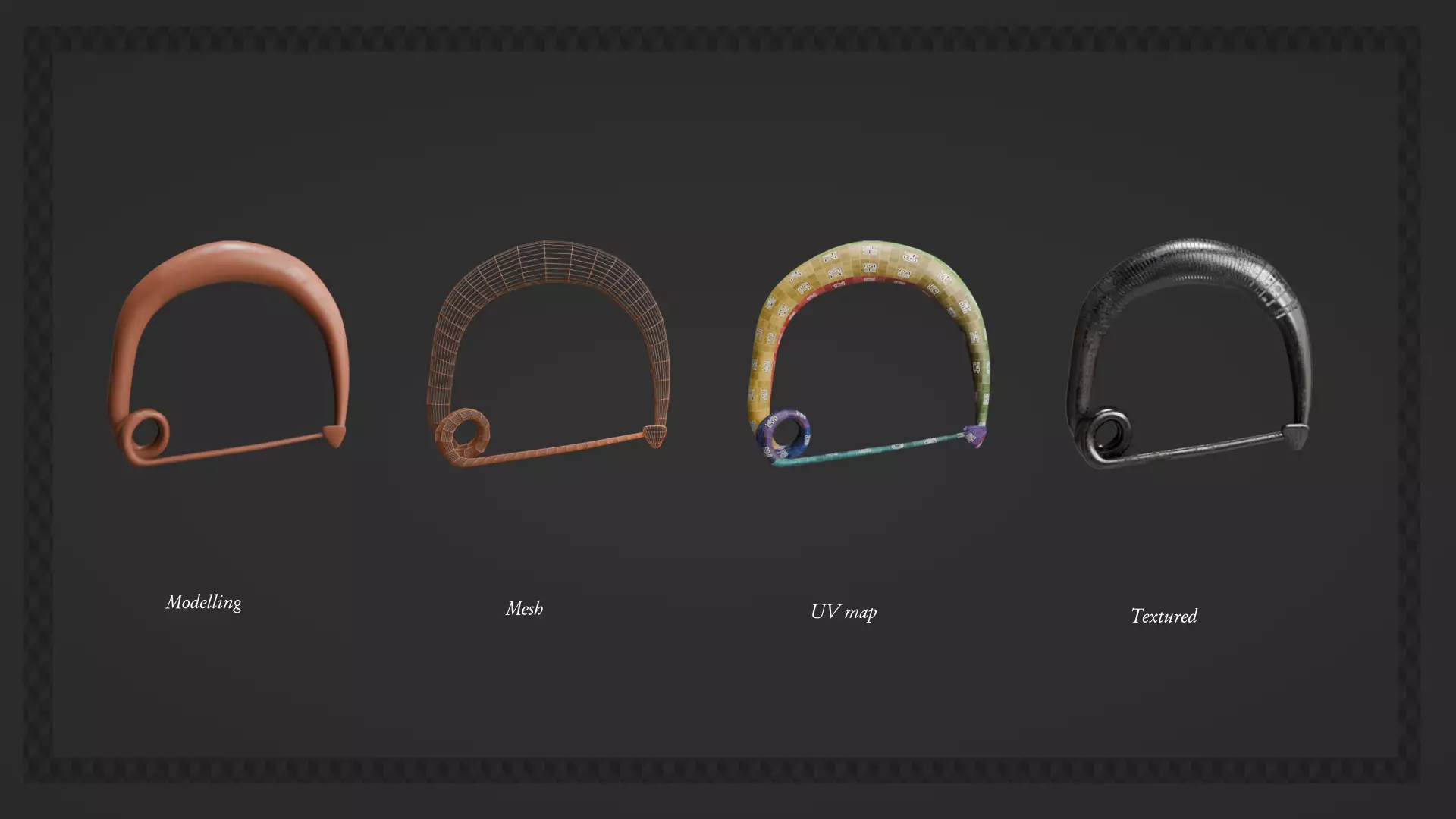
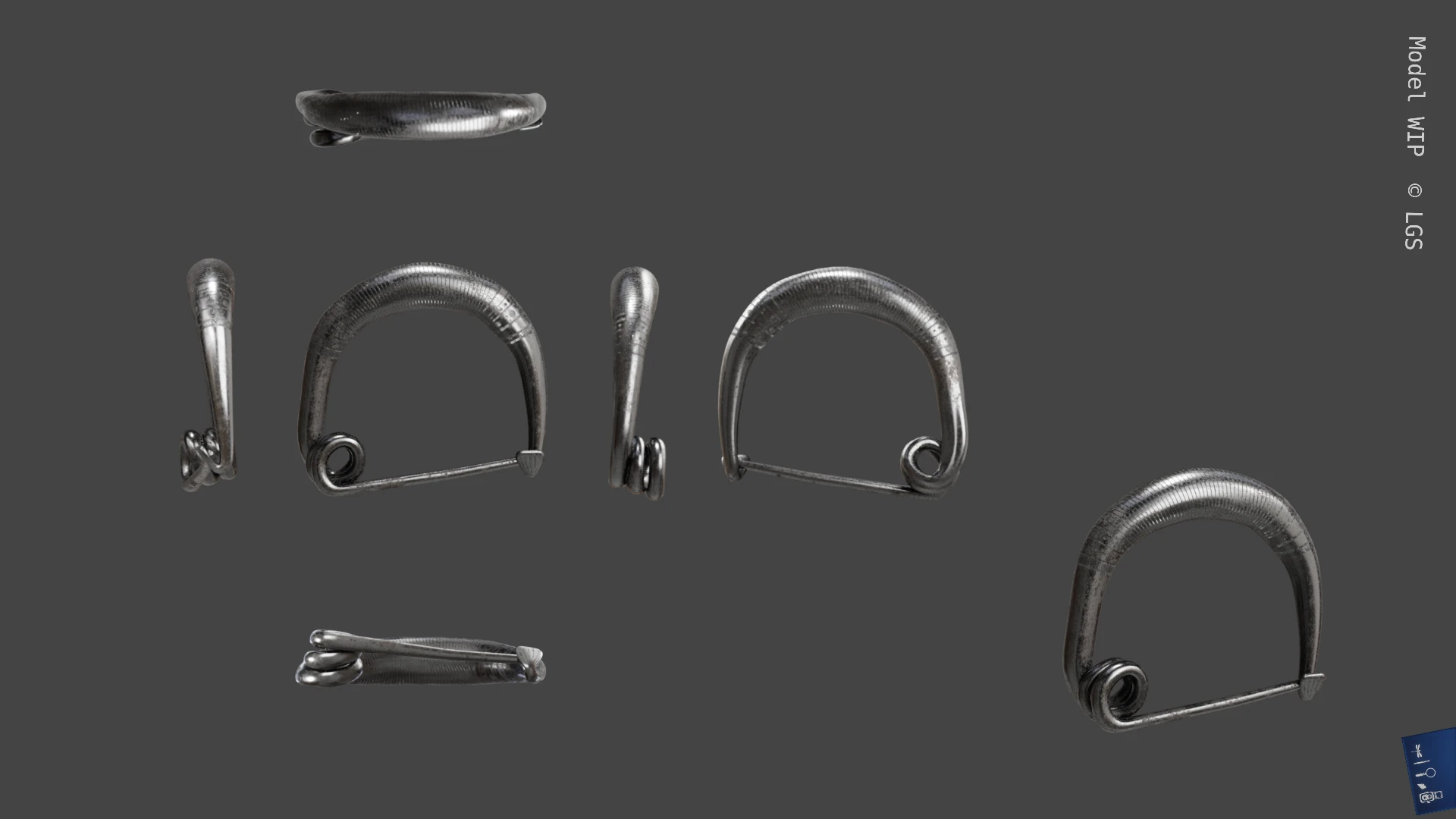
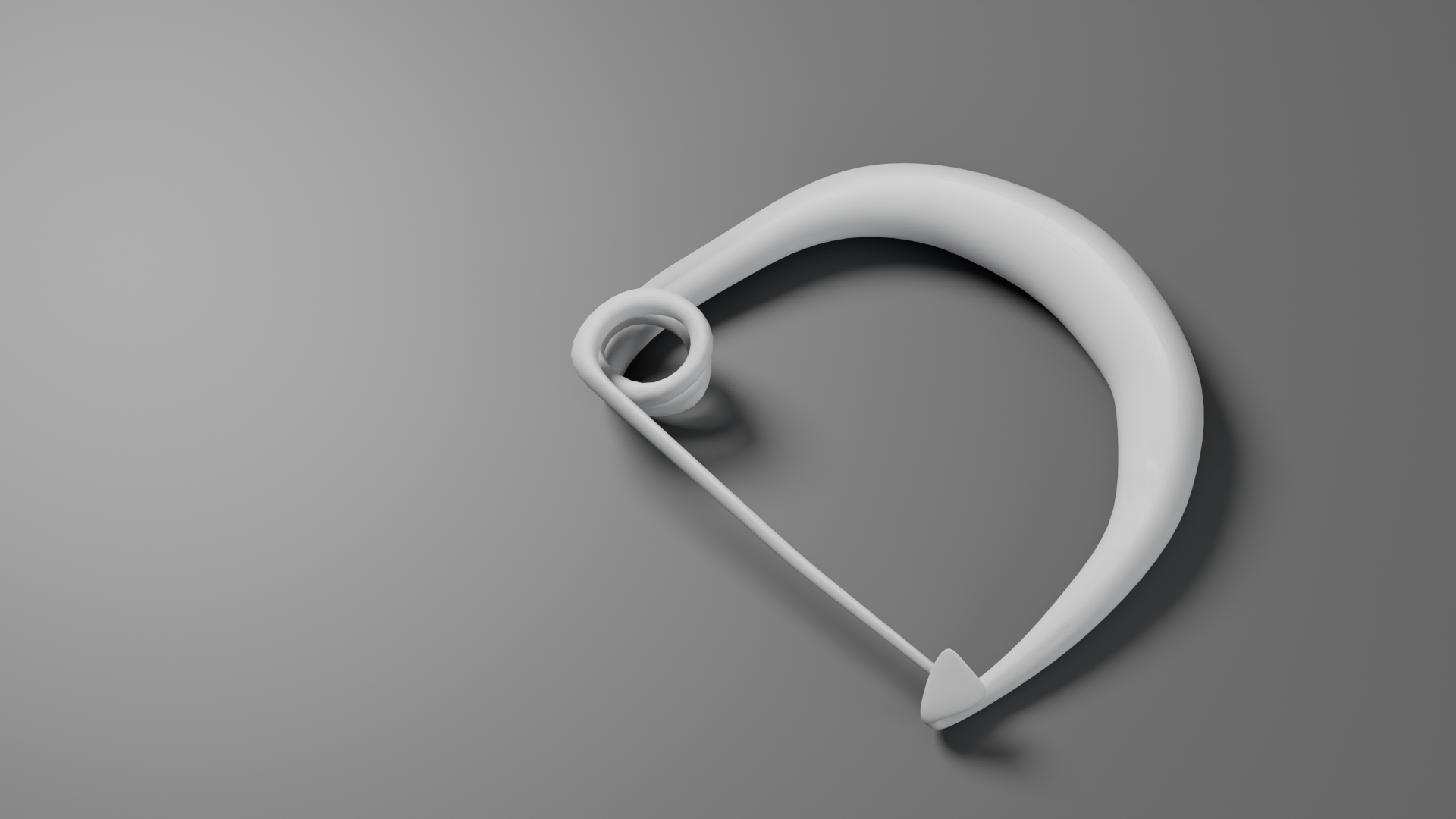
3D view
Disclaimer : technical limitation to material render in web app can let artefacts show, particularly in zoomed views.
See the full screen view (this will open a new tab in your browser)**.
Credits
Unless otherwise mentioned, all images credit to LGS.
Images
Fibula, Cypriot, Silver, Accession Number: 74.51.3207, Metropolitan museum of Art
Fibula, Bronze, 900-800 BCE, Italy, accession number 1970.109, The Cleveland Museum of Art
Fibula, Bronze, ca 600 BCE, Syria, accession number 1970.96, The Cleveland Museum of Art
Fibula with solar design, Bronze, c.700-675 BCE, Greece Boetia, accession number 1999.9, The Cleveland Museum of Art
Fibula, c.900-700 BCE, Etruscan, accession number 1970.84, The Cleveland Museum of Art
Decor
Tierney Tom, “Ancient greek costumes paper dolls”, coll. History of costumes, Dover publications.
Tierney Tom, “Historic costume : from ancient times to the Renaissance”, Dover Publications, 2003.