

Lekythos
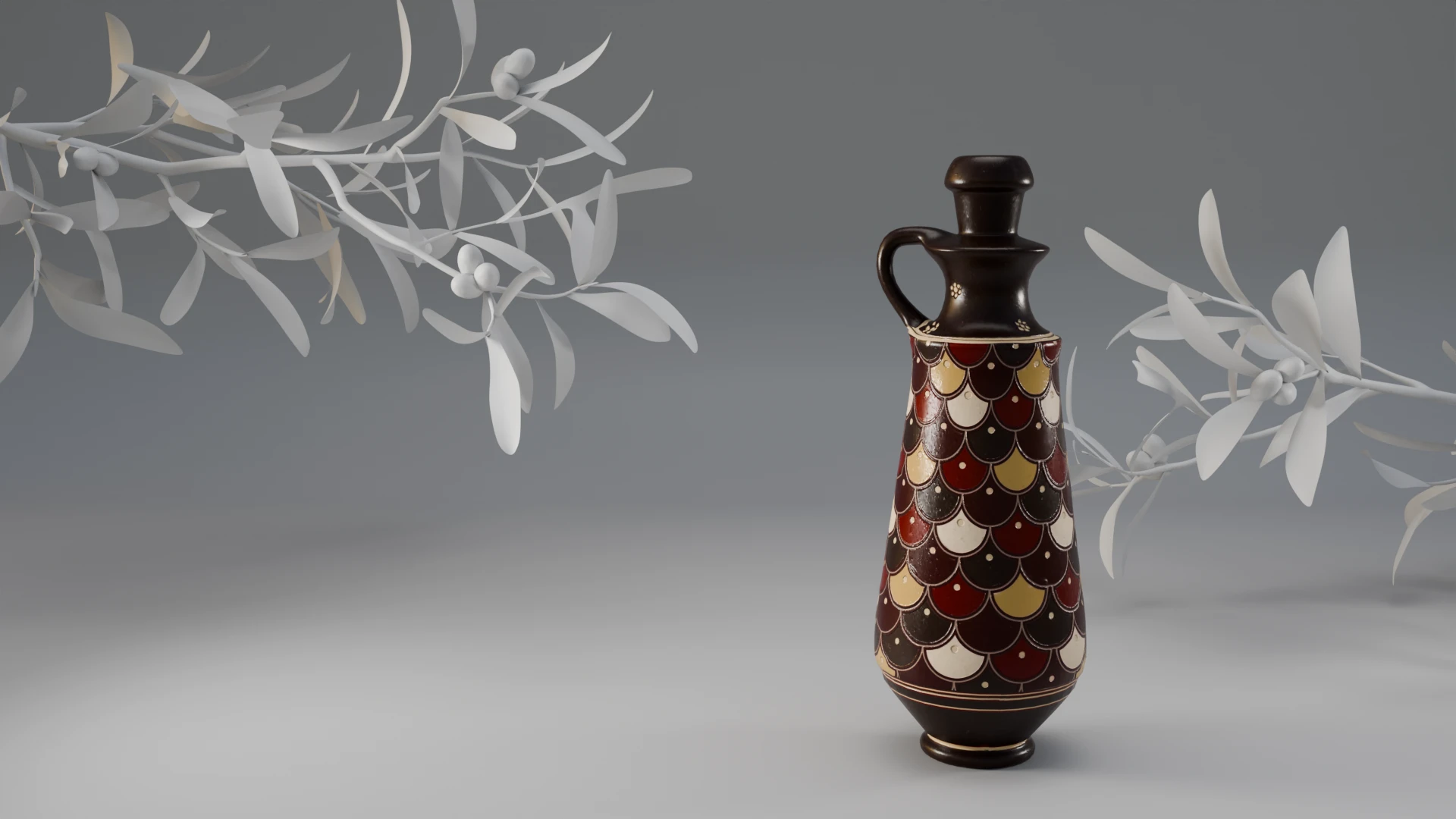
The following texts and images are the results of a training exercise to go from the pictures or the description of an artefact to the creation of a 3D digital double, sometimes restored version of it. If you wish to know more about the process, explanations are in A journey into learning a (3D!) restoration process workflow article.
In order to fill the contextualization scene in the aryballos owl project, I hade to model a few other items. I had to restrain myself a little on the ceramic pieces, because, well, there’s only so much that can fit in “naturally”. I created a very toned down version of a lekythos. But having been in the midst of so many pots and vases got my potter’s mind going.
So, as a sort of pottery-therapy for a potter without an IRL workshop at the moment, I decided for the next best thing and went digital throwing. Just for fun, I tried to imagine what a fully decorated lekythos would look like in the style of all the wonderful vases I came across researching the project.
This time, it is not in any way, shape or form a historically accurate piece. I do not have enough material to justify my choices. It’s only a little recreation (pun intended, of course!).
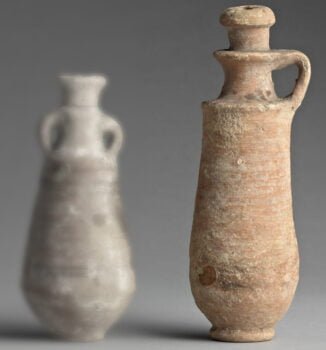
Title: Lekythos, Ionian
Datation: ca 650 BCE
Provenance: created in Rhodes, found in Camiros
Dimensions: 10,4x 4 cm
Media: terracotta
Source image: Musée du Louvre
Historical context
The shape of the lekythos (or lecythus) is inspired from an Ionian vessel from the Musée du Louvre collection.
Lekythoi are “a type of ancient Greece vessel used for storing oil”. They have been used to store perfumed oils, whether for domestic or ritual uses. Those latter ones are almost always richly decorated. I tend to think more kindly to more vernacular ones.
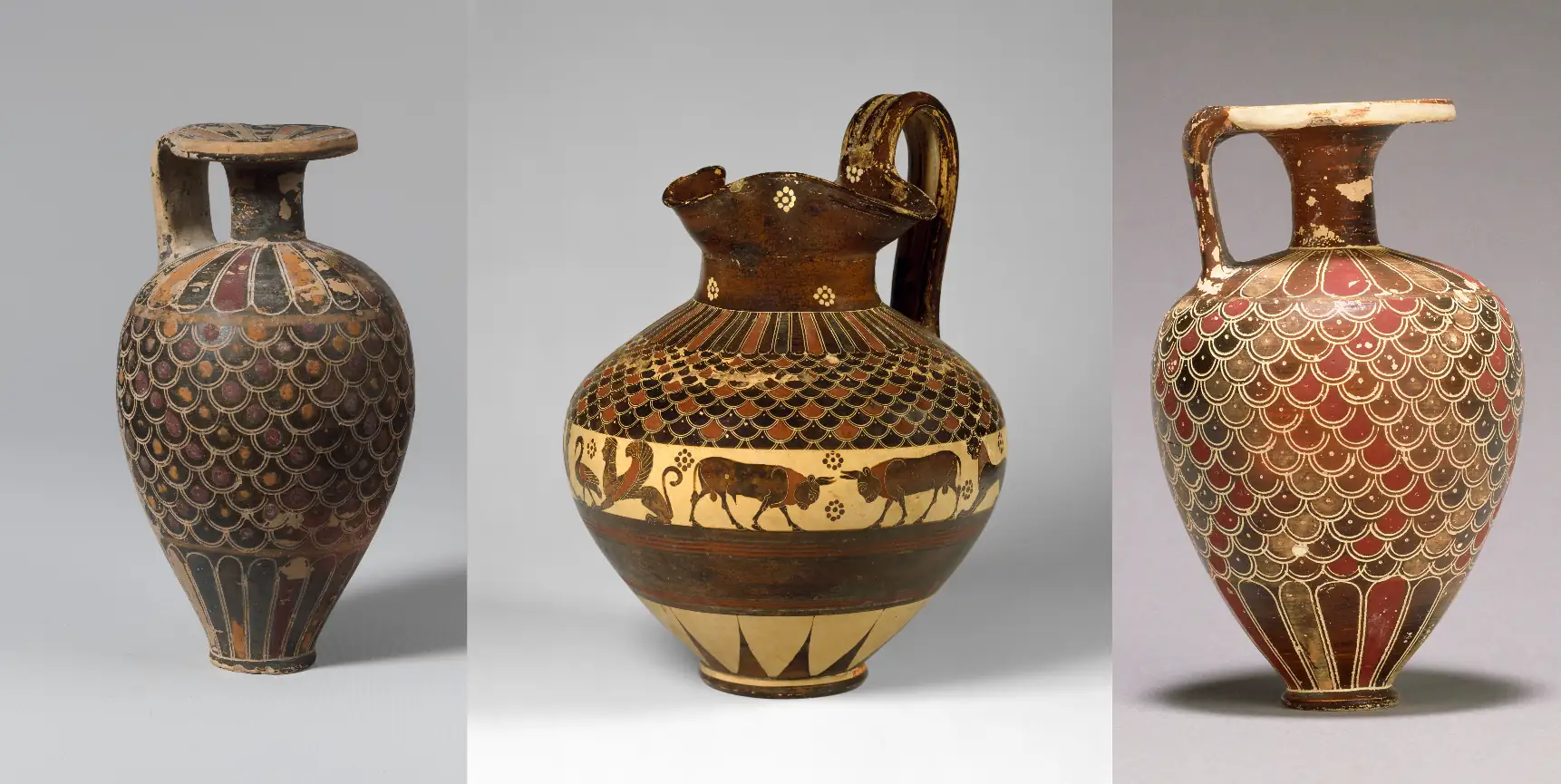
Of course, I’m shooting myself in the foot because the decor I chose to do is one inspired from the orientalizing period. I know, I know.
3D notes
Disclaimer : this is an exercise, shown for documentation purposes only
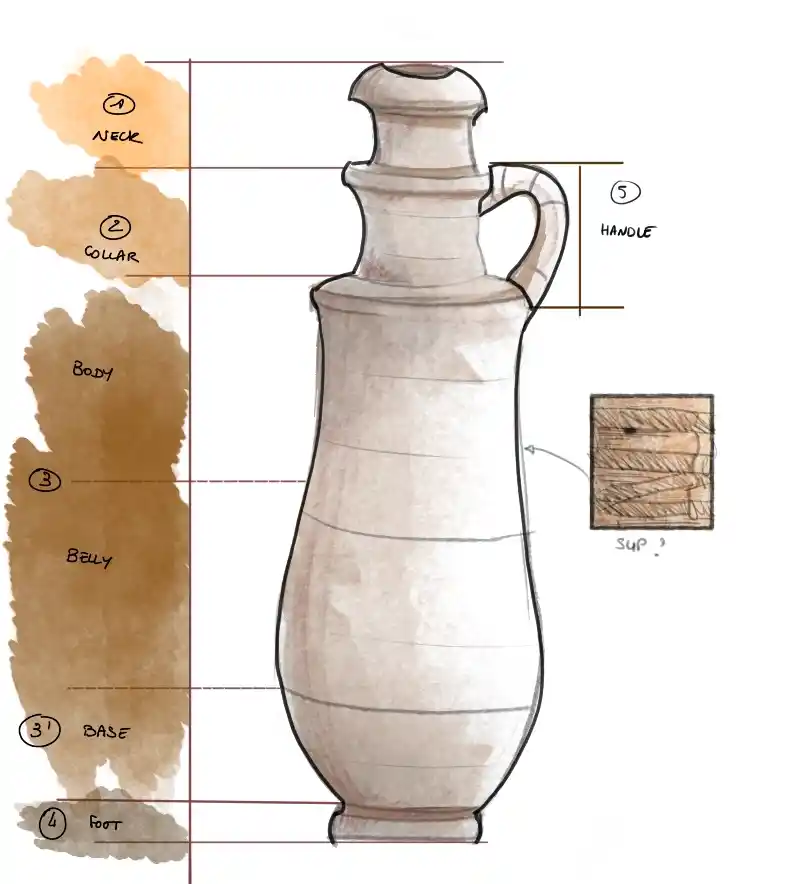
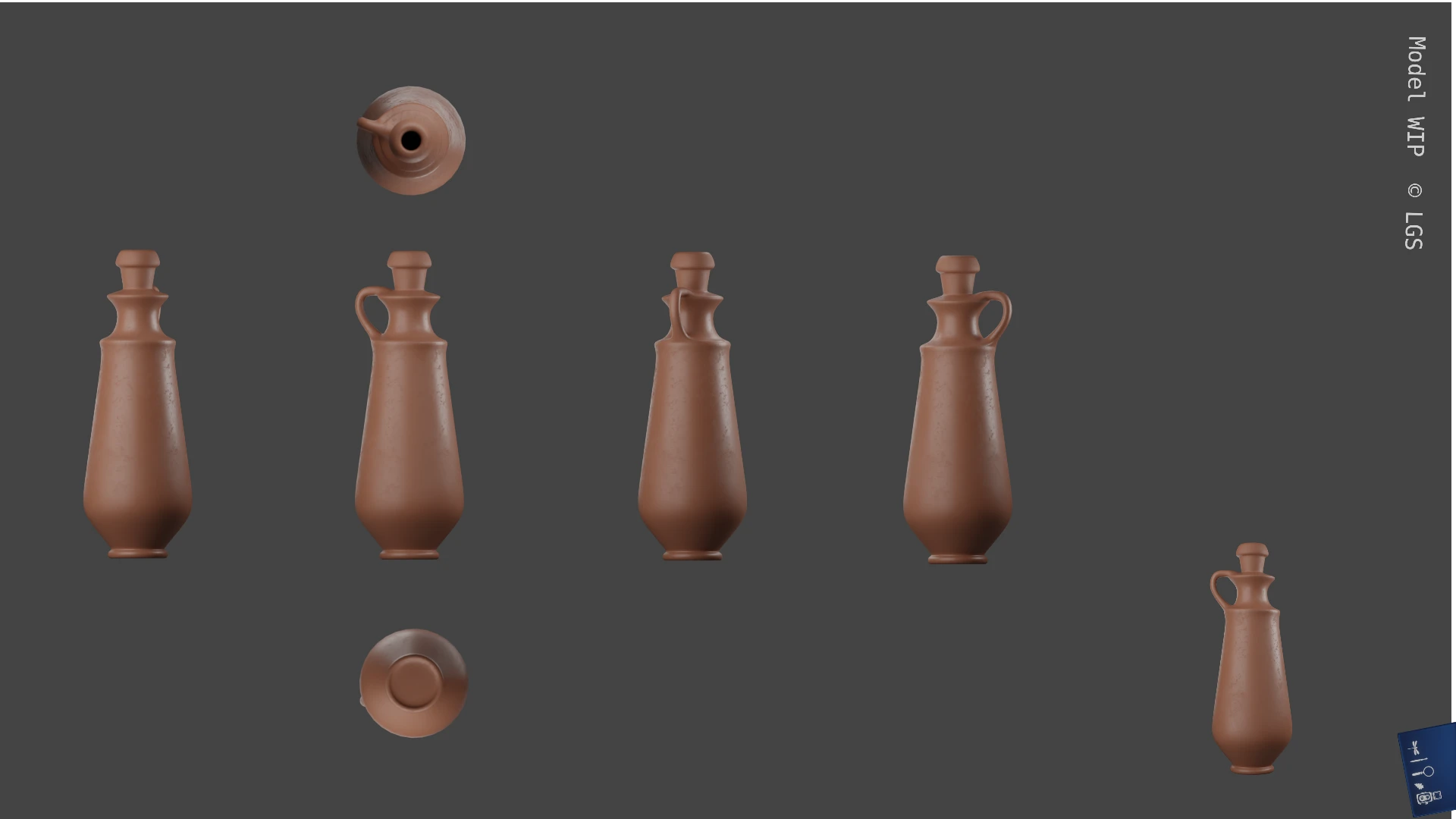
Model the shape
The shape was quite fun to model. The handle remaining the most arduous part. Just like with real clay, making it flow in the outline without breaking the silhouette is always tricky.
Texture the shape
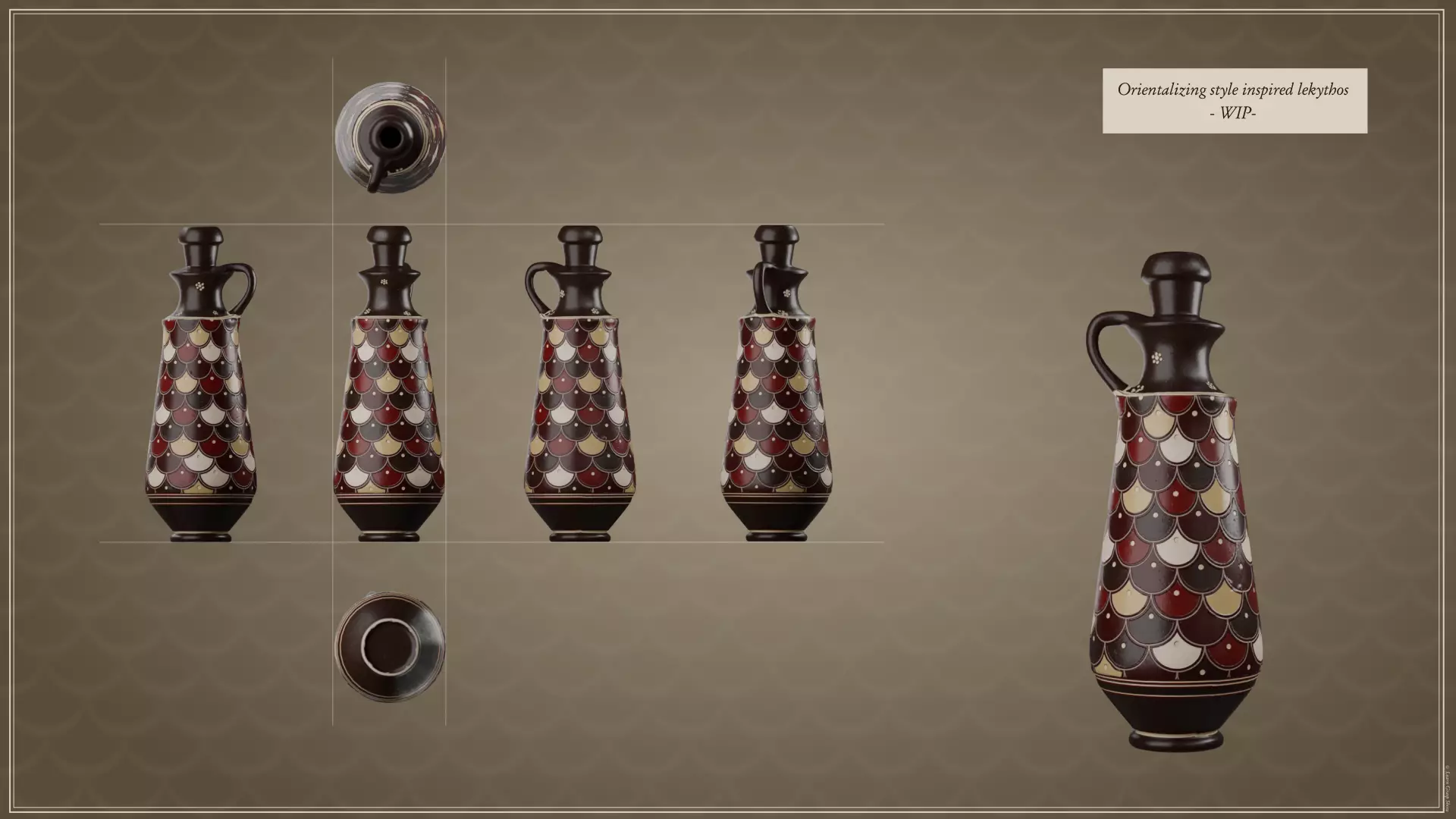
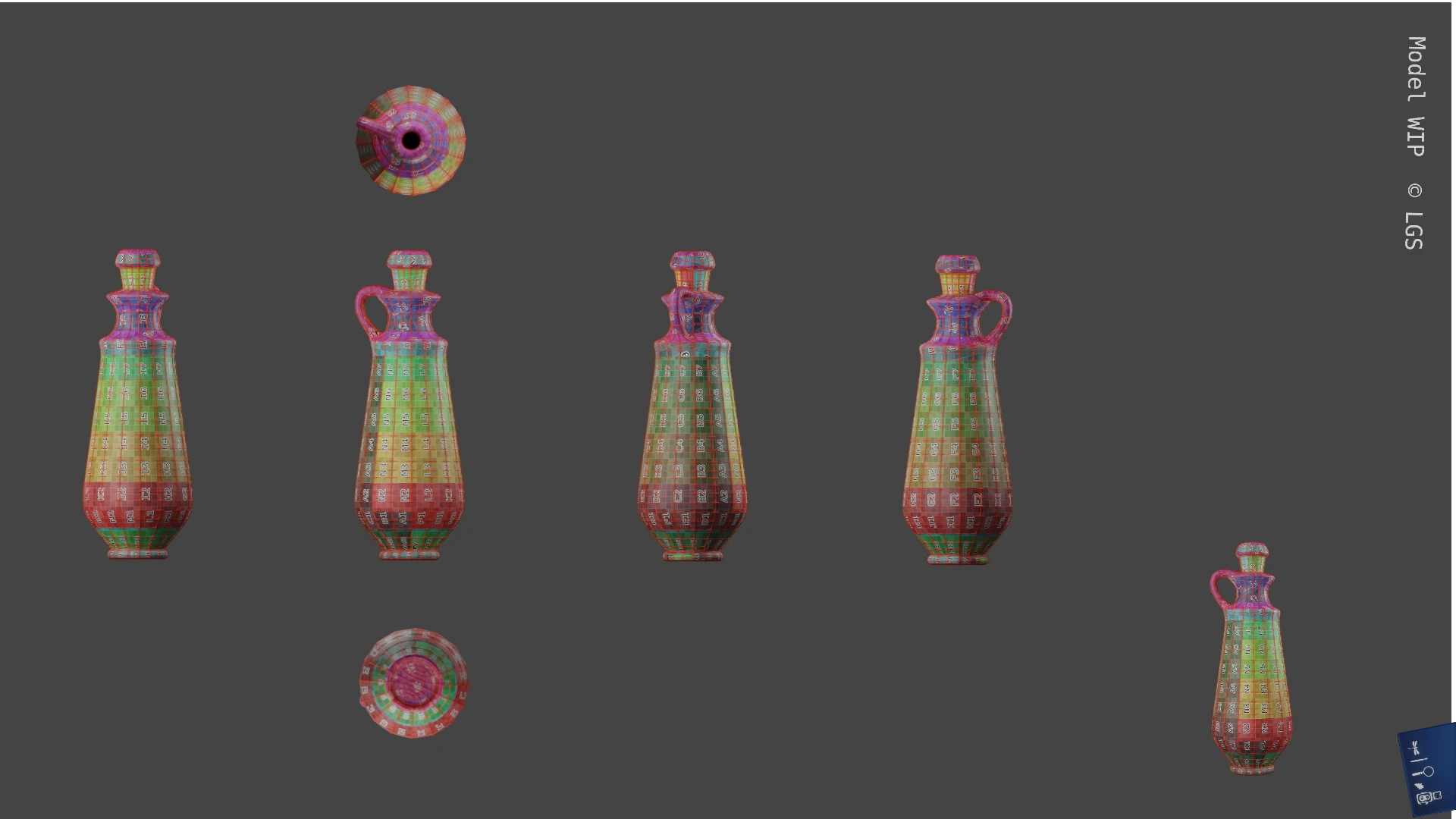
Here the most struggle was in the UV slicing. In the end, the most efficient way was to follow the decor position. There is however a cut at the bottom of the collar I couldn’t do without, and that is a little prominent depending on the view.
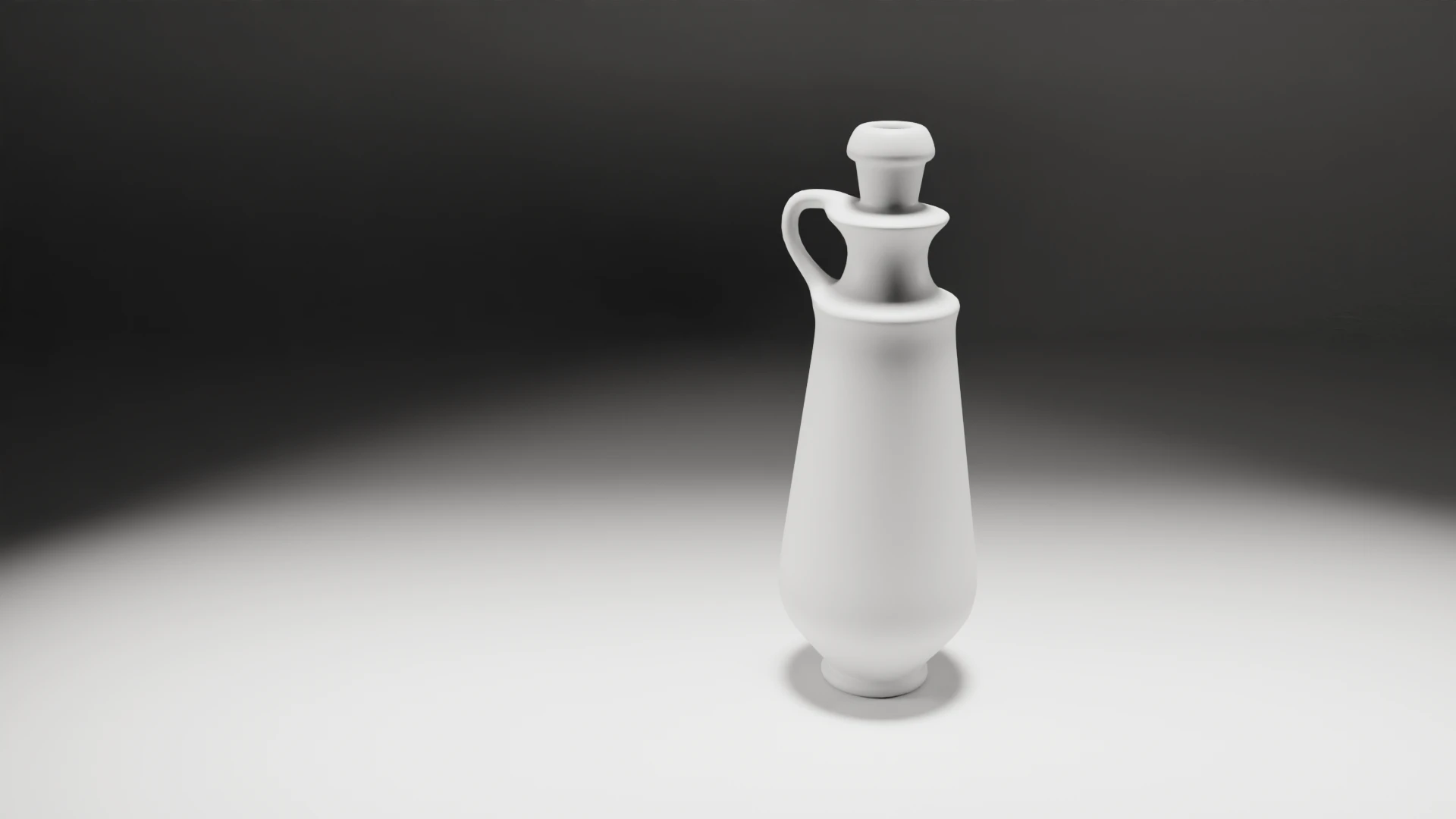
Still render
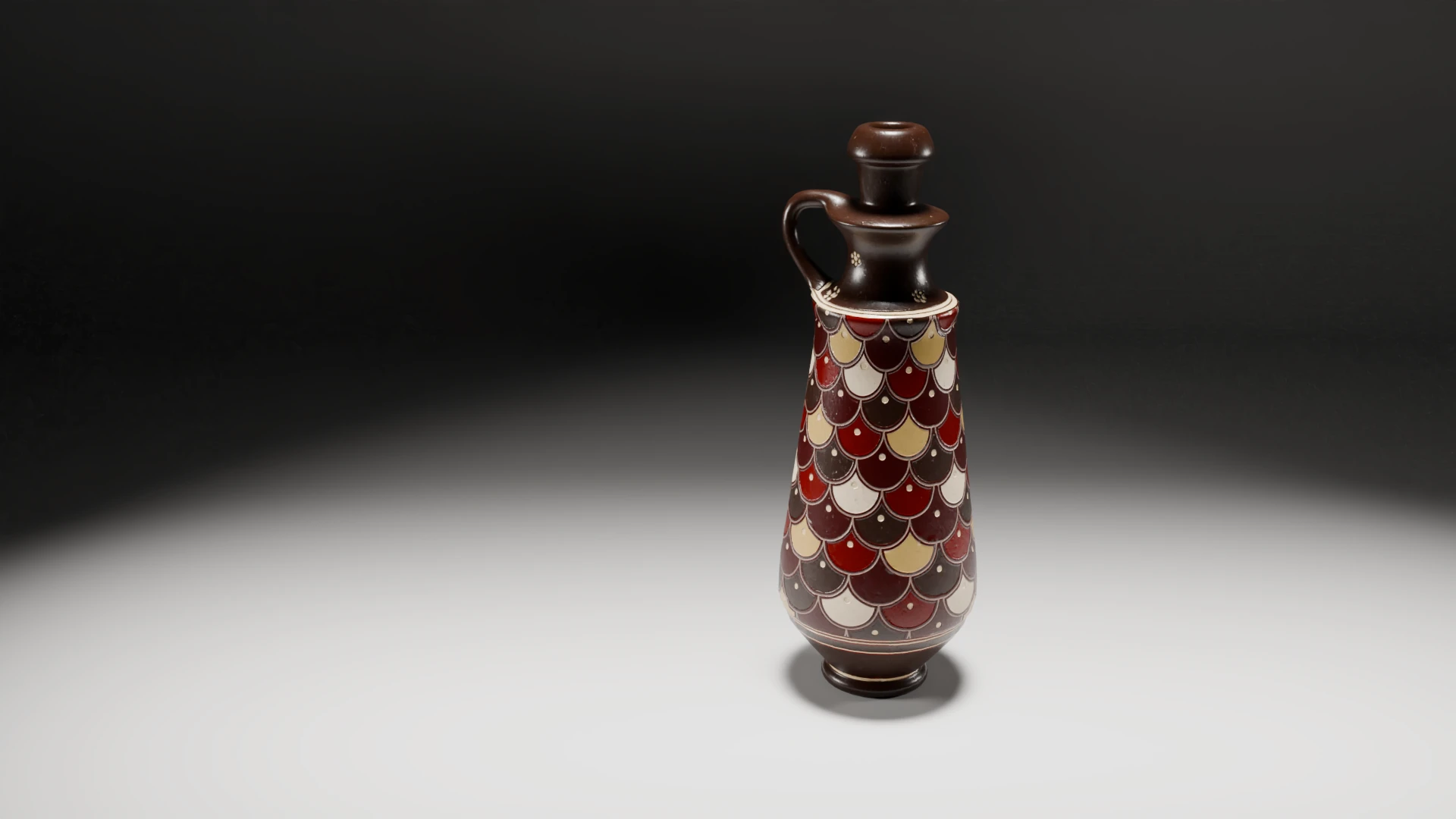
3D view
Disclaimer : technical limitation to material render in web app can let artefacts show, particularly in zoomed views.
See the full screen view (this will open a new tab in your browser).
Credits
Unless otherwise mentioned, all images credit to LGS.
Lekythos, ca 650 BCE, Camiros, Rhodes, Musée du Louvre
Tree, leaves reshaped into Olea europea ones, from Rico Cilliers at Polyhaven (CC0)