

The Guivre’s tales
In the olden days, when wishing still worked, lived a gentle soul. Born in the mountain streams and living on the land of man, it remained hidden from most eyes…
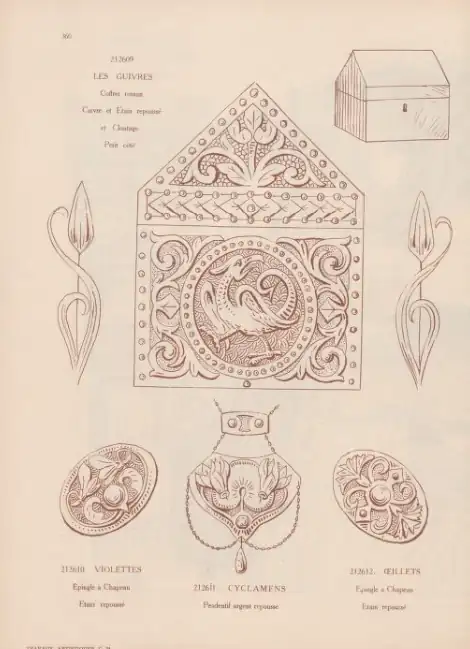
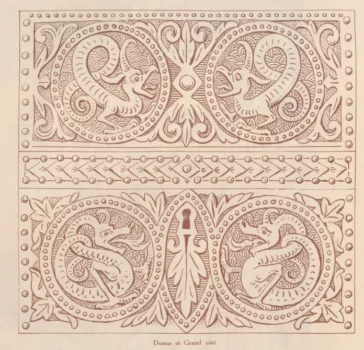
Stories of the Guivre are many and diverse. The part bird and part snake chimera having representatives in all civilizations, from Quetzalcoatl to the Wyverns of video games. As I was perusing the archives for another project, I stumbled upon a few drawings in the “Travaux artistiques : cahiers d’art appliqué” books that inspired an idea around the figure of their French cousin. The magazine was sponsored by a famous art supply store in France, Rougié & Plé, to incite everyone to practice arts and crafts.
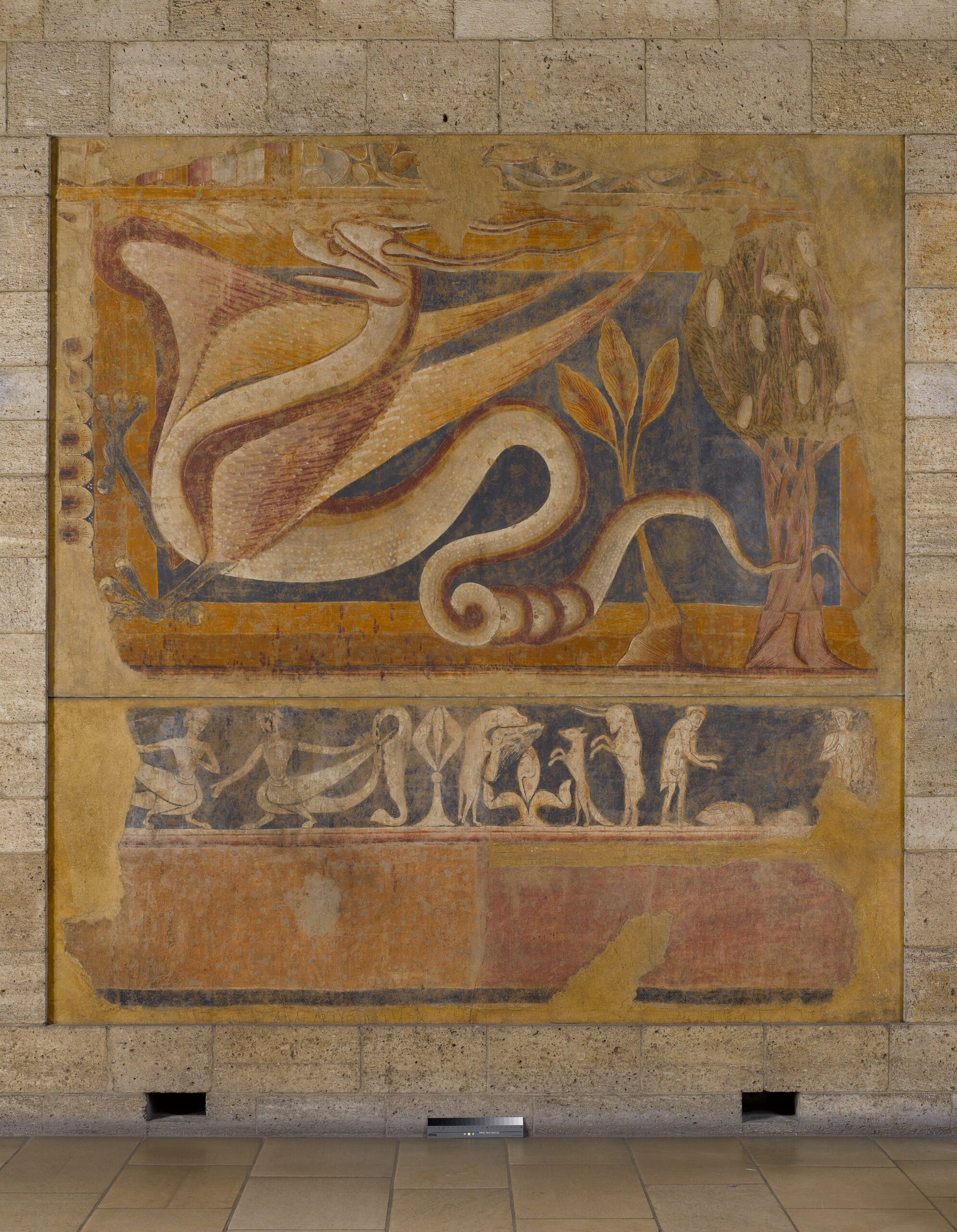
The main artifacts elements are set in a Romanesque art style, slightly modernized with early 20th century pastiche accents. The Guivre motif is not uncommon in the 10th and 11th centuries in Europe, when Christianity was getting rid of the last remnants of the pagan ways. It is however mostly describe with the generic “dragon” vocable.
Initially intended as yet another game on the subject, I tried to develop a few ideas and what is the very very very early stages of objects around a story and a game play. This project will not see the light of day, for now and as it is. This was a first for me, more of a trial run of sorts and I had fun doing it !
Let the stories be told? With a twist !
I took this opportunity to try out the models in the Unreal Engine and Unity. I have been going back and forth with this. I have tried many times to work with the engines and mostly, well, failed.
As the very reason this blog exists is to help those that would like to follow the same path as me, I’m taking you along for this new ride in the hope it can speed up your journey.
I think the game engine ecosystem key concept of “making a game” was the issue for me for a long time. All the tutorials and articles that can easily be found online focus on this and that is not what I’m about. I like games, I play games, but at the end of the day I’m a modeller, not a game developer. I need to use the engines mainly to ascertain my work can be used there too. So, I went looking along the archviz path and was met with concepts and methods that were also not what I was looking for. I was at a loss and wondering how to achieve what is, ultimately a “simple” product design presentation. There are not that many entry level stuff about this and fewer beginner ones.
The tutorial that did the trick for me was from architect Gediminas Kirdeikis. It shows a relatively straightforward product design showcase workflow with Unreal Engine 5.3.2.
Because I am not on the same system as him and my objects and scene are not the same as his, I had to adapt. But for the first time, I had satisfactory results ! That both re-ignited my interest in working with the engines and opened up new possibilities. It also triggers me into looking at also working with other game engines.
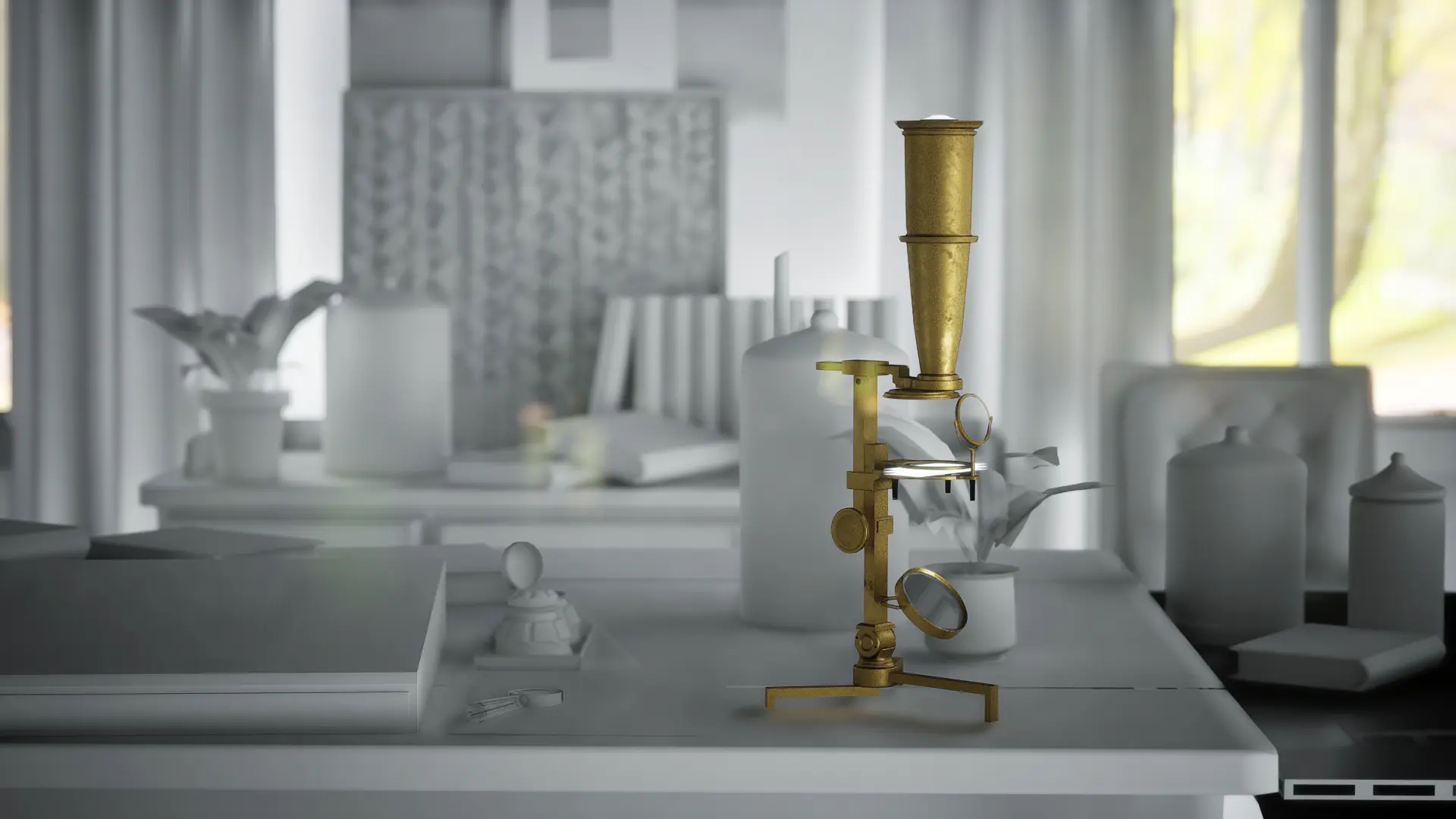
Before going into this project per model comments, here are a few tidbits I gathered from this experience. Again, I am not endeavoring to make a game, that’s not my job.
I’m mainly making sure the models I work with translate well into these pipelines.
If you are here for the loot, just skip the next part!
Game Engines in a Gnu/Linux environment.
Let’s deal with the principal ingredient first ! As some of you know, I’m operating on a workhorse PC operated by Linux Mint. I know Debian purists will faint but I need a reliable, stable, no fuss system and that’s exactly what it is for me at the moment. I may have to change my tune because of the x11/Wayland issue but for now I’m sticking to it.
I thought this was about to make a pain out of the engines installation and would require endless fiddling with Wine and stuff. It was very much not !
Epic games offers a Gnu/Linux version of their engine that you can download upon creation of an epic account. It does not however support the “Epic launcher” app, and you will be launching the engine directly. There is an unofficial client that does the same job brilliantly, Epic Asset manager. I noticed that I did not really use the launcher because it just delays the launch of the engine and the actual work, but it’s interesting to know it’s there.
Moreover, Unreal Engine also offers a Fab add-on for Gnu/Linux distros. That allows you to access what is basically a shop where you can find assets that are instantly delivered into your projects, compiling the old sketchfab-methahuman-megascans ecosystem. To install the add-on, just unzip the downloaded file and put the fab folder it gives you into the plugin folder of the engine. The folder hierarchy of the downloaded file gives you the path to where it is situated in the installed engine.
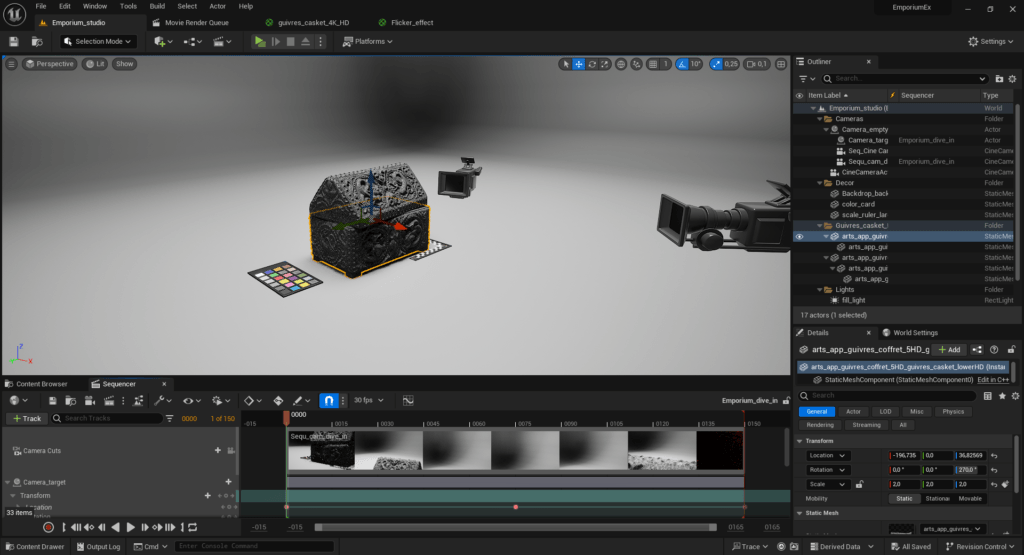
Though the installation was almost hassle-free, the Engine has a few quirks and crashes are, well, to be expected. The unreal official documentation and forums are helpful but, yeah, sometimes, everybody seem to agree that it just crashes. Thankfully the auto-save function works well ! So, don’t be hyperventilating that your system is at fault when it does, it…. just happens, I guess ?
Also, in my case, the nanite system works superbly but the experimental Substrate material system though put forwards in tutorials, never does, whatever version of the engine I try. Closing and reopening windows and/or the full projects sometimes fix issues (!?). This is also part of the learning curve, it seems!
The process was more or less the same for Unity. It actually was faster to install and I was also at work in a short time. There is a GNU-Linux native version of the launcher and upon creation of an account, it all went smoothly with installing Unity 6.
I liked the intro-tutorial to discover the UI, though other available tutorials are not all updated yet. I particularly took interest in the High Definition Rendering Pipeline one.
So far, I have only encountered issues with the engine potentially linked to the OS in the coding part of things, that is to say in marginal cases for the use I’m having of it.
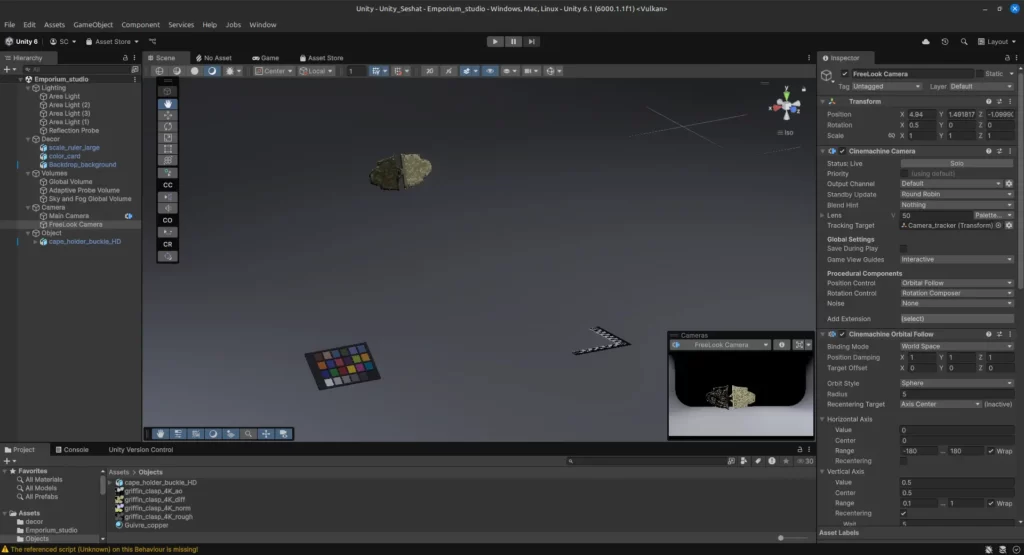
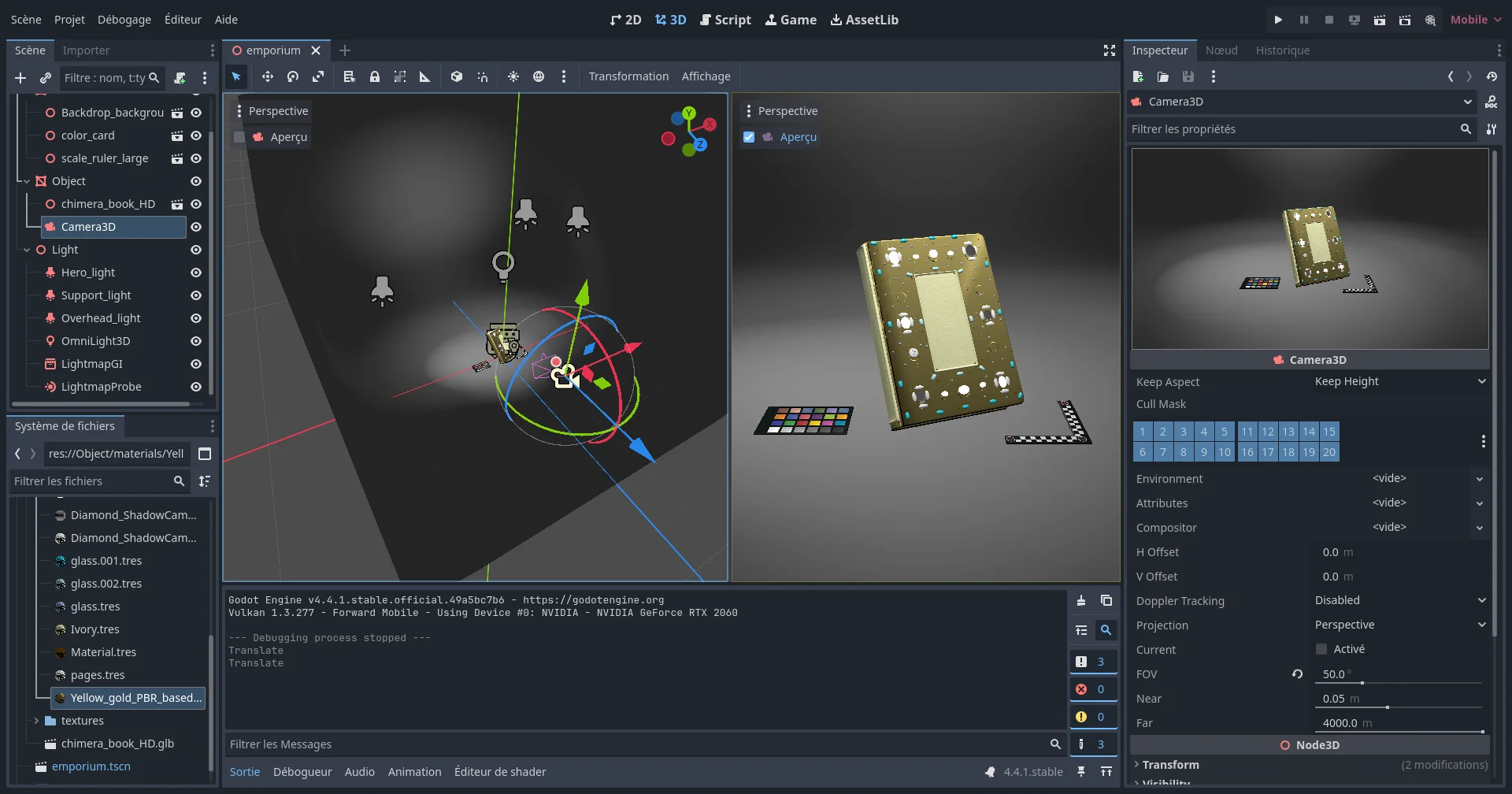
You may have noticed I deliberately left Godot out of the mix. This is not an oversight and I fully intend to use it in a near future for a different idea. As I said, my skills on these topics are only limited, and the learning curve is steep, though not as much as I thought. Despite all the engine’s qualities, I’m not up to the task in order to be able to use Godot for this particular project in the same manner as the other two.
The limits of the workflow.
As a full newbie to the trade, I won’t tell you I did understand how everything works because it’s way above my skill level. From what I gathered, when a game engine packages a game for export it creates what is basically a Docker container.
Again, the Docker universe is not my forte, but I understood it is something that ultimately uses the operating system tools and elements to make what it is supposed to do. In a game engine case, it is something that implies an input interaction with the viewer/player and most likely a control over the GPU. It can be a good old shoot’em up or an archiviz VR presentation.
You may then start to see the incoming issue. It can’t be OS agnostic. I can only create “games” aimed at Gnu/Linux platforms. Though you can create Gnu/Linux versions on Windows, the opposite isn’t true. There are ways around that. One can use virtual Windows machines to package for these systems etc.
What about the web ? Can the “game” be implemented into a web page and be accessible to everyone ? Theoretically, yes, absolutely. In practice, the engines do not seem to be equal.
Unreal Engine needs a server with computation powers way above what a regular site or blog uses. Funnily enough, it seems it mostly is happening with Gnu/Linux versions because most of the servers run a Gnu/Linux system. It is done commonly but mainly from big actors or for a limited amount of time. Though the result is stunning, this comes at not so small a cost !
Unity, like Godot, offers WebGL export possiblities. It still has a cost that, of course, depends on the project’s size. It also won’t be able to use the full extent of the engine’s possibilities because, again, the computation cost can be exponential.
For what is my personal use case, a “simple” web viewer, that means it is more or less equivalent to working with Three.js. Though the latter do not have the fancy UI interfaces. That is why I’m choosing to stick with my homemade viewer on this page instead of using the Unity version.
In the context of most heritage institutions where funding is an ever-growing concern and servers are rented and/or cramped, these last options might be the most viable ones for the moment.
In terms of usability, I did not feel the UI barrier was an issue the way I was warned against beforehand. I do not think Unreal UI is inaccessible to beginners compared to Unity. I actually thought it was the other way around, but maybe that’s just me ! All engines need a getting used to, but I guess that is true for every new app.
However, there is another usage for game engines that I did not anticipate fully well and that threw me off in favor of the Unreal Engine.
Yes, yes. I know. You’re not supposed to have favorites.
Film making
There is a growing use of the Unreal Engine in film making and animation. Unity left this part out in its recent development to focus on games making. Fair enough.
This is all my musings, and I’m not very experienced yet. I think of using Unreal for these jobs as something along the line of rendering scene with “a bit of the Cycles look with the speed of Eevee-ish”. I would need to run comparative tests to collect data on the veracity of this, though. I can only say I was surprised at how easy and fast it was for my system. Then again, as much as I like Blender, I’ve always felt that dealing with lighting in Eevee was an acquired taste.
By far, I won’t be making full use of the game engine capacities, but I’ve tried to make short cinematic clips of the models as a way to test this theory as well as for training purposes. Because that means close up of the nose to model kind, I will be using high definitions models for these parts. As the models you can have access below will not be that heavy (I do need to spare my server !), your results will vary from mine.
Enough of tech nerdy digressions, off to the Guivre’s tales and other book nerdy treasures !
The Guivre’s tale: the quest to a legendary treasure
An old journal
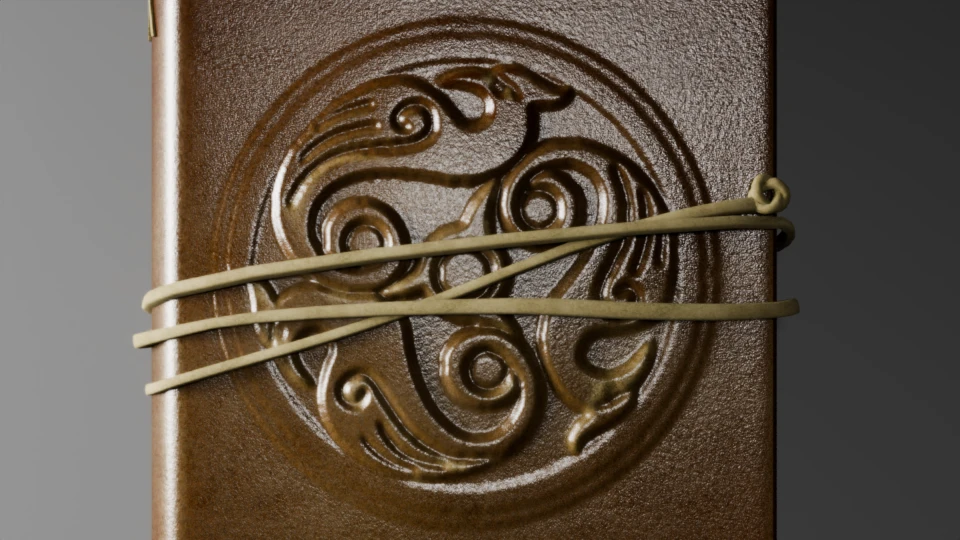
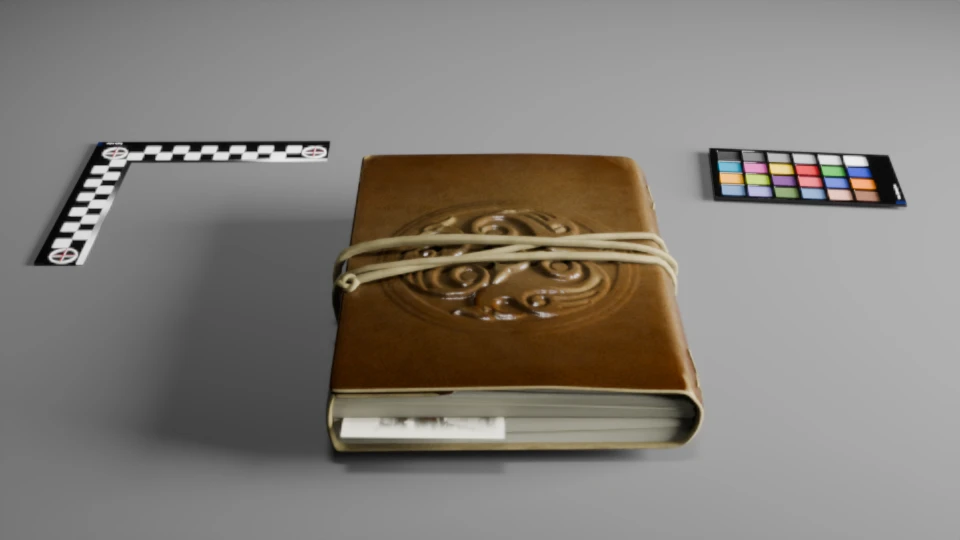
Every good story begins with a little mystery that launch the protagonists into action. Here I thought the “classic” journal would do the trick. It’s almost a heritage trope at that point !
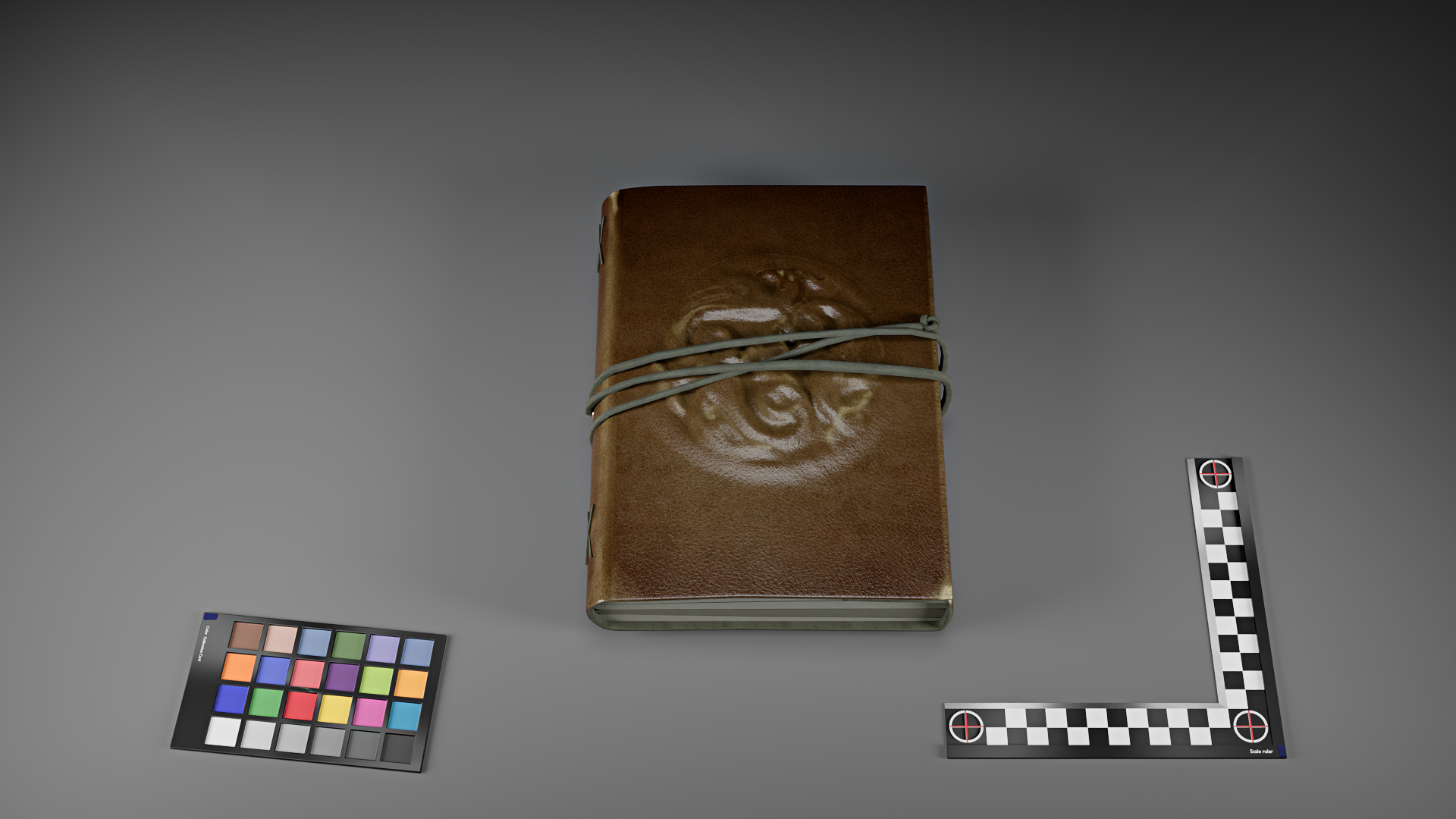
See a full screen web friendly version in another tab.
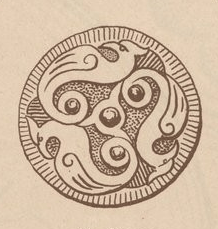
The main motif of the journal, embossed in digital leather, is extracted from a motif the [1911 artist](“Travaux artistiques : cahiers d’art appliqué”) called “Persane” (french for Persian, female variant). It is a variant of a common tryskelion figure, using guivres as the rotational symmetry motif.
The textures were created using Ucupaint add-on, directly in Blender.
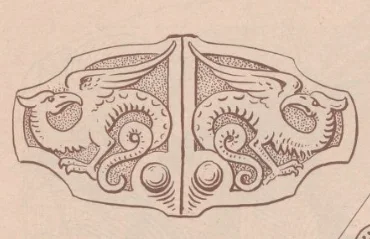
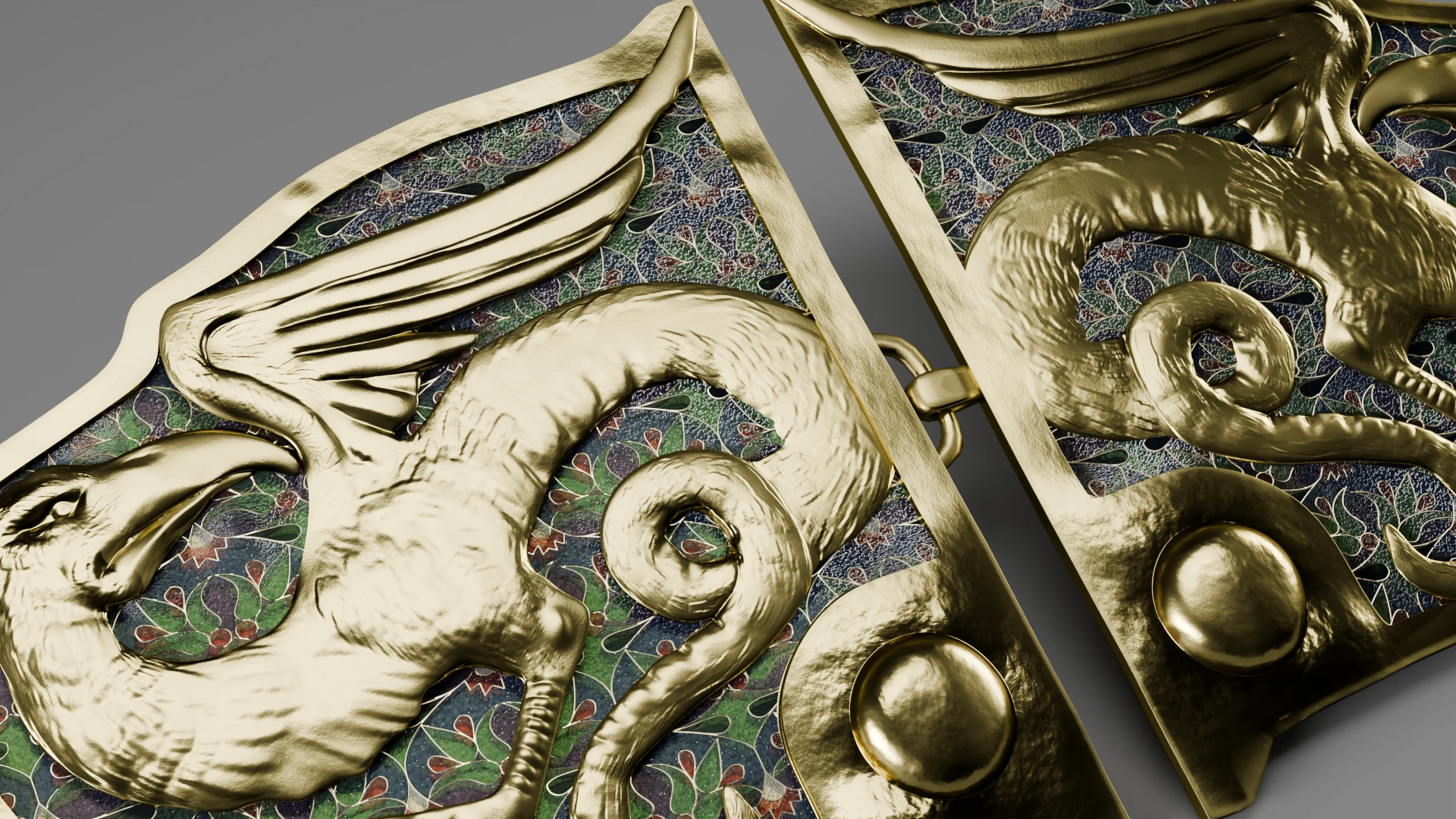
A cape clasp
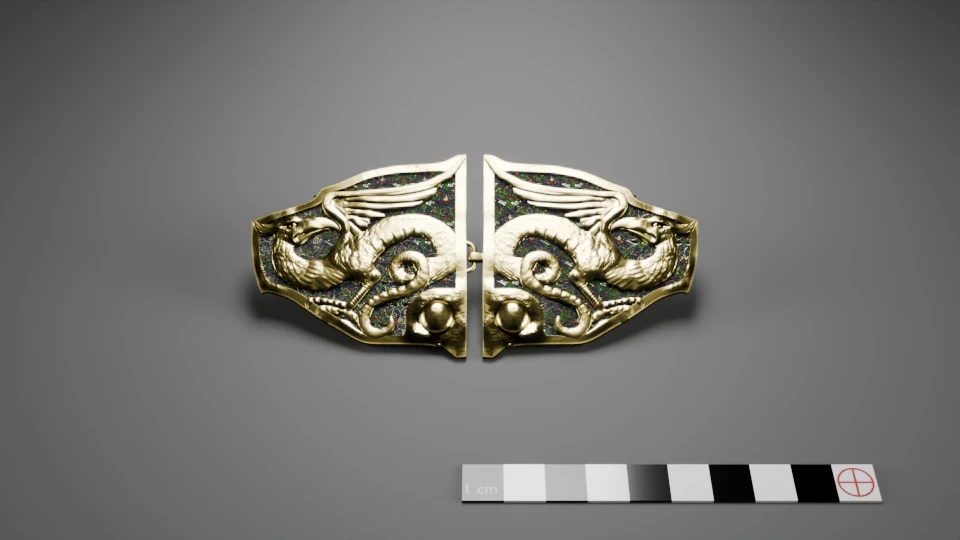
Guivres are notoriously famous for their “escarboucles”. A unique, precious stone, whose tremendous value is only less impressive than its magical abilities. The name is old French word for a shiny ruby or garnet.
Fun fact, those who saw or, worse, touch it, rarely live to tell the tale. Well, obviously some do otherwise there would be no stories, but you get the point ! Artists have integrated these fantastic beasts in their work and the canon has been reused multiple times in visual arts and literature.
Many tales of the ferocity of the beast are still populating European folklore. Rapacious, violent, terrifying: there are no shortage of adjectives to make people aware of the danger of it and the ill fate to whoever dares follow its path and enters its lair. Legend says it is a shape-shifter who can either be animal or human but always dangerous. Whether with humongous bat’s or bird of preys wings or just on its own, it can fly as well as it can swim.
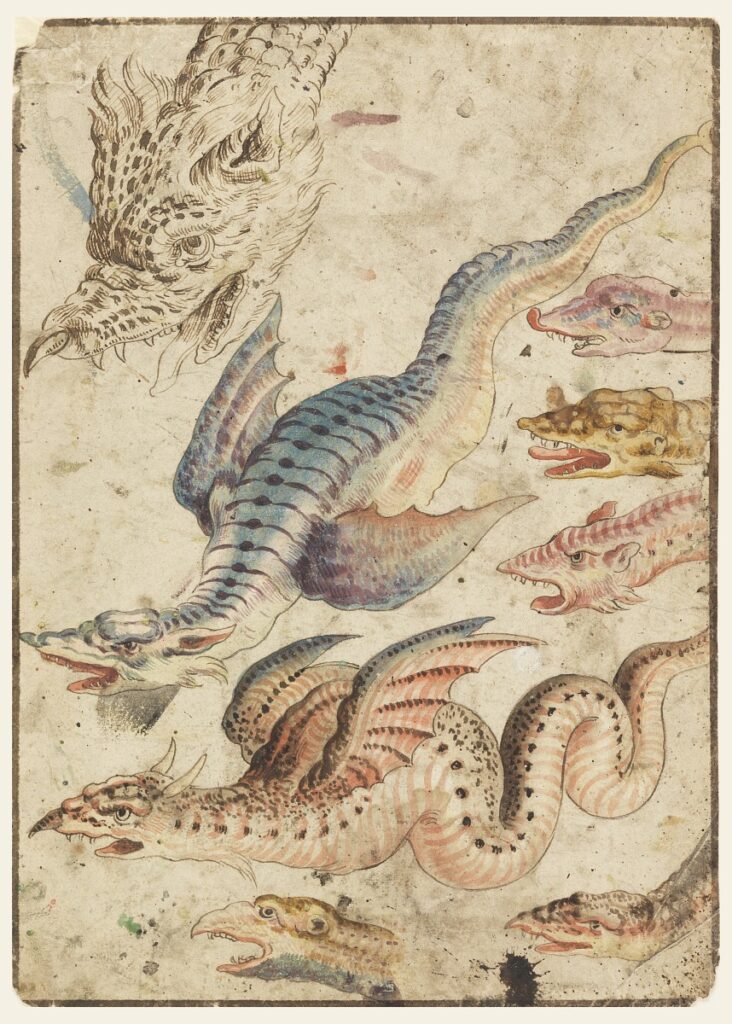
Either foe or protector depending on the storyteller, its chimera shape is not canonical and variations appear it its representation.
In France, its human female shape, the “Vouivre”, leaves her fantastic garnet, the escarboucle, by the river bank when she is bathing, tempting passers-by to seize it. Her snake family “deals” with the unwise robber in, shall we say, quite a messy way.
See a full screen web friendly version in another tab.
The cloisonné motif is made in blender with a series of masks and voronoi noise based colour-ramps to have variations mimicking the glass melted in the cells. The repetitive motif is based on the one found on an icon piece from 1048-1115 Constantinople, curated in the Louvre museum. I can’t help but feel it has Napoleon III style vibe, i.e. heavy but posh !
An ivory plaque
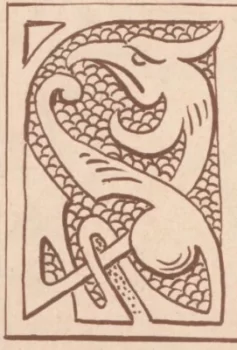
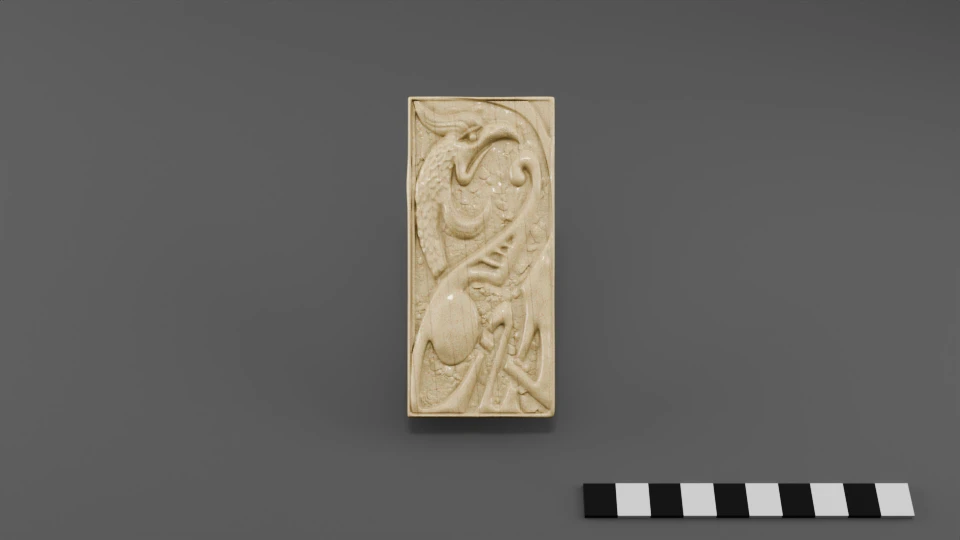
The original reference looks to me like a mix between the Simurgh and the Huma of Persian litterature. The artist added a somehow art nouveau flourish to create the feather like shape, that makes the piece reminiscent of Islamic or Byzantine pieces.
See a full screen web friendly version in another tab.
The toughest part for this model was to pinpoint the ivory material. I made heavy use of references, as is often the case one must be very cautious about one thinks one knows about what a material should look like !
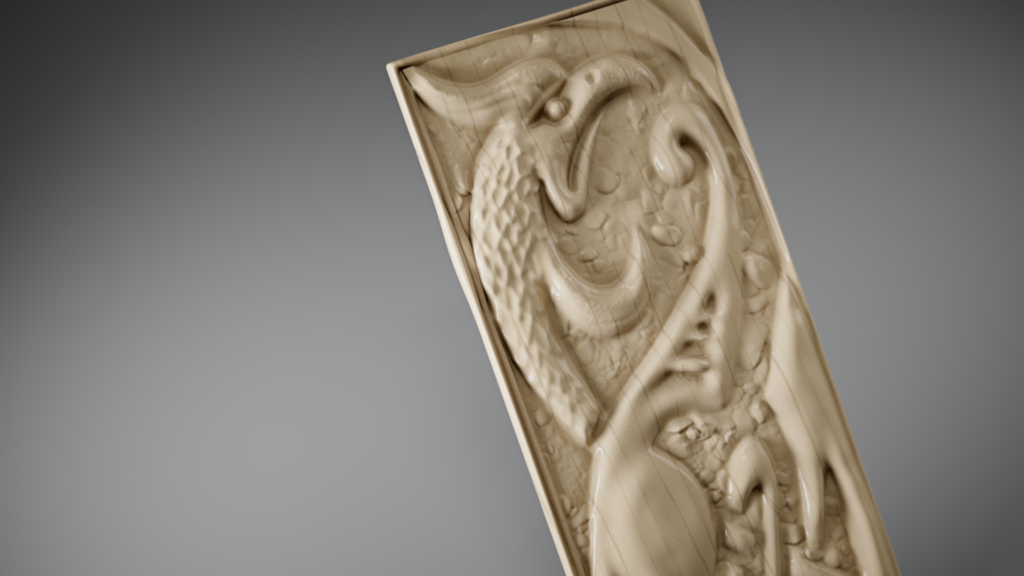
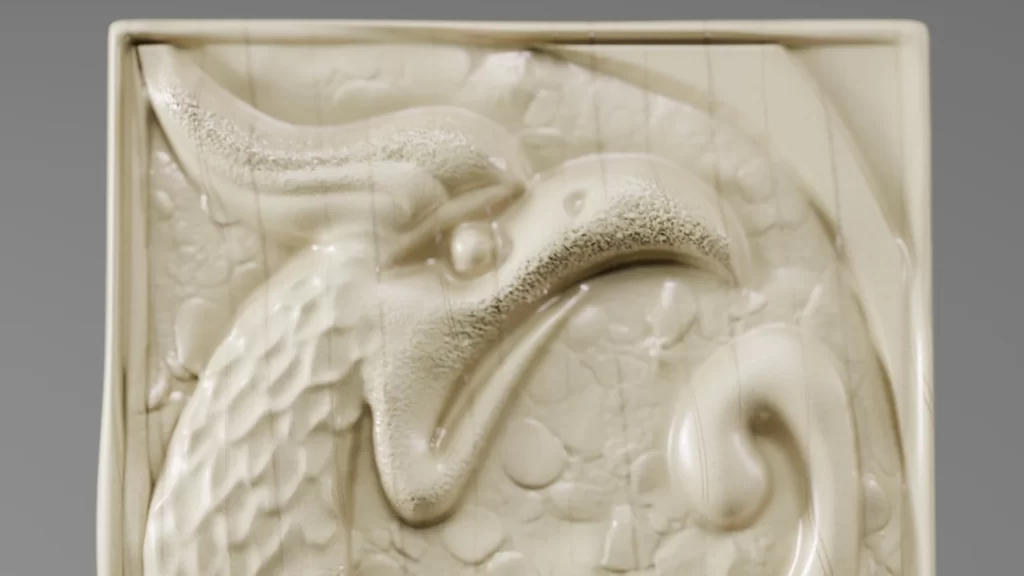
In accord with the medieval trend to re-employ antiques and oriental pieces, I thought it would be fun to try a little “fake” contextualization for it !
A treasure chest
Whatever the treasure, if there is one, it needs a chest. It does !
I like chests, so I took the liberty of creating one.
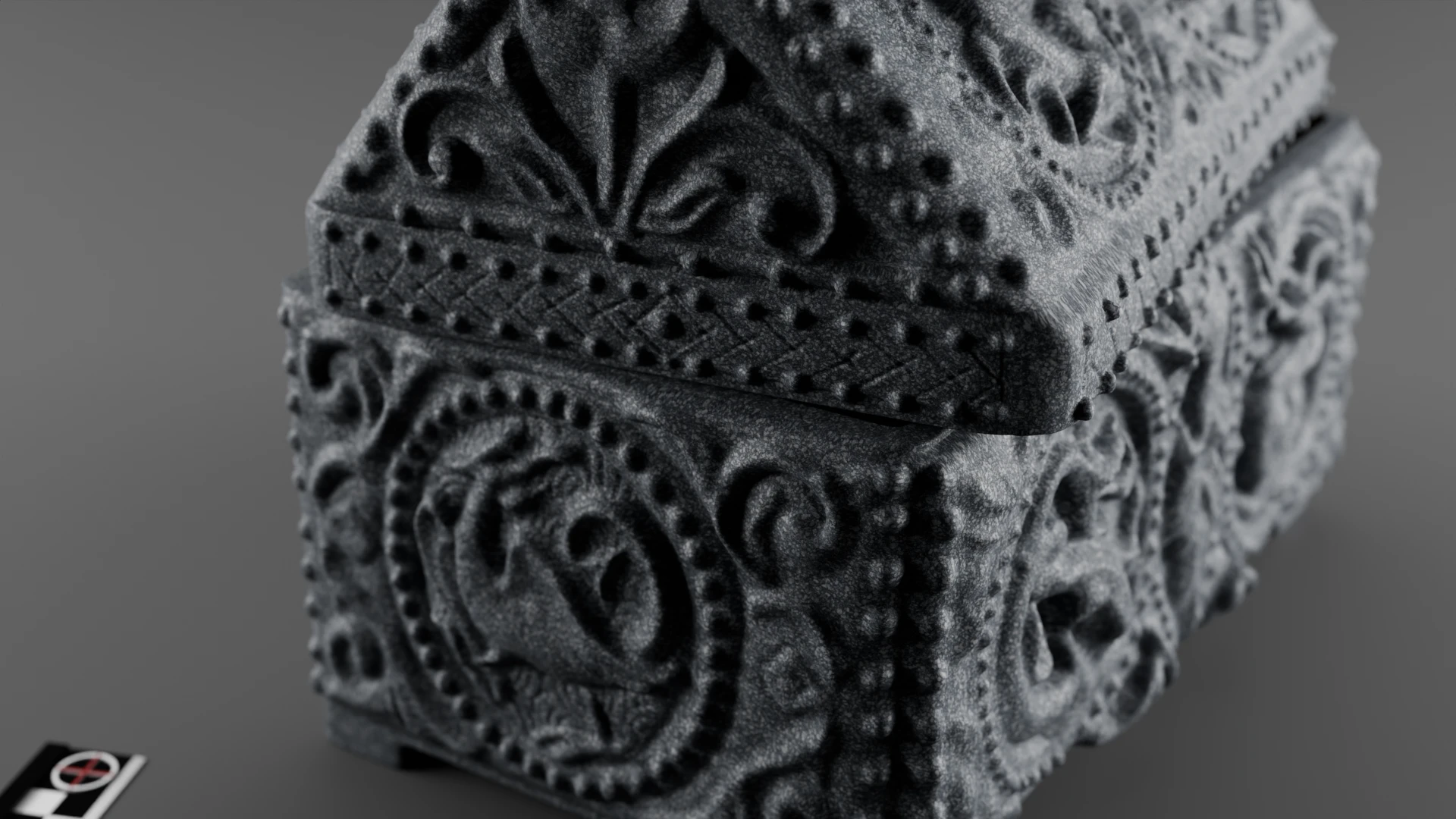
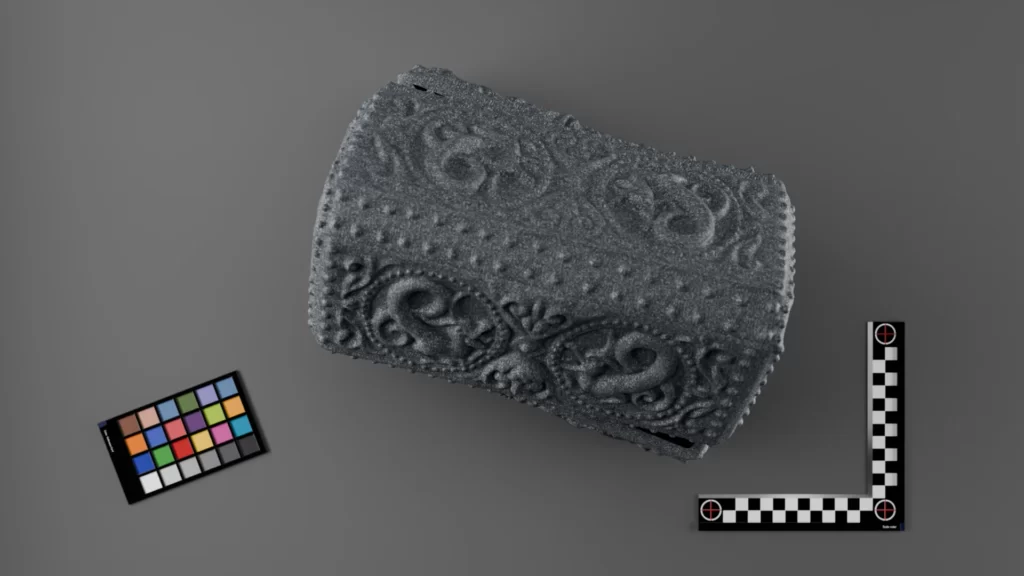
The bulk of the mass is hand sculpted following the original artist’s outlines. The smaller details are added via normal maps. The granite looking material is mostly inspired by similar elements found in western Europe late roman and Romanesque sanctuaries.
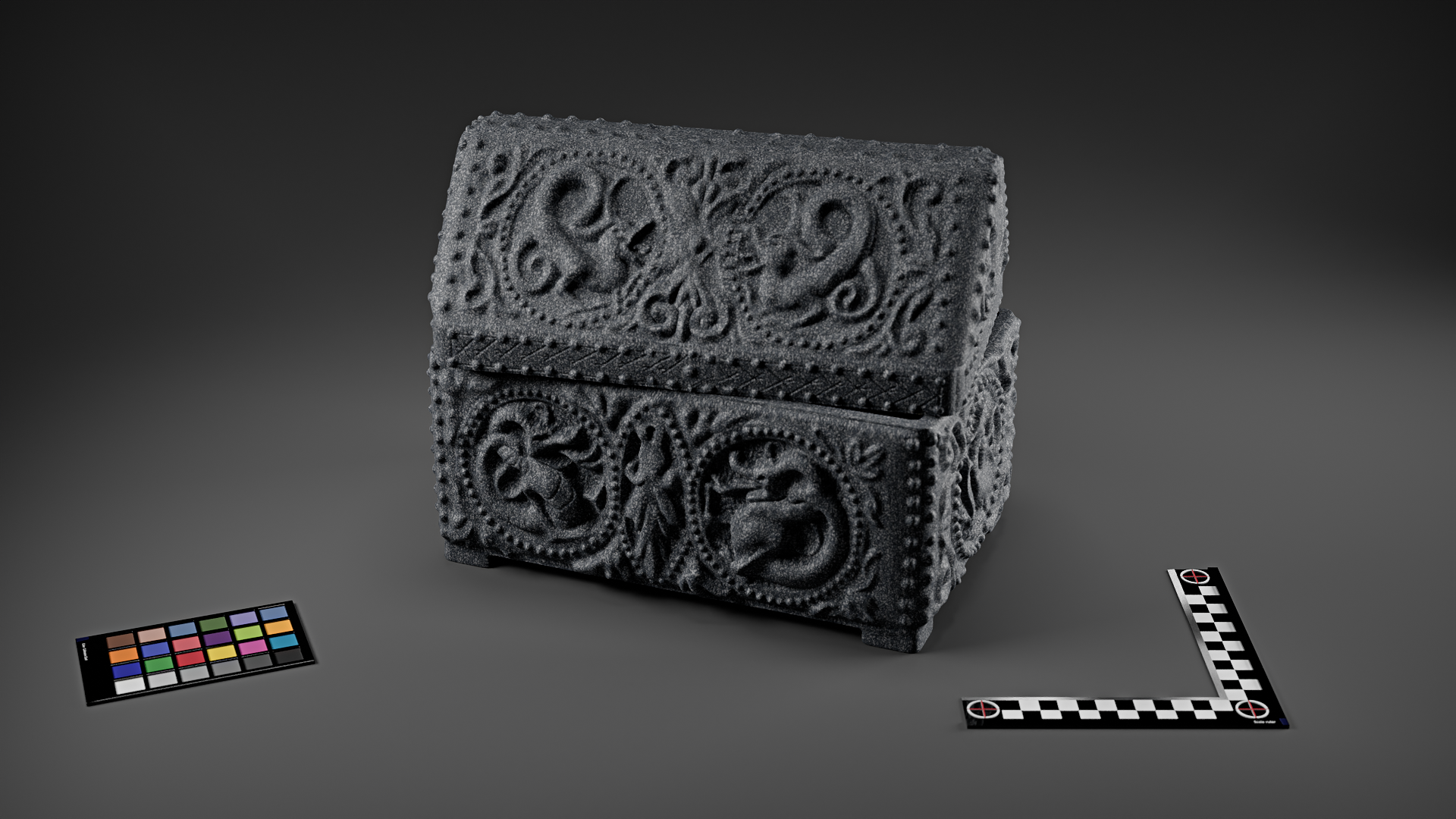
See a full screen web friendly version in another tab.
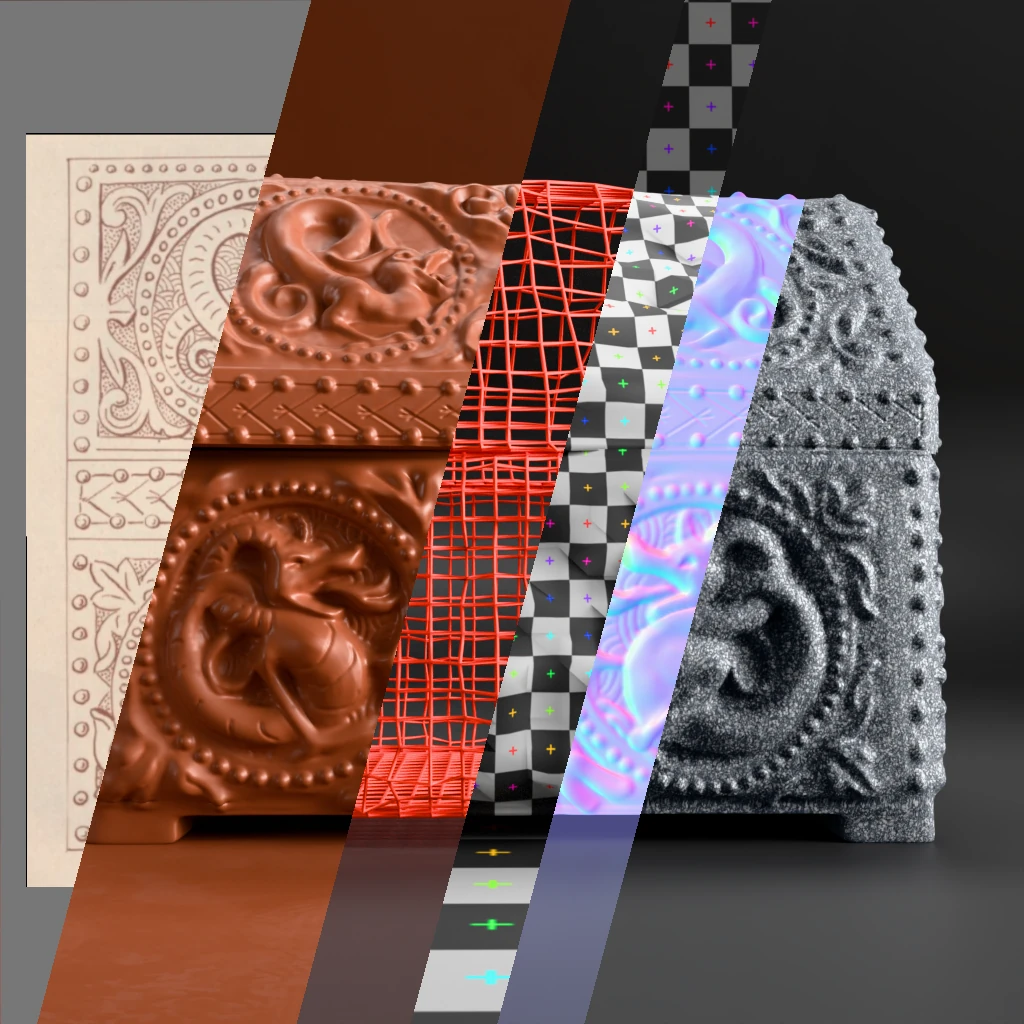
Maybe there is a treasure inside, who knows ? 😉
Contact
If any of you, dear reader, want to further the conversation, you can do so on Mastodon or Pixelfed.
As I will not be using these models, I’m offering them to whoever can use them, under EUPL-1.2 licence. I do not have the time to deal with the hassle of putting them online, for now. Drop me a message, and we can find a solution !
Credit
Unless otherwise mentioned, all images credits to LGS.
Bibliography
“Travaux artistiques : cahiers d’art appliqué : dessins grandeur d’exécution”, from 1911 to1914, C.Pierre (head of publication), collection available online.
Iconography
“Dragon”, from a room above the chapter house of the Monastery of San Pedro de Arlanza, near Hortigüela, Burgos, Spain (sold by the government in the nineteenth century) , after 1200, Spanish, fresco, mounted on canvas, The Cloisters Collection, 1931, Object Number: 31.38.2a, b
“Two winged snake-like dragons and six heads of each are shown.”, verso: two men on horseback in classical armor, fleeing from a burning castle in Romanesque style, ca. 1560–1600, Accession Number 1938-88-2601, Brush and watercolor, pen and black ink on laid paper; verso: black chalk, pen and ink on laid paper, Italy, Cooper Hewitt, Smithsonian Design Museum Collection, CC0